WHY IS BURNHAM'S GOVERNMENT HIDING THE NATIONALITIES OF CONVICTED RAPISTS, MURDERERS AND DRUG DEALERS?
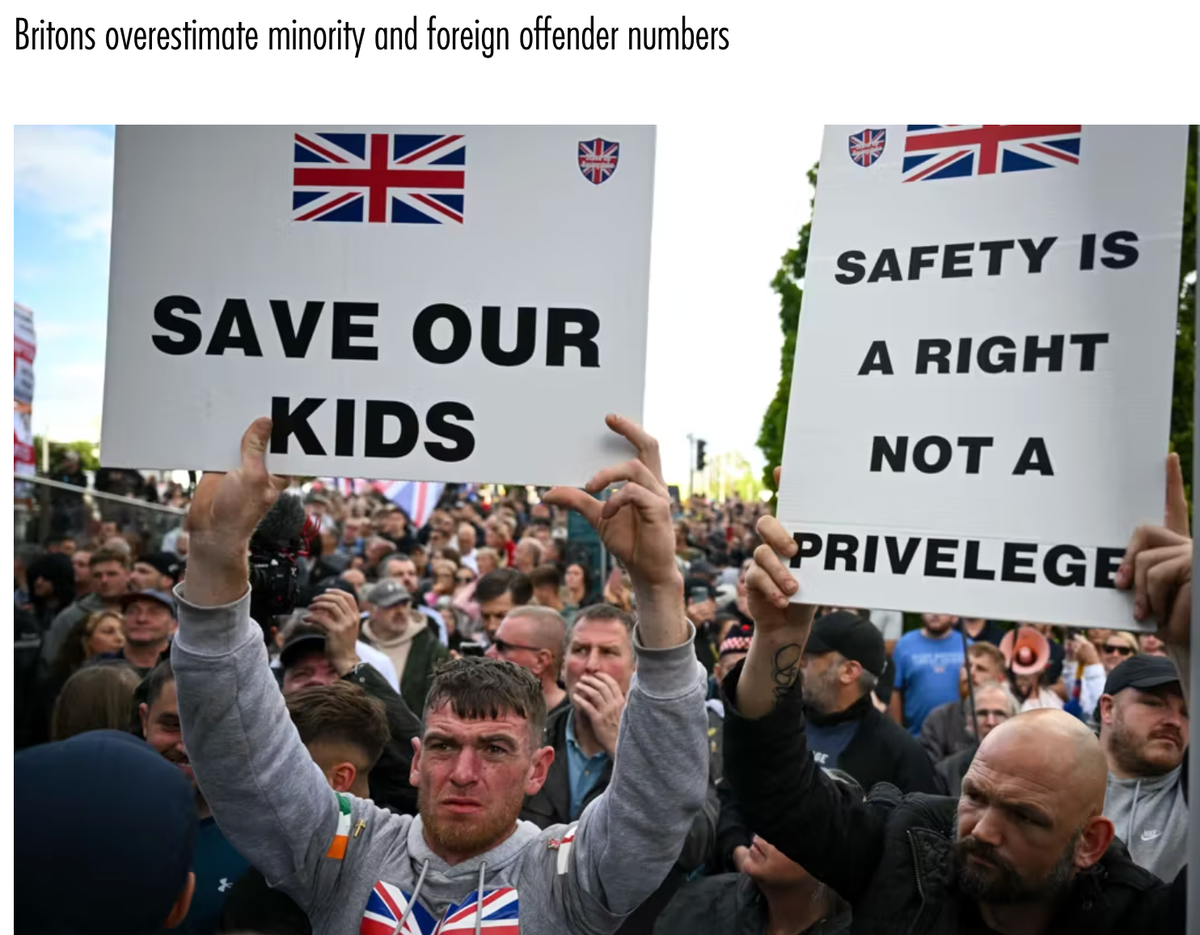
THE MINISTRY OF JUSTICE HOLDS THE CRIME FIGURES BY NATIONALITY. IT IS NOW IN COURT TO STOP YOU READING THEM.
The regulator ordered the conviction data by nationality released. The Ministry of Justice, which has produced this data before, is appealing at public expense. Burnham could end it in a sentence.
Britain is arguing about migrant crime with half the evidence. Academics say the debate is overblown. Campaigners insist particular nationalities are wildly overrepresented. Both sides are working from the big headline numbers, because the detailed figures that would settle it sit inside the Ministry of Justice. And the Ministry of Justice has gone to court to keep them there.
 t.jones219
THE REQUEST WAS SPECIFIC. THE REFUSAL WAS NOT.
In June 2025, the Centre for Migration Control, a campaigning think tank that wants immigration reduced, put a question to the Ministry of Justice under the Freedom of Information Act. For every year from 2018 to 2024, how many people were convicted in England and Wales, broken down by nationality, for the offences within seven categories:
- violence against the person,
- sexual offences,
- drug offences,
- criminal damage and arson,
- possession of weapons,
- theft offences
- robbery.
The request was for counts, not opinion. How many convictions for rape, for murder, for arson, for supply of class A drugs, by nationality, year by year.
The Ministry refused. First it said releasing the figures would breach offenders' privacy. Then it said producing them would cost too much. Under the Act, a department can refuse a request if answering it would cost more than £600.
The Centre took the refusal to the Information Commissioner's Office, the regulator that polices the public's right to government information. On 22 June 2026, the regulator threw out both excuses.
On privacy, it said the concern only applies to tiny numbers. If fewer than five people of one nationality were convicted of one offence, someone might work out who they are, so hide those. Everything of five and above must be released.
On cost, it found the Ministry had never actually shown the work would cost more than £600. It had simply asserted it. The Commissioner's words were;
"Complexity alone does not obviate the requirement to provide a properly evidenced estimate."
In plain English, saying it is complicated is not the same as proving it is expensive.
The Ministry has produced this data before. The Migration Observatory, a research unit at the University of Oxford, says in its August briefing on migrants and crime that its conviction figures, by year, by nationality, by offence type, were handed over by the Ministry of Justice in response to a freedom of information request, pulled from the Police National Computer. The extract exists. The Ministry has run it.
So the regulator ordered the data released. The Ministry's answer, on 17 July 2026, was to lodge an appeal at a tribunal to overturn the ruling. According to the Centre for Migration Control, at least some of the requested information had already been compiled during the regulator's investigation. It was compiled, and then fought over rather than published.
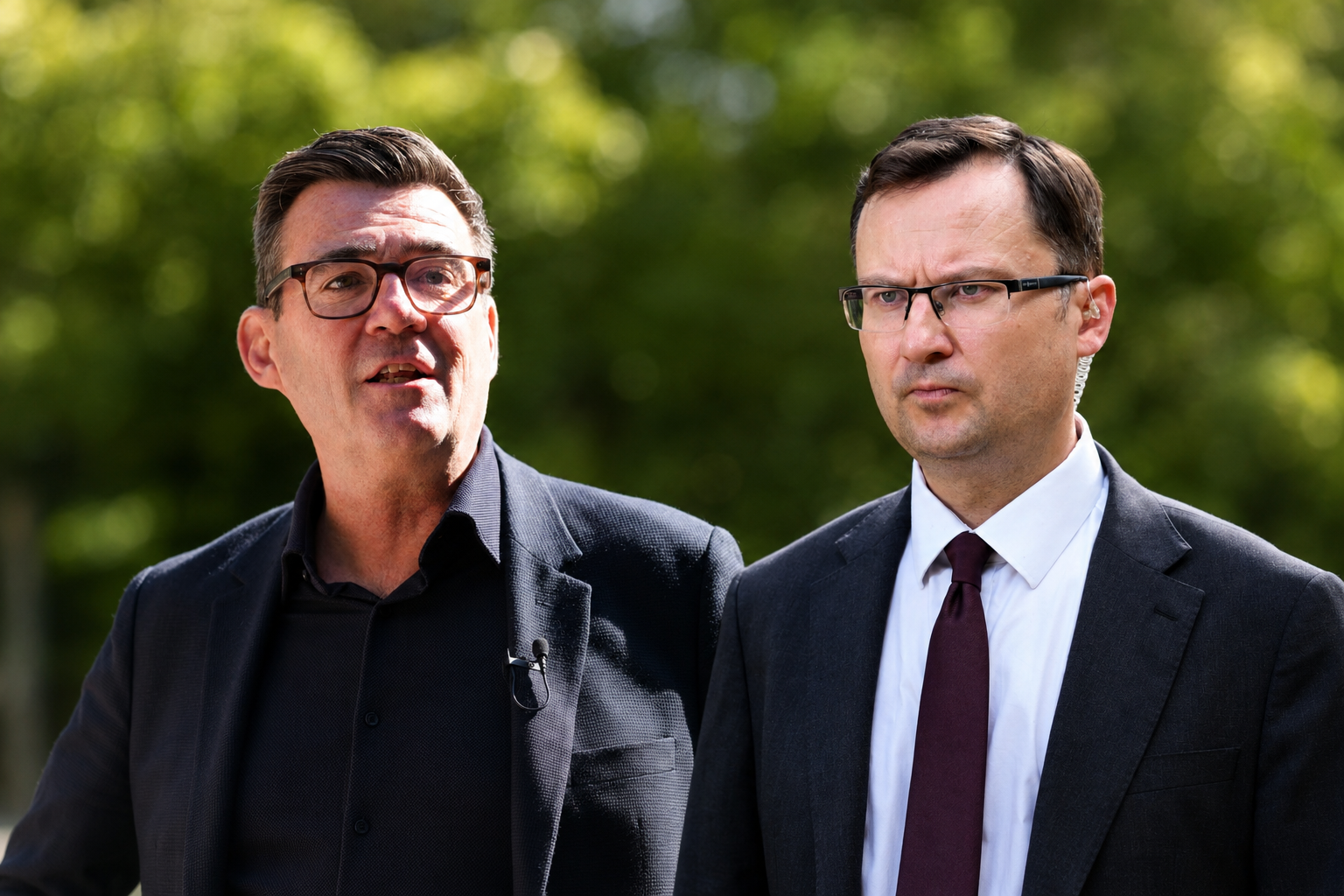
Robert Jenrick called it a cover-up. The Ministry denied one was underway. The appeal was lodged while David Lammy ran the department. It is maintained under Alex Norris, appointed Justice Secretary on 20 July by Andy Burnham in his first reshuffle as Prime Minister.
Norris came to Justice straight from the Home Office, where he was the minister for border security and asylum. Few ministers should understand better that "foreign national", "migrant" and "asylum seeker" are not the same thing. His department's refusal is why the public cannot tell them apart. Continuing the appeal is his decision. So is telling the public what the appeal is costing, because barristers and government lawyers do not work for free, and every hour of their time is being spent defending the claim that a £600 answer is unaffordable.
The appeal now survives at the pleasure of Andy Burnham's government. Burnham could end it in a sentence. He has not. This is the same Andy Burnham whose rape gang Assurance Reviews failed to detail any meaningful demographic data also. The instinct to withhold was not at Downing Street when he arrived. It travelled there with him.
THE NUMBER MEANT TO END THE ARGUMENT IS A GUESS
On 18 August, the Migration Observatory, the Oxford research unit the Ministry of Justice once handed this data to, and no relation to the campaigning Centre for Migration Control, published its briefing on migrants and crime. It contained the numbers behind a reassurance the press had printed the day before, when a King's College London study landed everywhere, headlined as proof the public overestimates migrant offending.
The Observatory's briefing received almost no coverage at all. Almost nobody read it. The reassurance does not survive its own footnotes.
Here is the number doing the reassuring. Foreign nationals received 13.1% of the cautions and convictions in England and Wales in 2024, and they make up roughly 13.5% of the adults. Same share of the crime as their share of the people.
The first number is real. It comes from counting convictions. Courts convict people, the records exist, the Observatory added them up.
The second number is a guess. Nobody knows how many foreign nationals live in this country. The government has never produced a figure. The Observatory's researchers had to estimate one themselves, and they say in the briefing that the estimate is uncertain.
So the number being used to close down the debate is a real count divided by a guess.
It gets worse. Crime is committed by young men. Foreign nationals in Britain are younger than the rest of us. A younger population should produce more than its share of convictions, so coming out level is strange, and the way to check is simple. Get the conviction figures broken down by age. The Observatory asked the Ministry of Justice for exactly that. The Ministry said no. To the researchers whose study its defenders now quote.
And the average hides what the Observatory actually found. Indians get fewer convictions than their numbers would suggest. So do Pakistanis, the French and the Chinese. Albanians get more. So do Iraqis and Afghans.
The Albanian figures make it plainer still. Of everything Albanians were convicted of in 2021, 61% was drugs. For Brits, 12%. When an Albanian is convicted in this country it is nearly always for drugs, and the Observatory traces part of that to trafficking gangs whose members do not even live here, so they sit in nobody's population count. One nationality, one trade, organised. The 13% average flattens all of it.
THE PUBLIC GUESSES BECAUSE THE STATE HIDES THE ANSWER
Now the study that did get the coverage. On 17 August, King's College London published research into what the public believes about crime, built on two YouGov surveys of nearly 4,000 adults. Eastern Eye ran it as "Think immigrants and minorities commit most serious crimes? The data says otherwise." Other outlets led on Britons greatly overestimating foreign offending, and on Reform voters being the most mistaken of all.
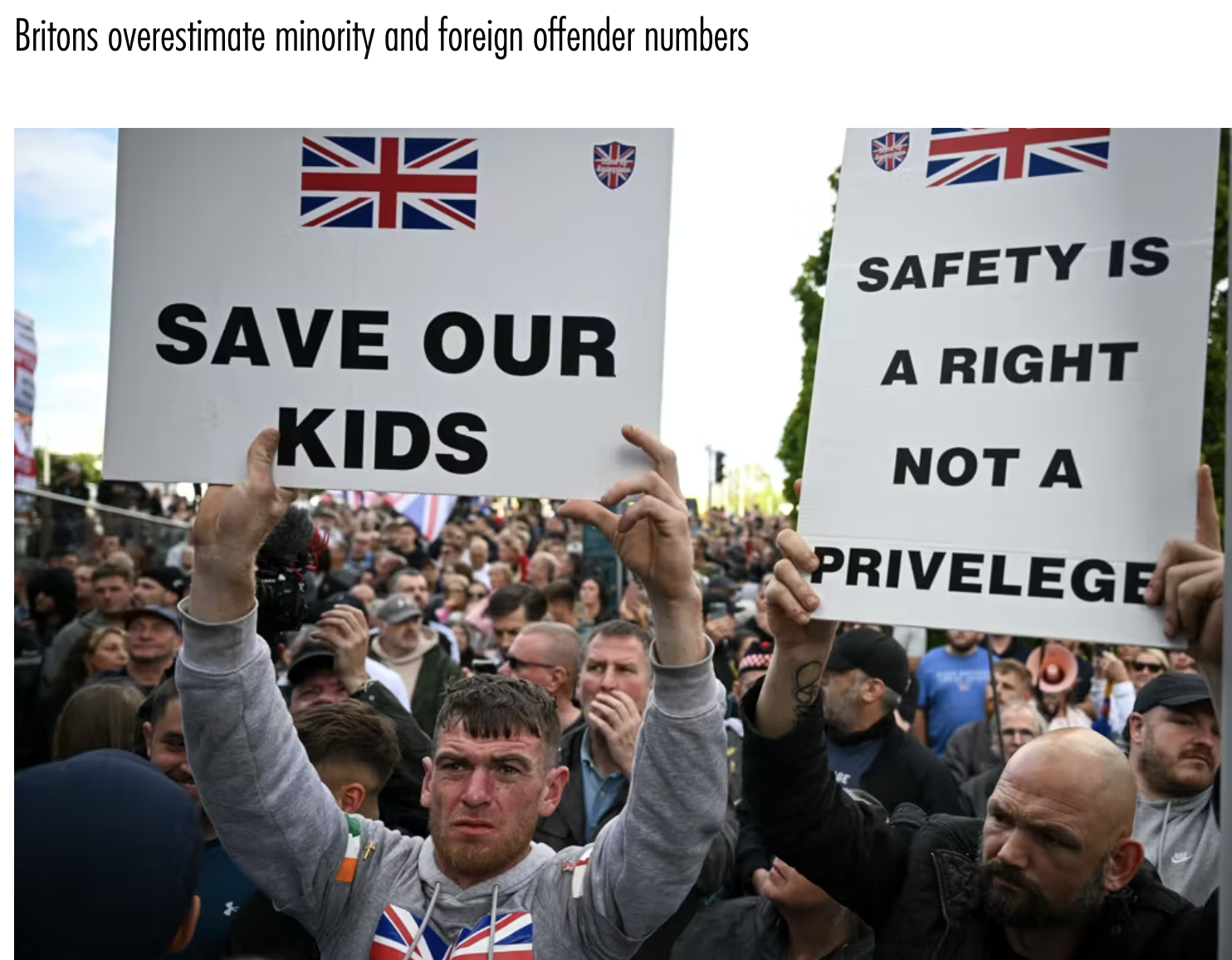
The study found something real. When the public was asked what share of sexual offence convictions involve foreign nationals, the typical answer was 30%. The official figure King's used is 15%. Asked what share of prisoners are foreign, the public said 25%. The real figure is 12%. On both questions the guess is double the truth.
The researchers offer this as proof the public is misinformed. They are right. It is the wrong ending to the story.
Because that 15% answers a question nobody is actually fighting about.
The row consuming British politics is not whether foreign nationals as one giant block commit more sexual offences than the rest of us. It is whether particular nationalities do.
And 15% cannot tell you. Fifteen per cent spread across a hundred and fifty nationalities and fifteen per cent carried by a handful describe two different countries, and the headline figure reads the same in both. The numbers that would show which country we live in are the numbers sitting in the Ministry of Justice under appeal.
Hold those two studies together.
- The Migration Observatory says foreign nationals overall get roughly their share of convictions, then admits it cannot properly measure the differences between nationalities.
- King's says the public thinks the overall problem is twice its recorded size.
Neither can tell you where the problem actually sits. And a public kept from the real numbers does not stop guessing. It guesses badly, and demagogues and apologists step into the gap with whichever number suits them.
THE STATISTICS DO NOT MEASURE MIGRANTS
There is a deeper problem with both studies, and the Migration Observatory admits it. Every number above counts one thing only: the passport a person holds today.
A man who came to Britain thirty years ago and took citizenship is recorded as British. His convictions sit in the British column.
A French executive who arrived six months ago sits in the foreign column. The records hold no country of birth, no immigration status and no length of residence, so an asylum seeker, a work migrant and a resident of thirty years all look identical in them. And they include people convicted here who never lived here at all, in the country for days when arrested.
Anyone claiming these figures prove migrants offend at the same rate as the British-born is claiming something the figures cannot show, and the Observatory's own briefing says so. The whole national argument is being conducted with a dataset that cannot see the thing being argued about.
Over 10,000 of you will read what I publish for free every day.
That matters to me. I want this investigation to reach far beyond the people who can afford to pay. But producing thirty parts across twenty-eight days takes time, research, interviews, documents and complete independence from the institutions I am investigating.
That independence is funded by paid subscribers. Only a handful of readers upgraded yesterday. That is not enough to sustain work on this scale.
I am not asking those who cannot afford it. Keep reading. Keep sharing. Help this reach the people who need to see it. But if you read this publication every day, value the work and can afford to support it, please stand with me.
21,294 AND RISING
While the conviction data sits in a tribunal, the government's other numbers keep moving.
A foreign national offender in the community is a foreign citizen convicted of a crime here, whom the law says should be deported, but who is instead living among us while the Home Office works out how, monitored through reporting conditions or tags. On 27 August the Home Office published the count. There were 21,294 of them at the end of June 2026. A year earlier there were 18,993, so the number is up 12% in a year, and it is up 6% just since the end of March. The Migration Observatory tracks the longer trend: 36% growth between the end of 2022 and March 2026, roughly 1,600 more people every year.
The Home Office offers an explanation for the recent jump. The Sentencing Act 2026 changed two things.
- More offenders now get suspended sentences, serving their punishment in the community instead of prison, and foreign offenders among them join this monitored group instead of the prison population.
- And the law now requires deportation for anyone given a suspended sentence of 12 months or more, which pulls more people into the count.
So part of the rise is the state widening its own definition of who gets counted. The direction is not in dispute.
The same release shows what the Home Office publishes when it chooses to. For the 8,507 foreign offenders who left immigration detention this year, it listed the most common nationalities, Albanian, Romanian and Polish, and the most common offences, with drugs accounting for a third. Since May it has published offence type and sentence length for every foreign offender it removes.
When the government wants to advertise how many foreign criminals it deports, nationality and offence data flows freely. When the request would test how many were convicted in the first place, the same kind of data becomes too expensive and too private to release.
TWENTY YEARS OF SCANDALS AND STILL NO USABLE NUMBERS
One more admission sits in the Migration Observatory's briefing, and for me it is the largest.
The briefing does not discuss group-based child sexual exploitation. The rape gangs. The Observatory's stated reason is that no usable figures exist on how many offences were committed, in what context, or on the citizenship or country of birth of the men who committed them.
After Rochdale, after Rotherham, Telford, Oldham and Huddersfield, after the criminal trials, the local reviews, the parliamentary debates and a national inquiry, the leading academic unit studying migration in this country records, in August 2026, that the subject cannot be analysed because the national data was never built.
The absence of usable data is not a finding that no pattern exists. It is a finding that the measurement was never done at national level. And that failure was not imposed by nature. It is information the British state declined to collect, link and publish. The uncertainty produced by that refusal is then offered back to the public as a reason to stop asking.
SECRECY SMEARS THE INNOCENT AND SHIELDS THE GUILTY
I am a second-generation immigrant. I know what happens to law-abiding communities when the state withholds the figures. Whole communities get tarred with the crimes of a minority, because "migrant" becomes the only category the public is permitted to see.
The Migration Observatory's data shows Indian, Pakistani, French and Chinese citizens receiving fewer convictions than their numbers would predict. Those communities are entitled to have that published in full. If Albanians are substantially overrepresented, that belongs in print with the same prominence. I am not protecting any narrative from the evidence, mine included.
The record is this. A lawful request was made in June 2025. The regulator ordered disclosure on 22 June 2026, finding the Ministry had never shown the cost excuse applied, and that privacy justified hiding figures below five, not withholding everything. The Ministry has previously extracted this very kind of data for the Migration Observatory. It appealed on 17 July anyway, with public money.
I believe the Ministry of Justice does not want these numbers published. The record supports one description of what is happening here. A public body refused a lawful request, offered two justifications, watched the regulator reject both, and is now spending public money to overturn the ruling rather than release figures of a kind it has extracted before.
This is a cover-up. Not just Jenrick's word. Mine also. Drop the appeal, Mr Norris. Publish the data. Then the Migration Observatory, King's, the Centre for Migration Control and the public can test every claim in this argument against the evidence.
I’m Raja Miah MBE. For eight years, I led a campaign that exposed how senior Labour politicians helped protect Pakistani rape gangs. The people of my town helped force the national inquiry.
You won’t see me on the BBC. You won’t read my work in the legacy press. That’s not an accident. I take this to a place from where there is no coming back. I document everything in my newsletter. It’s 100% free to read. If this work matters to you, if you believe it must continue, I need your backing.
My work is free. No paywalls. No gatekeeping. No exclusions. Because the truth shouldn’t belong only to those who can afford it. If you can afford to do so, supporting me costs as little as 75p a week (£30 a year).
If you can’t commit to a regular subscription, a one-off contribution genuinely helps keep this alive. You can support me using one of these links;
👉 http://BuyMeACoffee.com/recusantnine
👉 http://paypal.me/RecusantNine
We’re up against a machine, politicians, police, officials, and media, working together to shrink, sanitise, and bury the truth. This work survives because of you.
If you’ve ever shared my posts, learned something, or felt less alone reading them, stand with me. I need your help.
Raja Miah MBE