WHO DREW THE LINES ON BRITAIN'S RAPE GANG NETWORK MAP?
THE NETWORK MAP DESERVES SCRUTINY BEFORE IT DESERVES BELIEF
Anonymous researchers have built what The Times calls the most comprehensive dossier yet assembled on the rape gangs. It is to be released this week. This article sets out the questions that release has to answer.
The Network Map reported by The Times could prove to be important work. The Times says it is "to be released this week". I am genuinely looking forward to seeing it published in full.
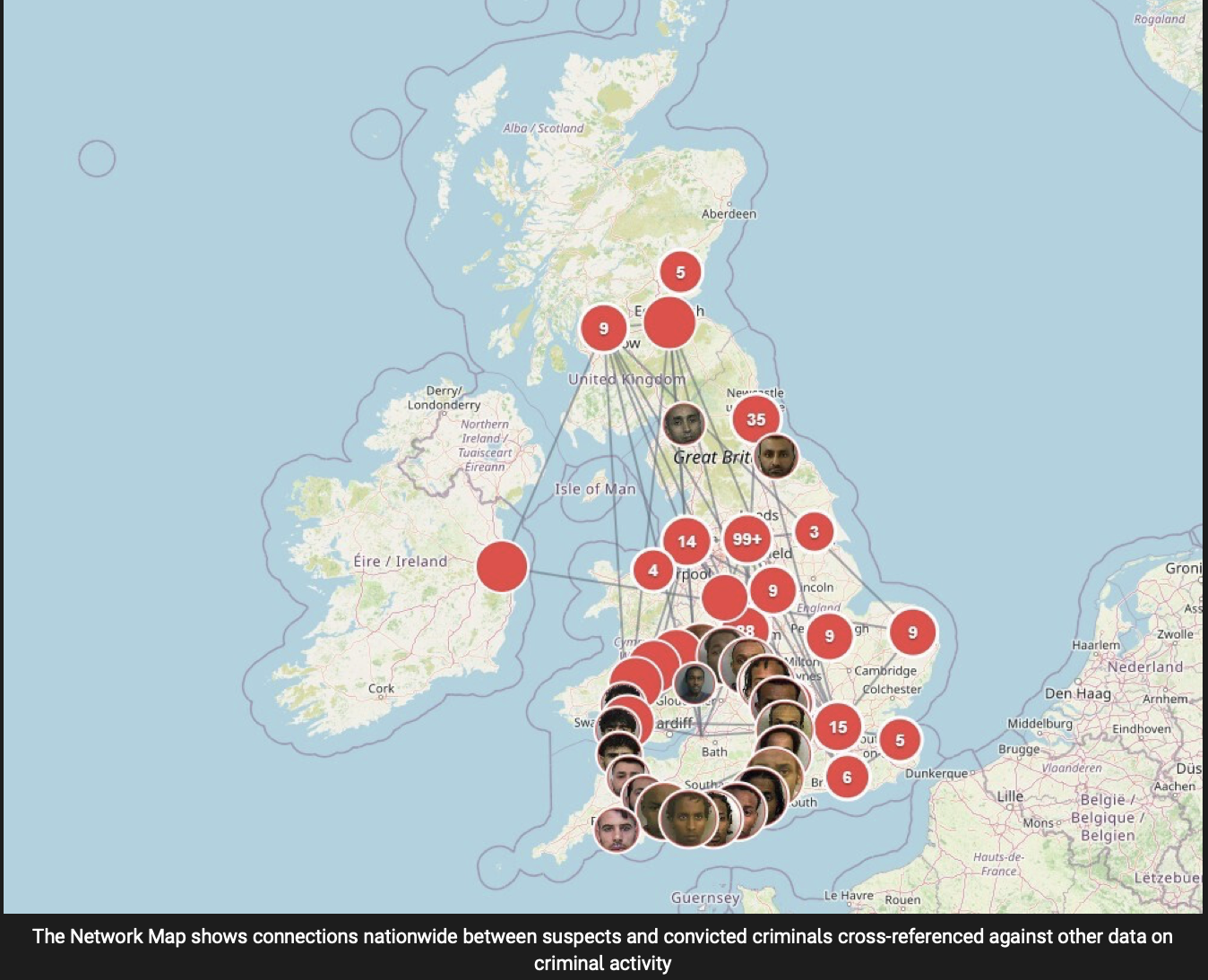
The claims being made for it are substantial. The Times says the project draws on police records, court records, local authority records and interviews with survivors, journalists and campaigners. It says the resulting Network Map contains more than 1,000 entries: perpetrators, gangs, families, establishments and what the researchers call "notable individuals", including councillors and police officers, who were connected to the men The Times describes as "groomers".
Where the courts convicted these men, they convicted them of rape and sexual offences against children. That is the language I will use.
More than 150 of those notable individuals are said to be involved in other crimes and connected to the perpetrators, many through direct relationships, a shared criminal enterprise, family or gang conflict. The research also claims to show in meticulous detail how victims were trafficked across the country and how the offending extended from Plymouth to Dundee. The project claims to be the single most comprehensive dossier yet produced on this scandal.
Those are serious claims. They deserve to be taken seriously. Serious claims also require serious scrutiny.
WHO BUILT THE MAP?
The researchers behind the Network Map have chosen to remain anonymous, telling The Times they fear repercussions for exposing criminality on such a wide scale. The fear may well be justified. The evidential problem remains. We are being asked to place considerable weight on what is presented as the most comprehensive national dossier yet assembled without knowing who produced it, what expertise they have, what they have produced before, who funded them, what assumptions they brought, what methodology they used, who checked the data, or what threshold of evidence had to be met before somebody appeared on the map.
Those questions are not hostile. They are exactly the questions I ask when evidence arrives from Government departments, official inquiries, universities, think tanks and campaign organisations. For years we have been told that certain claims should carry weight because they arrived carrying an academic title, a university logo or the endorsement of government. I did not accept it from them. The same standard applies here, and I cannot set it aside because a piece of research happens to reach conclusions that may support arguments I have been making. Evidence does not become reliable because we like the conclusion.
ANONYMOUS RESEARCH IS NOT AN ANONYMOUS SOURCE
We do know who wrote the article. Fiona Hamilton is one of The Times's most experienced crime journalists, and The Times has a particular history with this scandal. Andrew Norfolk's reporting exposed what was happening in places like Rotherham when large parts of the political and institutional establishment had failed to confront it. That gives me every reason to pay attention. It does not remove the need for scrutiny.
Because the researchers are anonymous, Hamilton and The Times are all the public has to go on. Has The Times examined the complete map, its methodology and its source material, or been shown selected examples? Does the newspaper know who the researchers are and who funded them? Has anybody independent of the researchers audited the dataset? None of that alleges any failing by Hamilton or The Times. They are the questions any reader of an article built on anonymous research is entitled to ask.
There is an important distinction between protecting an anonymous source and publishing anonymous research.
A confidential source may direct a journalist towards documents, court records or evidence which can ultimately be independently verified. A national database containing more than a thousand entries, drawing connections between rapists, organised criminals, families, establishments, councillors and police officers, is different. The decisions made by the researchers become part of the evidence. Who appears on the map, who does not, which relationships are considered significant, how they are categorised and which lines are drawn between people are all decisions.
Over 10,000 of you will read what I publish for free every day.
That matters to me. I want this investigation to reach far beyond the people who can afford to pay. But producing thirty parts across twenty-eight days takes time, research, interviews, documents and complete independence from the institutions I am investigating.
That independence is funded by paid subscribers. Only a handful of readers upgraded yesterday. That is not enough to sustain work on this scale.
I am not asking those who cannot afford it. Keep reading. Keep sharing. Help this reach the people who need to see it. But if you read this publication every day, value the work and can afford to support it, please upgrade now.
WHAT DOES CONNECTED ACTUALLY MEAN
Perhaps the most important word in the entire Times article is "connected". What does it actually mean?
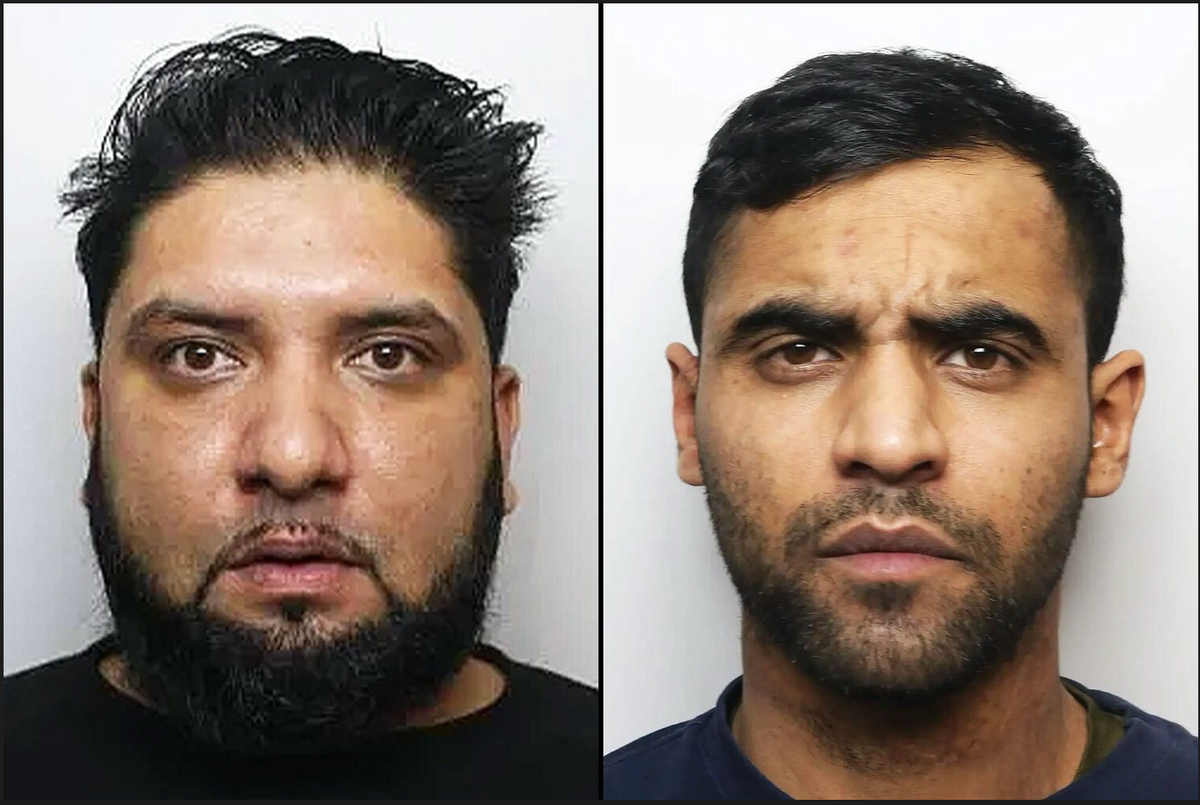
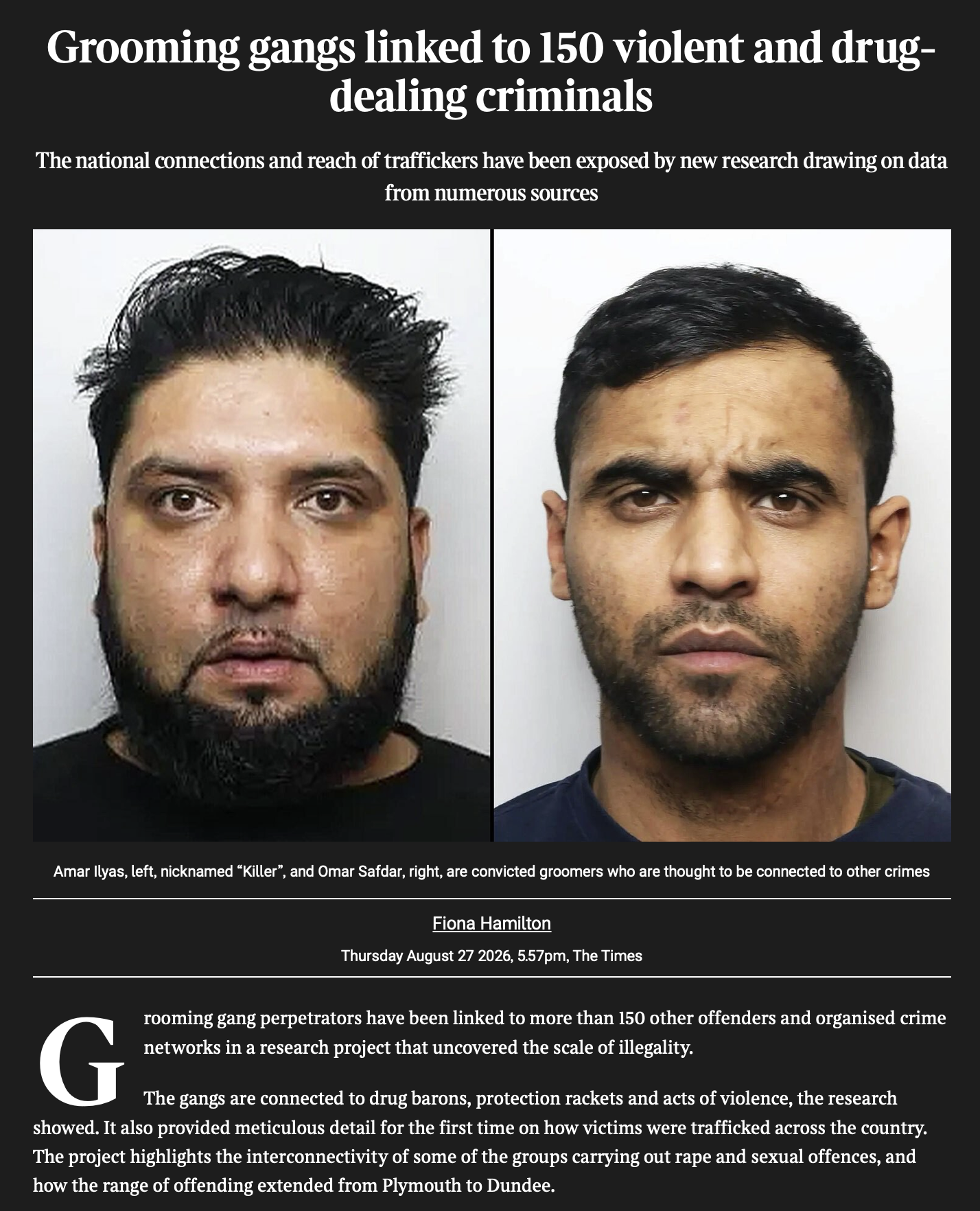
The Times tells us that Amar Ilyas, a recently convicted offender from Sheffield who used a gun and threats of gang rape to coerce girls, was previously stabbed in the head by an organised criminal connected to drug trafficking. The stabbing undoubtedly establishes some form of relationship. What kind? Were the men associates or rivals? Was there a debt, a feud, a territorial dispute? Being stabbed by a drug trafficker does not automatically establish that you operated together. Without knowing what the line represents, it tells us very little.
Omar Safdar, jailed in 2022 for rape as part of an eight-man gang based in Keighley, was connected to protection rackets and had been convicted in 2011 for drugs offences. That is a different category entirely. There is direct evidence of his own involvement in other criminality.
Then there is Parvaze Ahmed, jailed in 2019 for sexual offences. The Times tells us that a drugs baron in Bradford is related to him. That is potentially significant, but being related to a criminal does not make somebody part of that criminal's enterprise.
These are three different kinds of line being presented here:
- violent conflict,
- direct personal criminality
- and family.
A map that draws them identically does not tell us which is which.
THE BROTHERS THE ARTICLE DOES NOT MENTION
There is already public evidence concerning the very names The Times has chosen which appears more directly relevant than the connections highlighted in the article.
Parvaze Ahmed himself had previous convictions connected to drug dealing and money laundering. That appears significantly more direct than telling us one of his relatives was a drugs baron. Why was one connection highlighted and not the other?
The same applies to Amar Ilyas. The Times illustrates his wider criminal network through the man who stabbed him. Sitting immediately around Ilyas in the record of the National Crime Agency's own investigation are his two younger brothers. Kamar Ilyas began phoning one girl in 2004, when she was 12 and he was 17 or 18. He groomed her, sexually abused her and raped her, then introduced her to Amar, who raped her weekly for the next three years. During those same years she was also sexually abused by the third brother, Kamran. In March this year Kamar and Kamran were convicted of five sexual offences against her. A second girl, aged 16, was driven by Kamran to a park where Amar was waiting in a car. She was told to get in. Amar bit her face and raped her.
Here we do not need to speculate about what a line means. One brother groomed a child and handed her to another. Three brothers abused the same girl. That is not two criminals who happened to know each other. That is a family.
Why does The Times direct us towards the man who stabbed Amar Ilyas while not telling readers that his own brothers were convicted over the sexual exploitation of the same child?
Perhaps the map itself contains the brothers, but the article in front of us does not say.
THE TEST ARRIVES THIS WEEK
The record is this. The Times has reported a Network Map containing more than 1,000 entries. The researchers are anonymous. The article identifies no independent audit of the dataset. It offers selected examples of connections without enough information to understand how those relationships were classified. And in at least two of those examples, the public record contains highly relevant relationships that the newspaper does not mention. The Times says the map is to be released this week. It does not say by whom, where, in what form, or how much of it.
That last point is the test of the entire project. A release can mean the full dataset, the methodology, the categories and the evidential thresholds, placed where any journalist, researcher or survivor can examine them. Or it can mean a curated report and a set of selected extracts handed to newspapers. The first would be publishing research. The second would be publicising it. Within days we will know which one this is.
I am not dismissing this work. I want it to be good. I want it to withstand scrutiny. I want these researchers to have found relationships that official investigations failed to identify.
When it arrives, the question I will be asking is not who knew whom. It is what connected them. More on that in Part 2 published tomorrow.
I’m Raja Miah MBE. For eight years, I led a campaign that exposed how senior Labour politicians helped protect Pakistani rape gangs. The people of my town helped force the national inquiry.
You won’t see me on the BBC. You won’t read my work in the legacy press. That’s not an accident. I take this to a place from where there is no coming back. I document everything in my newsletter. It’s 100% free to read. If this work matters to you, if you believe it must continue, I need your backing.
My work is free. No paywalls. No gatekeeping. No exclusions. Because the truth shouldn’t belong only to those who can afford it. If you can afford to do so, supporting me costs as little as 75p a week (£30 a year).
If you can’t commit to a regular subscription, a one-off contribution genuinely helps keep this alive. You can support me using one of these links;
👉 http://BuyMeACoffee.com/recusantnine
👉 http://paypal.me/RecusantNine
We’re up against a machine, politicians, police, officials, and media, working together to shrink, sanitise, and bury the truth. This work survives because of you.
If you’ve ever shared my posts, learned something, or felt less alone reading them, stand with me. I need your help.
Raja 🙏