THEY RAPED THE GIRLS. THE COMMUNITY PROTECTED THE MEN.
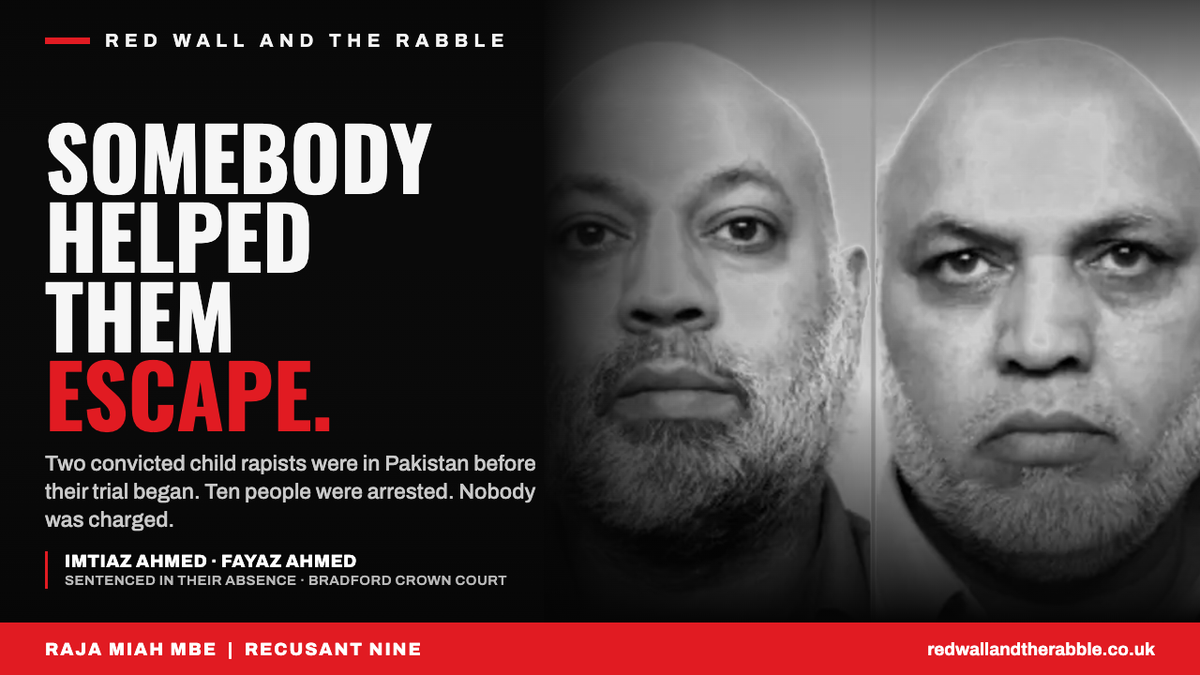
Two convicted child rapists fled to Pakistan before their trial ever began. Ten suspected helpers were arrested and nobody was charged. Now the national inquiry must investigate the networks of fear, kinship and contempt that surrounded both the abuse and the escape.
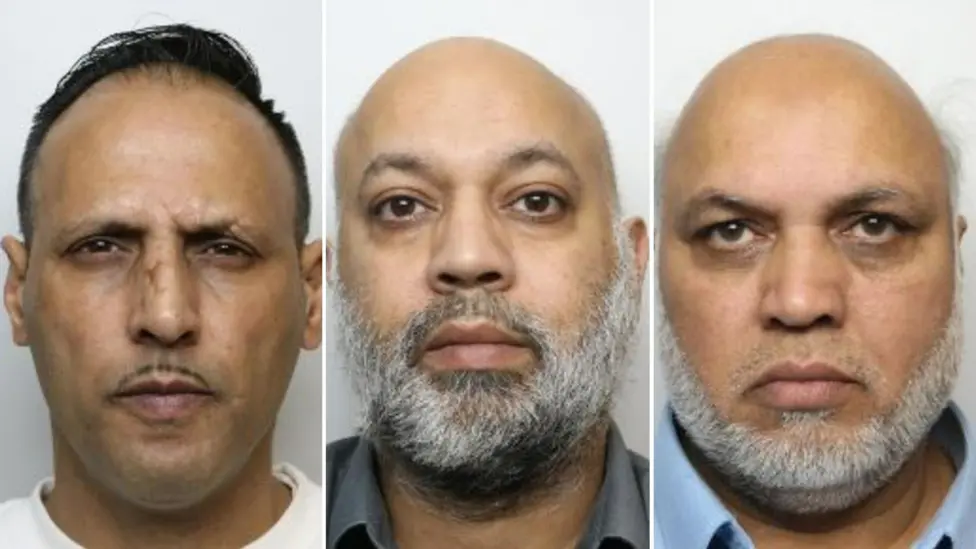
In January 2025, brothers Imtiaz Ahmed, 62, and Fayaz Ahmed, 45, were convicted at Bradford Crown Court alongside Ibrar Hussain for the sexual exploitation of a vulnerable 13-year-old girl in Keighley.
The abuse began in the late 1990s, and it was not confined to three men. Eight men in all were convicted, across two trials, of the sexual exploitation of her and one other teenage girl. She was given money, drugs and alcohol in return for sex, and raped in properties across the area, including a flat above a family-run grocery store and homes connected to members of the gang.
TWO RAPISTS VANISHED
But the Ahmed brothers were not in the dock to hear the verdicts. They were not even in the country. They had fled to Pakistan as long ago as 2023, while proceedings against them were live. They never stood trial at all. They were convicted in their absence, sentenced in their absence, and they remain free today.
Two men facing trial for raping a child were moved out of Britain cleanly enough that they have never been found. Men do not achieve that alone. They need money, transport, shelter, information, and people willing to provide all of it while criminal proceedings hang over them. Somebody bought the tickets. Somebody arranged the journey. Somebody helped two child rapists escape British justice before it could even begin.
TEN ARRESTS. NO ANSWERS.
West Yorkshire Police understood this well enough to arrest ten people across Keighley, Shipley and Nelson on suspicion of assisting an offender. Seven men and three women, aged between 24 and 76, detained in two waves in the weeks after the sentencing. A year and a half later, the public record shows no charges. Nobody has been named. Nobody has appeared before a court. Ten people detained, then silence. This does not suggest an investigation. It suggests a press release.
 Matt Soanes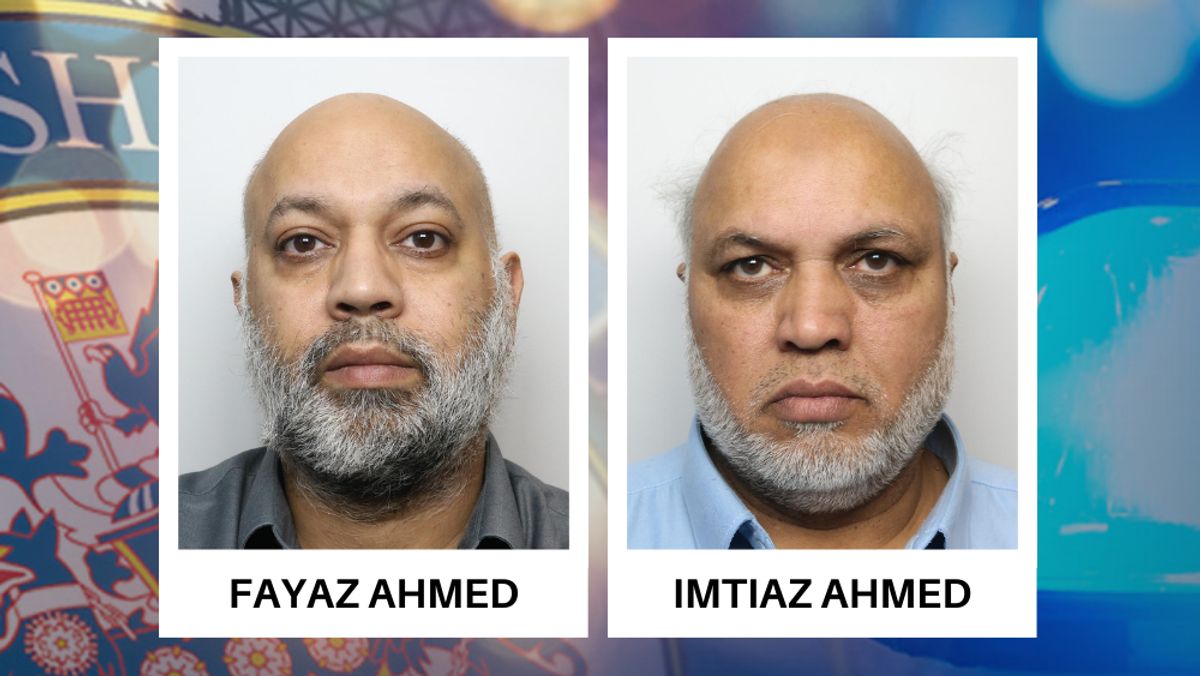
But the arrests are the smaller question. The bigger question is who knew about the abuse itself. A child cannot be drugged, moved between properties and repeatedly raped over several years without people seeing, hearing or suspecting something. Some of this abuse took place in a flat above a working grocery store, with people passing through, customers coming and going, and neighbours living alongside it. This did not happen in a vacuum. It happened in the middle of a community. And on the question of whether communities know, we do not have to guess. The courts have already answered it.
Over the last month we have secured over 800 paid supporters.
With the ongoing legacy media blacklist of my work, this is an incredible achievement for us. Thank you.
Every new supporter strengthens this campaign, increases our voice and makes it harder for those in power to ignore the evidence.
If you believe the truth should be followed wherever it leads, please stand with us. Subscribe to my newsletter Red Wall And The Rabble.
"EVERYBODY KNEW"
In October 2025, across the Pennines in Rochdale, Judge Jonathan Seely sentenced seven men for the abuse of two girls who were thirteen when it began. The judge told the court that the girls had been targeted by gangs of sexually predatory men and had been "sexually abused by numerous other men."
Those other men have never been brought to justice. They are still out there. And the court heard exactly how numerous they were. One of the girls gave evidence that she may have been preyed on by more than two hundred offenders as her mobile number was passed around the town. In her words, "there was that many it was hard to keep count."
That detail deserves more attention than it received. A child's phone number was handed from man to man across a town. Market traders, taxi drivers, friends of friends. Every handover was a conversation in which one man told another that a thirteen-year-old girl was available. Hundreds of introductions, calls and conversations, on her own evidence, each one requiring knowledge, each one an act of participation. You cannot pass a child between hundreds of men in secret.
The prosecutor in that case, Rossano Scamardella KC, told the court that the girl was not without people to turn to. She reported what was happening to her. His words to the court were plain. "People knew, authorities knew. And nothing was done." The other survivor put it plainest of all. "It all just seemed to me everybody knew."
Even in Keighley the bench said as much. Sentencing the men, Judge Ahmed Nadim criticised the police and social services for failing to protect the victims, describing their response as "ill-equipped" or "disinterested." The authorities in the town where this girl was passed between men were, by the judge's own account, not equipped to protect her or not interested in doing so.
THE ABUSE WAS NOT HIDDEN. IT WAS HELD.
None of this was new. A judge had said it fourteen years before Seely did. In May 2012, sentencing the first Rochdale gang, Judge Gerald Clifton told the convicted men why they had treated their victims as worthless. The girls were "not part of your community or religion." That was the dividing line. Girls inside it were protected. Girls outside it were prey. The same week, Trevor Phillips, then chair of the Equalities and Human Rights Commission, said what everyone understood, that inside those closed communities were "people who knew what was going on and didn't say anything."
A judge said it in 2012. Judges, a King's Counsel and two survivors said it in 2025. Keighley sits in between, in geography and in years. Different courtrooms delivered the same finding. The offending was not hidden. It was held. Held inside networks of relatives, workmates, taxi ranks, market stalls and shop counters. Held by the men who passed the number on and the men who took the call. Held inside premises, families and neighbourhoods where a drugged child was repeatedly brought into the orbit of older men and nobody stopped it.
And in Keighley the holding did not end with the abuse. The network did not wait for verdicts. The brothers were out of the country before their trial, and when the convictions finally came, ten arrests produced nothing.
The critical question, the one the arrests posed and the silence has never answered, is whether the network surrounding the abuse was the network that ran the escape. Whether the same structure of loyalty, fear and silence that protected these men for more than twenty years also raised the money, arranged the journey and closed ranks when the police came asking.
This is the question now sitting in front of Baroness Longfield. A criminal trial answers one narrow question. Did these named men commit these specific offences. It cannot reach the hundreds of men through whose phones, vehicles, businesses and social circles a child was passed. It cannot reach the people who supplied the flats, the drugs, the transport and the silence. It cannot reach whoever raised the money, booked the journey and concealed the destination while two men awaiting trial slipped out of the country. Only a statutory inquiry can. Longfield has the powers to compel witnesses, demand documents and put the uncharged men, the facilitators and the silent watchers under oath.
The judges have done their part. The prosecutors have done theirs. The survivors have done more than anyone should ever be asked to do. The inquiry must not stop with the rapists. It must name the people who made their crimes possible. The ones who knew, the ones who watched, and the ones who helped them run.
And then it must answer the question underneath all of it. Why did the community remain silent?
My name is Raja Miah. I led the campaign that helped force the National Inquiry.
No political party funds my work. No institution stands behind it. And no mainstream media channel dare interview me despite Queen Elizabeth II putting a medal on my chest.
What I do exists because ordinary people choose to stand alongside me. I publish all of my work for free through my newsletter Red Wall and the Rabble.
Despite the ongoing legacy media blacklist of my voice, just under 75,000 people read my newsletter in July.
FEAR. BLOOD. CONTEMPT.
Three answers demand investigation.
Perhaps the silence was fear. These were not respectable men. They were drug dealers and predators who supplied drugs and alcohol to a child in exchange for her abuse, and everyone who knew what they were doing to her knew exactly what kind of men they were. Ordinary families living alongside them may have concluded that speaking out would cost more than they could afford to pay. If that is the answer, then the inquiry must examine how criminal networks were allowed to frighten their own neighbourhoods into silence for decades while the police looked elsewhere.
Perhaps the silence was blood. Biraderi. Kinship networks capable of enforcing obligation across families, businesses, towns and continents, the same networks that deliver votes in blocks at election time. Where those loyalties were corrupted, protecting the family name came before protecting a child and before any duty to the law. If that is the answer, then the inquiry must examine how a parallel system of loyalty operated inside British towns, and whether it protected rapists, moved money and spirited men awaiting trial to Pakistan.
Or perhaps the silence was contempt. Perhaps the community watched and said nothing because it held the same view of these girls that the rapists did. Judge Clifton identified the dividing line from the bench in 2012. The victims were not part of the community or the religion, and so they were worthless and beyond respect.
If men could rape White working-class children for years while the neighbourhood watched, because those children were not their children, then the silence was not fear and it was not loyalty. It was racism.
Racism of the oldest and plainest kind, directed at little White girls whose lives were held too cheap to be worth a phone call.
Fear, blood or contempt. Longfield's inquiry has the powers to establish which. Compel the witnesses. Put the watchers under oath. Ask them, one by one, why they said nothing.
THE QUESTION LONGFIELD CANNOT AVOID
But that last answer is the one British officialdom cannot afford to hear. An entire political and media class has spent over 30 years policing the language of this scandal, hunting for racism in everyone who exposed it while never once looking for racism in the communities that hosted it. The word has been a weapon pointed permanently outward. Turn it around, and decades of denial collapses.
So that is the true test of this inquiry. Will Longfield investigate the racism British officialdom has spent twenty years pretending could not exist? Dare she pass judgement on who Britain's real racists are?
If the inquiry refuses even to ask, it will not expose the cover-up. It will become part of it.
For eight years I have exposed how politicians, police and public bodies failed working class White girls who were systematically raped by Pakistani grooming gangs. Together, with the support of the people of Oldham, we forced the Government to concede a National Statutory Inquiry after years of resistance.
Now the harder fight begins.
Andy Burnham is no longer the Mayor of Greater Manchester. He is the Prime Minister. That does not place him beyond scrutiny. If anything, it makes scrutiny more important than ever.
As Mayor, Burnham commissioned a series of Assurance Reviews across Greater Manchester, including one in my hometown of Oldham. They were presented as a search for the truth. They were nothing of the sort. They were cover ups of cover ups that allowed those responsible to escape proper accountability.
Don't take my word for it. Even former Greater Manchester Police detective Maggie Oliver has described what happened in Oldham as 'nothing short of a cover up'.
Despite every effort to stop us, we forced a National Inquiry. Now Burnham and others are attempting to rewrite the history of what happened under their watch.
At present, the inquiry has made no commitment to examine Burnham's own role or the decisions taken during his time as Mayor. That must change before the Oldham investigations begin.
The pressure to protect a serving Prime Minister will be immense. The institutions that failed these girls will have every incentive to avoid putting the country's most powerful politician under oath. Much of the media will once again find reasons to look the other way.
That is why this campaign cannot slow down now.
For too long this has been a one man operation. It needs to become something much bigger. We need the resources to build a genuinely independent investigative organisation with:
- A professional website capable of reaching far larger audiences.
- Video production that takes our investigations to millions more people.
- Research support so no lead is left unexplored.
- Live events to educate, organise and train others.
- The resources to investigate, travel and expose institutional failure wherever it is found.
Over the last six weeks we have secured over 800 paid supporters towards our target of 2,000. That is an incredible achievement. Every new supporter strengthens this campaign, increases our voice and makes it harder for those in power to ignore the evidence.
If you believe the truth should be followed wherever it leads, please stand with us.
If you cannot afford the £3 a month or £30 for the full year, just sign up for free. There are no paywalls to access any of my work. I publish everything for free.
If you can’t commit to a regular subscription, a one-off contribution genuinely helps keep this alive. You can support me using one of these links;
👉 http://BuyMeACoffee.com/recusantnine
👉 http://paypal.me/RecusantNine
Should we succeed, politicians will go to prison. Even if there is only the smallest chance of this happening, isn't it worth your support?
Raja Miah MBE