The Most Dishonest Moment Is Not the Lie
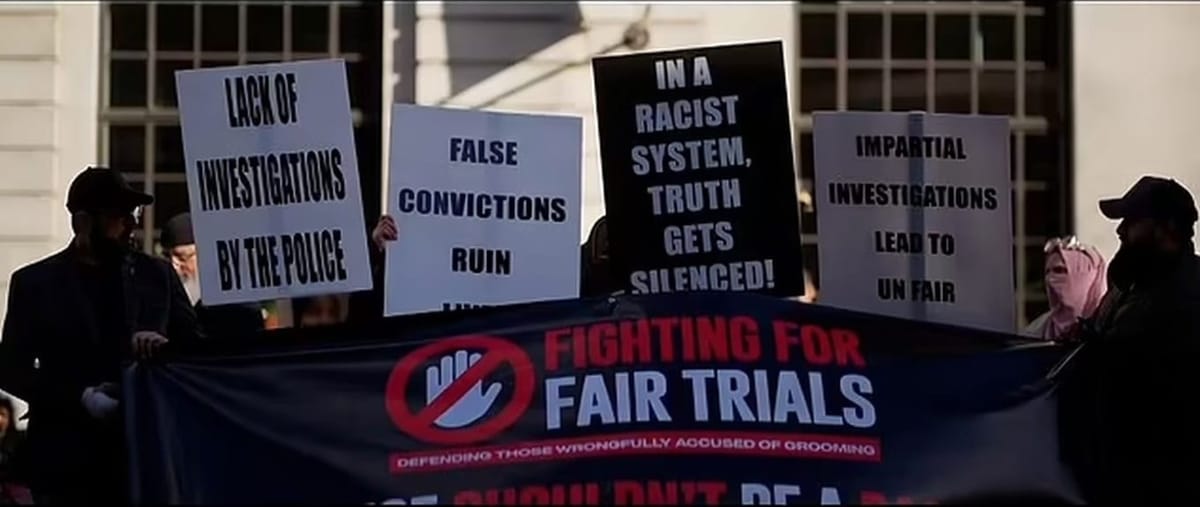
The Oldham Rape Gang Rewrite
The most dangerous moment in any scandal is not when the lie is told. It's when the truth gets rewritten.
Outright lies can be exposed. Documents can contradict them. Witnesses can refute them. But when truth gets rewritten, the facts remain intact while responsibility dissolves. Abuse gets acknowledged while the decisions that enabled it disappear. Victims get heard while the officials who silenced them remain invisible.The story gets told in a way where power survives and politicians are protected.
This is what's happening with the rape gang cover up right now.
 Geraldine McKelvie
Geraldine McKelvie's Guardian piece on Oldham rape gangs does not deny that children were systematically abused, ignored and criminalised by the institutions meant to protect them. She shapes how those facts are allowed to be understood. Institutional failure becomes tragic learning. Cover-up becomes tragedy. Deliberate choices disappear into process.
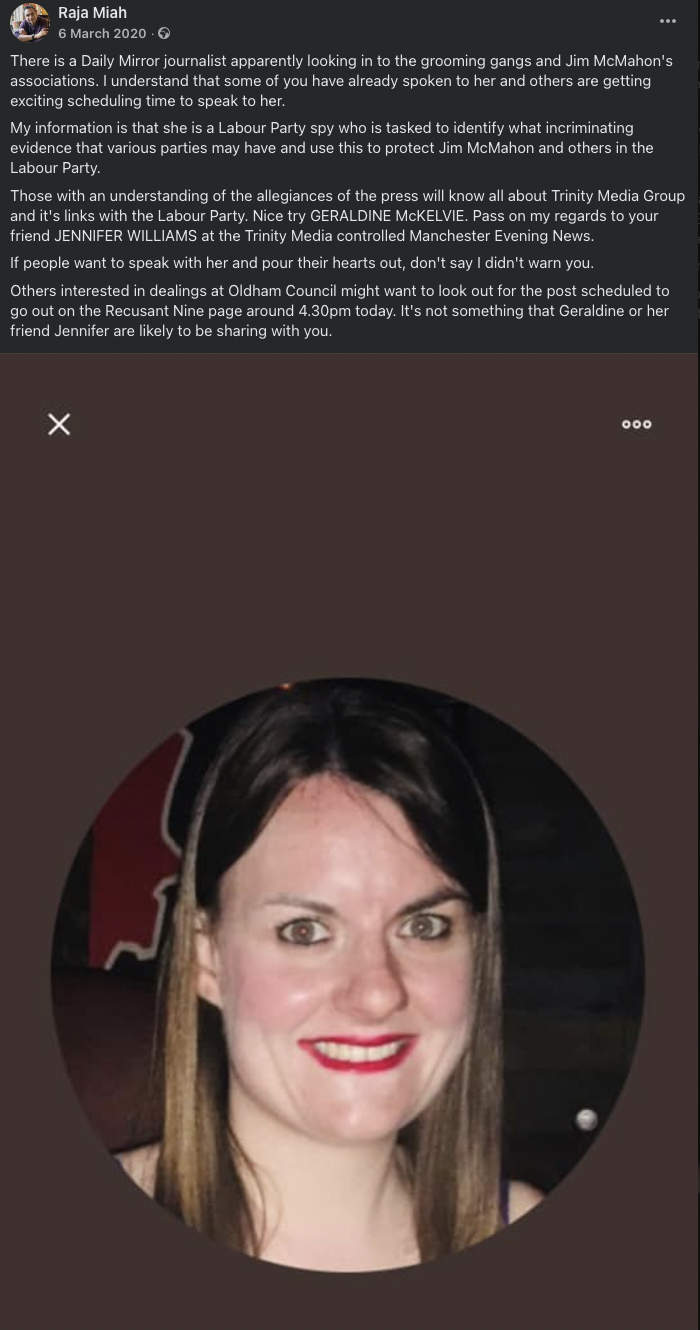
I warned people about Geraldine McKelvie five years ago.
McKelvie begins her story in 2003 when "social workers in Oldham noticed a disturbing pattern." Girls going missing from care homes, found "in the same locations, being harboured by the same men." By 2006, Ruth Baldwin from Oldham council was warning about "groups of offenders" targeting school children.
Notice what this framing does. It starts the story when institutions finally acknowledge there's a problem, not at the years when warnings were dismissed and evidence buried. The period of resistance gets erased. The decisions that enabled abuse to continue get replaced with a narrative of gradual institutional learning.
McKelvie describes Operation Messenger as "groundbreaking," noting it "won a Greater Manchester police award for partnership working" and was "seen as being ahead of its time." Only later does she mention the 2022 review found it failed the children it claimed to protect.
What she doesn't ask is why obvious, repeated harm didn't trigger decisive intervention. The award winning Operation Messenger ran for eight years while children continued to be raped. Why weren't those running it removed when the scale of ongoing abuse became clear? To ask that would mean examining Oldham Council as a governing body that managed risk and reputation rather than an abstract system learning slowly.
McKelvie won't go there.
The article acknowledges that police feared "community tension" and "fuelling the far right." She quotes a 2011 Greater Manchester Police memo warning about media interest and demonstrations by the BNP and English Defence League.
These documents did not write themselves. They were authored, received, and acted upon by identifiable people in positions of authority.
But look what's missing. Those fears were discussed by specific people in specific meetings who made concrete decisions based on them. The memo warns about "further cases" bringing "wider media interest" - meaning they knew there were more victims but were managing disclosure. McKelvie tells us about institutional anxiety but not who felt it, who acted on it, or how it translated into decisions not to arrest, not to prosecute, not to investigate.
Fear gets acknowledged. The people who acted on it remain invisible.
McKelvie spends considerable space on victim testimony - Samantha Walker-Roberts kidnapped from a police station at 12, trafficked around town, described as "attention-seeking" when she disclosed abuse. These accounts are necessary and harrowing. They're also convenient.
Victim stories make articles emotionally compelling while substituting emotional gravity for institutional accountability. We learn Walker-Roberts was dismissed as attention-seeking but not who wrote that assessment or why they faced no consequences. Personal testimony becomes a substitute for examining the choices made by those in authority.
McKelvie treats Andy Burnham's 2022 safeguarding review as establishing facts about what went wrong. What she doesn't mention is that this review didn't interview a single survivor - not even survivors whose experiences were used as case studies in the final report.
The authors, the child protection specialist Malcolm Newsam and the former senior police officer Gary Ridgway, found there was no evidence to suggest Oldham council sought to cover up child sexual exploitation or shy away from the issue of abuse of vulnerable white girls predominantly by men of Pakistani heritage.
The truth is, Burnham's independent review resulted in institutions assessed themselves. Survivors were reduced to text. Those used in case studies were never provided the opportunity to speak. And if it had been left to Burnham and his Labour Party pals, a line would have been drawn and we would be recorded as conspiracy theorists.
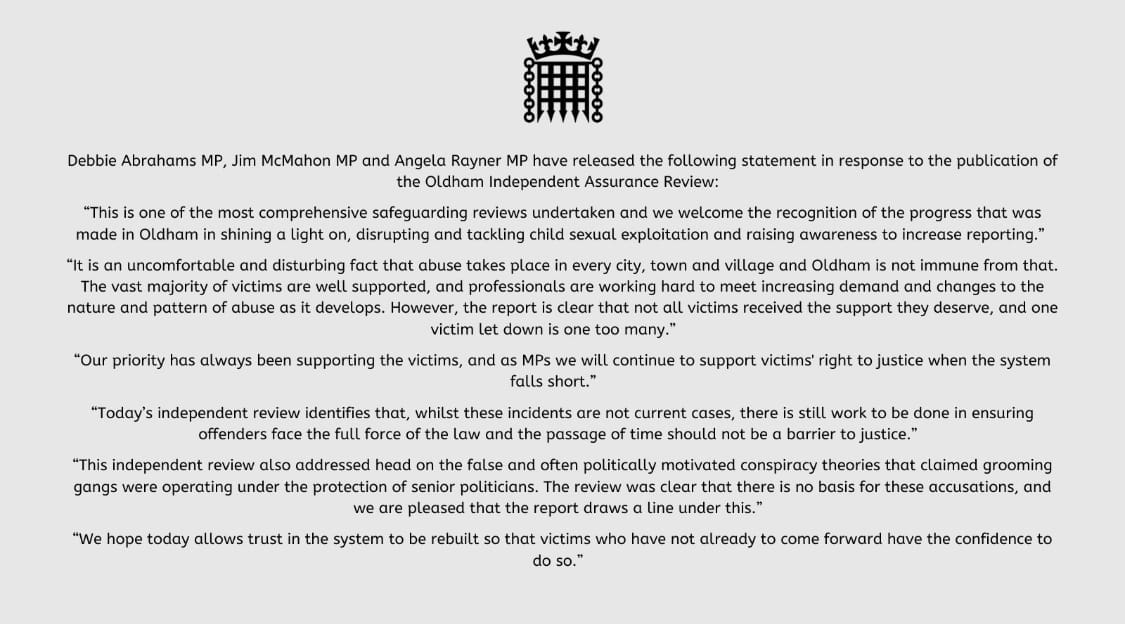
The structure of the review ensured these limits. Whether by intent or consequence, the effect was accountability theatre rather than investigation. To examine this honestly would mean questioning Burnham's role in commissioning accountability theatre.
No sponsors. No parties. No institutions to lean on. Just numbers. Growing fast enough that shutting this down becomes impossible.We don't need everyone. We need 1,000. We need them this January. We need you.
On 6 March 2020, I posted a warning about media coverage of the Oldham scandal. A Daily Mirror journalist was apparently looking into grooming gangs and Jim McMahon's associations. Based on Trinity Media Group's Labour connections, I warned that any coverage would likely protect rather than expose institutional figures.
I specifically flagged Geraldine McKelvie and told people considering cooperating with her investigation: "If people want to speak with her and pour their hearts out, don't say I didn't warn you."
The warning anticipated that abuse would eventually be acknowledged but resistance would be erased, decisions would dissolve into process, and accountability would stop short of power.
The journalist was Geraldine McKelvie. Some might describe her and the Guardian as controlled opposition. Personally, I believe McKelvie and her paymaster's motives are worse.
 Gaby Hinsliff
Read again her Guardian coverage against a warning I published 5 years ago. Children's suffering gets documented in heartbreaking detail. No one with power gets named or held responsible. The period of active resistance to exposure disappears.
The article doesn't lie. It shapes how those facts are allowed to be understood. Truth gets told in a way that the people who enabled it can survive.
- Would you have stopped to see it this way?
- Would you have noticed how McKelvie's sequencing erases resistance, how her framing protects institutional continuity, how victim testimony substitutes for official accountability?
- Without the forensic detail I've shared here, would you have recognised the careful boundaries she draws?
When you can predict exactly how truth will be rewritten years before it happens, you know you're not watching investigation. You're watching damage control. If you needed reminding why I am blacklisted by the legacy media, and how those in power despise my growing reach, this is another reason why. Not because I make things up. It is because I know the game they play.
Politicians did not wake up one day and decide to do the right thing. We are not where we are because of them. We will not get where we need to be if we leave it to the very same people that were part of the cover up to deliver justice. Stand with me.
I'm Raja Miah. For seven years, I led a small team that exposed how politicians protected the rape gangs. Before that, I spent over a decade safeguarding children and protecting communities from extremists.
My work is free because the truth must circulate. But truth without numbers is easy to crush. The government does not fear facts. It fears scale.
I need 1,000 new subscribers this January. Not next month. Not when it's convenient. This January.
Starmer and the Labour Party fear thousands reading, sharing, and backing the same work because numbers mean witnesses, pressure, and consequences. That's why I am blacklisted by the legacy media. That's why this matters. That's why we need these 1,000 before February.
Every subscriber is a number they can't erase. Every reader widens the circle they can't control. One thousand more voices means one thousand more people they cannot silence when the next cover-up attempt comes.
🔴 Subscribe to the newsletter. It's free:
If you can afford it, please support for 75p a week (£3/month or £30/year). Not for perks. Not for access. But because numbers with backing become power. A few supporters can be ignored. One thousand cannot.
This is how this campaign survives. This is how we see this through. This is how voices like ours stops being managed and starts being feared.
Prefer a one-off contribution?
👉 http://BuyMeACoffee.com/recusantnine
👉 http://paypal.me/RecusantNine
No sponsors. No parties. No institutions to lean on. Just numbers. Growing fast enough that shutting this down becomes impossible.
We don't need everyone. We need 1,000. We need them this January. We need you.
Raja 🙏