The BBC Funded Election Propaganda for a Cop Killer's Getaway Driver
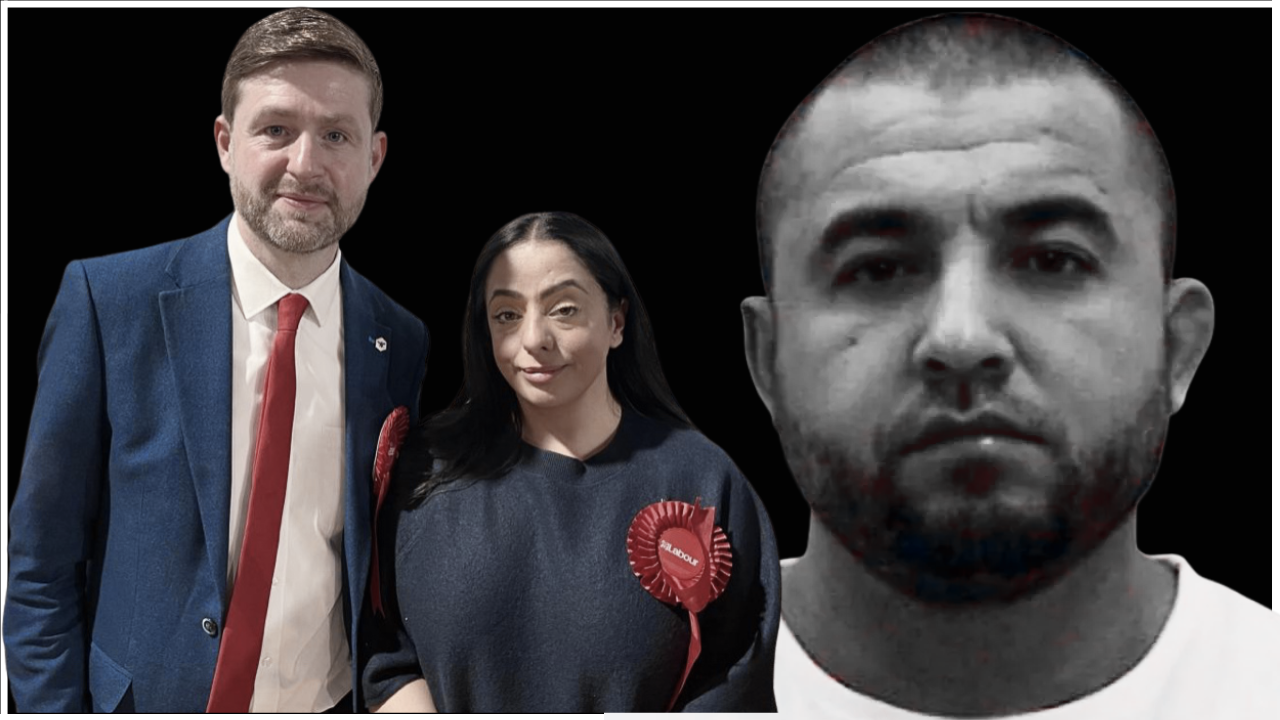
When a tax payer funded scheme rewrites history to promote a convicted criminal's past, democratic accountability doesn’t fail, it is dismantled.
On 10 January 2026, a Local Democracy Reporting Service (LDRS) article ran in the Manchester Evening News profiling a declared local election candidate in Oldham. It was published during an active election campaign, written through a publicly funded journalism scheme overseen by the BBC and bound by guidelines that explicitly demand editorial independence and democratic scrutiny. Instead of scrutinising power, it rewrote the record.
I am not alleging bias or disputing tone. I am comparing what the Manchester Evening News has already placed on the public record with what it chose to present this time. The facts did not change, but the framing did.
What the LDRS Is Mandated to Do and What It Did Instead
The Local Democracy Reporting Service scrutinises councils, public bodies, and those seeking public office. It strengthens accountability where local journalism lacks resources, not to act as a reputational buffer for candidates mid-campaign. Publicly funded journalism does not exist to recycle rejected courtroom defences as personal testimony, downgrade established facts already on the record, or quietly rehabilitate a candidate's history while voters are deciding.
When an LDRS article does those things, it does not merely fail in its remit but inverts it. It transforms public accountability infrastructure into private reputation management, with the public funding this deception.
The Record the MEN Already Holds
This matters because the Manchester Evening News knows these facts. It has reported them clearly, repeatedly, and in detail over many years. MEN has reported that Mohammed Imran Ali:
- Pleaded not guilty and was convicted by a jury in June 2013, in the same proceedings that convicted Dale Cregan
- Advanced a claim of ignorance about Cregan's crimes and that the jury rejected that claim
- Admitted driving Cregan to a safe house in Leeds immediately after the murder of David Short without ever holding a driving licence
- Enabled Cregan to evade a major police manhunt, after which Cregan murdered PCs Nicola Hughes and Fiona Bone
- Stood beside Cregan in the dock throughout the trial
- Had served jail sentences totalling 16 years, starting with assault at age 15
- Received multiple significant sentences for trafficking drugs including heroin and cocaine
- Was convicted of assault after hitting a 59-year-old man with a two-foot plank outside a pub
- Was recalled to prison in 2018 for breaching licence conditions
- Was found with prohibited items including two mobile phones and allegedly a knife
- Has never held down a legitimate job
- Was covered in tattoos including pictures of guns such as an AK47 rifle and grenades
Any article that departs from this baseline adds no nuance and instead removes truth. And when that removal occurs during an election, under public funding, it doesn't just mislead readers, it corrupts the democratic process itself.
 Charlotte Hall
How the Record Is Rewritten Quote by Quote
What follows is a forensic comparison between what MEN knew and what MEN chose to publish.
Repeating a defence a jury rejected
The article quotes Ali saying "I didn't know Cregan… I got a call from a friend who said he needed help" and later "They told me they'd shot Dave Short… I took them to an apartment I had access to in Leeds, dropped them off there, and that was it." The article does not state that this account was put before a jury and rejected. A conviction secured by the Crown Prosecution Service is not opinion but legal fact established beyond reasonable doubt.
MEN previously reported that "He claimed he had no idea Cregan had been involved in the murder of Short Snr… The jury disagreed and convicted Ali of assisting an offender." Presenting a rejected defence without stating that it failed in court is not balance but false equivalence, and in an election context it serves as reputational repair.
Reframing deliberate assistance as incidental
The article allows Ali to describe his actions as "I took them to an apartment I had access to in Leeds, dropped them off there, and that was it." Yet MEN previously reported that "Ali admitted he had driven Cregan to a safe house in Leeds after Cregan carried out the savage gun-and-grenade murder of David Short" and that "After slaughtering David Short, Cregan called Ali to transport him out of Manchester. Within minutes Ali turned up…"
What MEN once described as immediate, deliberate assistance to a murderer on the run is recast as a minor, contained act. That change alters what happened.
Omitting the absence of a driving licence
The article describes Ali driving Cregan to Leeds, but omits a material fact that MEN previously reported: "Ali had never taken a driving test." This bears directly on legality, recklessness, and credibility. Omitting it removes an aggravating factor MEN itself once deemed significant.
Severing the causal link to the murder of two police officers
The article states "Ali's involvement predates the police murders…" while MEN previously reported that "He ferried Cregan and two others to Leeds, enabling the murderer to evade a huge manhunt and later lure two police officers to their deaths." That is MEN's own causal chain. Removing it does not clarify chronology. It removes consequence.
Distancing Ali from Cregan and the joint trial
The article frames events this way: "Ali's involvement predates the police murders, when Cregan set his sights on the alleged 'rival family' of the Shorts…" Yet MEN previously reported that "Ali was standing beside Cregan in the dock in 2013 when he was convicted of assisting an offender." The joint trial disappears, replaced by a narrative of separation that did not exist in court.
Amplifying a victim narrative unchallenged
The article goes beyond omitting inconvenient facts. It actively platforms Ali's preferred narrative of victimhood and redemption. He claims to suffer from "PTSD from that lifestyle," presents himself as a thwarted army recruit whose "dream quickly shattered," and blames systemic rejection for his criminal choices. "Every job I went to saw I had a criminal record and turned me down," he says. "When a young lad with a chip on his shoulder... gets that kick in his face, then you sort of become anti-establishment."
This is a man with 16 years of jail sentences, multiple drug trafficking convictions, violent assault with a weapon, and gun tattoos who never held legitimate employment but claimed jobseeker's allowance. The article allows him to present himself as a victim of circumstance driven to crime by societal rejection, someone who found his "true calling" watching a Yemen war advert in prison and now suffers trauma from "that lifestyle" forced upon him.
The MEN knows this narrative is false. Their own archives document a career criminal who chose violence and drug trafficking. Charlotte Hall amplifies his preferred story without challenge, turning documented criminality into claimed victimhood. When Ali says "Everything they're going to say is all old news. There's no substance to it," the article repeats this dismissal of his extensive documented criminal history instead of challenging it.
Omitting a documented pattern of serious offending
The article refers to Ali's "past" in general terms and reassures readers that his conviction is now spent. MEN previously reported that "Mohammed Imran Ali… was jailed for seven years on 3 November 2004 for drugs offences" and that "He was released from prison in September 2008 but has since breached the terms of his licence." But this barely scratches the surface of what MEN knows about Ali's criminal history.
In 2018, MEN reported that Ali was recalled to prison for breaching licence conditions, found with two mobile phones when only allowed one, and allegedly found with a knife. The same article revealed Ali's admission that he "had served jail sentences totalling 16 years, starting when he was given a three-month sentence for assault when he was just 15." He received "other significant sentences for trafficking drugs including heroin and cocaine" and "was convicted of assault after hitting a 59-year-old man with a two-foot plank outside a pub in Werneth." MEN also reported he "has never held down a legitimate job" and was "covered in tattoos, including pictures of guns such as an AK47 rifle and grenades."
Ali himself dismissed potential criticism in the January article, saying "Everything they're going to say is all old news. There's no substance to it." These are part of an extensive documented criminal history already placed on the public record by the same publication, then quietly removed when the subject, Arooj Shah's childhood friend, became a candidate for election. Contrary to his claims, there is substance to it, and MEN knows it.
We desperately need more paid supporters to help keep the work free and effective. Please, if you are one of the thousands that take value from my work, and can afford to do so, upgrade to a paid subscription now.
The Pattern and Why Timing Matters
Each passage follows the same editorial pattern.
- A quote is reproduced,
- material context already known to the newsroom is withheld,
- and the reader is left with a softened, incomplete account.
One omission might be an error, but multiple omissions, all cutting in the same direction, are editorial choice. And when that choice is made under BBC oversight, using public money, during an election, it becomes institutional complicity in democratic deception.
This did not happen in a vacuum. The candidate had already declared, and the article discussed his campaign, manifesto, and prospects. Publicly funded journalism must not function as campaign material, especially during elections. Publishing a sympathetic, largely unchallenged profile under a BBC-funded scheme is not scrutiny. It is worse than amplification and promotion of one candidate. It is outright propaganda. And if this can happen in Oldham, it is happening elsewhere, creating a network of publicly funded reputation management masquerading as democratic journalism.
This Is Not About Rehabilitation
People can change, convictions can be spent, and rehabilitation matters. But real rehabilitation requires acknowledging wrongdoing. Ali has never done this. He pled not guilty, claimed ignorance about Cregan's crimes, and maintained he was an innocent helper. The jury rejected this defence and convicted him, but Ali is still pushing the exact same story that was found false in court.
In the LDRS article, he repeats the identical narrative: "I didn't know Cregan... I got a call from a friend who said he needed help." He remains in persistent denial of a jury verdict. MEN is helping amplify a story that was already tested in court and rejected. When someone maintains the same defence that failed at trial and dismisses 16 years of documented criminality as having "no substance," he is denying reality.
Rehabilitation requires honesty about the past. It cannot be funded by the public while voters are making decisions. The public does not fund journalism so that newsrooms can help convicted criminals continue lying about crimes they committed.
Press as Propaganda
The question here concerns whether publicly funded journalism is allowed to lie by omission during an election. When a newsroom rewrites its own archive to soften a candidate's past by removing rejected defences, erasing aggravating facts, and breaking causal chains it previously reported, democratic accountability does not fail by accident. It is dismantled deliberately, piece by piece, until voters are left with a narrative instead of a record. This is journalism being repurposed as campaign machinery.
When public institutions systematically deceive the public during elections, democracy is actively sabotaged by the very mechanisms designed to protect it. Democratic capture looks like sophisticated editorial amnesia, selectively applied, publicly funded, precisely timed. Publicly funded journalism that rewrites the record during an election engineers consent by erasing inconvenient truth.
The BBC oversees this scheme. It funded this deception of voters during an active election campaign. The Corporation that demands accountability from every other institution now has two options. It can investigate what it helped fund, or it can admit that it is involved in attempting to influence the outcome of a local council election. The public deserves to know which. And if it is the latter, you have to ask yourself why?
I'm Raja Miah. For seven years, I led a small team that exposed how politicians protected the rape gangs. Before that, I spent over a decade safeguarding children and protecting communities from extremists.
Blacklisted, in an attempt to prevent the truth from emerging, you will not find me on any mainstream media network. If my words have ever helped you make sense of a broken system, if they’ve ever made you feel seen, heard, or hopeful, please don’t scroll past.
100% community funded, there are NO paywalls to access any of my work. I share ALL of my content for free. I ask, for those that can afford to do so, to support me with £3/month or £30/year. That’s 75p a week. Pennies to most - everything to help keep me going.
🔴 Sign up to my newsletter. All content in 100% free.
🔴 Can afford a one-off contribution? Please support me here;
👉http://BuyMeACoffee.com/recusantnine
👉 http://paypal.me/RecusantNine
Raja 🙏