The Bad Smell Around Burnham Gets Stronger
Damage Control From a Mayor Who Has Everything to Fear
The national grooming gang inquiry has not yet begun. But the political effort to control it already has.
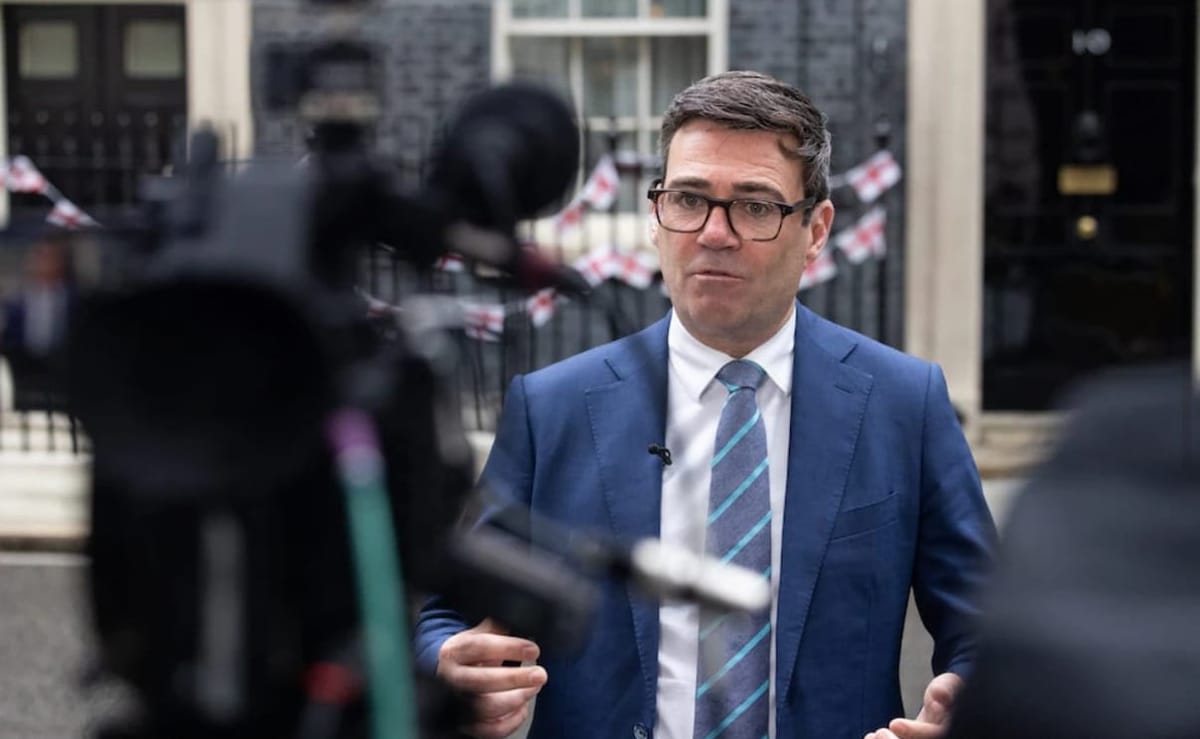
As predicted, Greater Manchester Mayor Andy Burnham publicly rebuked critics of the inquiry's new chair, urging them to stop "reading politics into it" and to "let the inquiry do its business." Damage control from a man who has everything to fear from what this inquiry might expose.
 ByKevin Fitzpatrick, Greater Manchester political reporter and Georgie Docker, North West
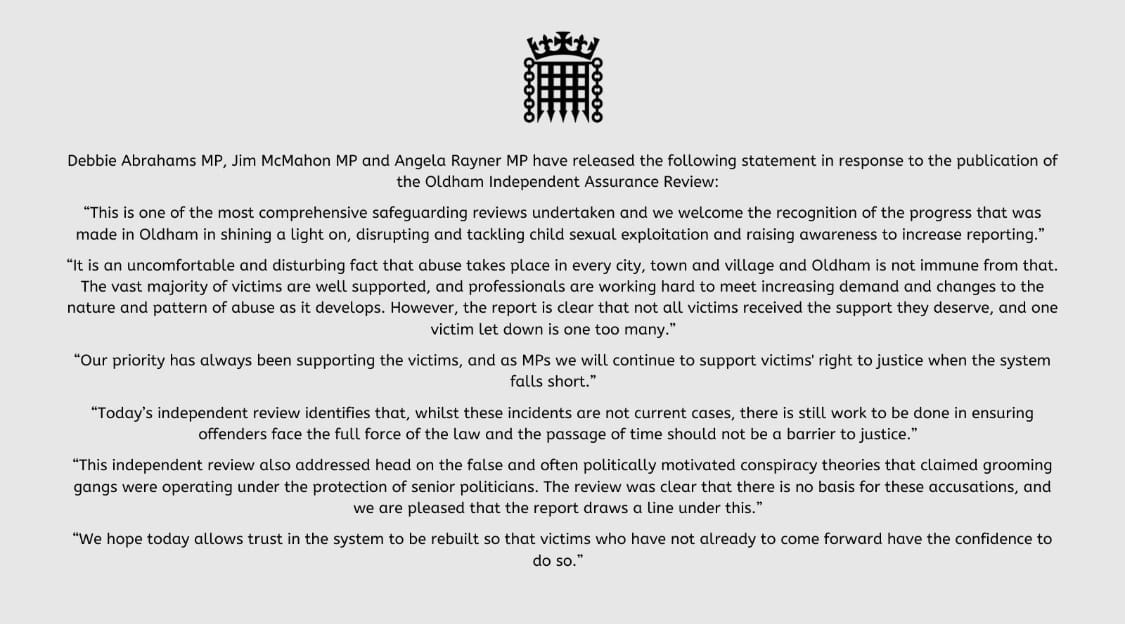
Burnham is not some outside observer. He is knee-deep in this scandal's recent history. As mayor, he commissioned, promoted and defended the Oldham Assurance Review — sold to the public as independent but designed from the start to avoid the most serious evidence of institutional failure.
Burnham's Fingerprints Are All Over This
That review was not botched incompetence. Look at what it actually did:
- it cleared political figures of wrongdoing
- it refused to interview a single Pakistani rape gang survivor
- it accepted political explanations without testing them against evidence.
There is no plausible explanation for clearing politicians while excluding the most relevant survivors other than protection.
The Assurance Review did not interview a single Pakistani rape gang survivor. Not one.
They Silenced Every Survivor
A process that clears political figures while silencing the most inconvenient witnesses cannot be called independent inquiry. No innocent explanation survives these facts. Burnham commissioned this whitewash. He promoted it as credible. He used it to block any further inquiry. He defended it even as survivors and campaigners exposed its deliberate omissions.
His latest intervention is brazen. He wants people to forget that these failures occurred inside political institutions, under political leadership, for political reasons.
Politics did not enter this scandal when survivors spoke out. Politics created the scandal in the first place.
The Correspondent Who Killed the Story
Burnham's remarks were dutifully reported by the BBC's North West political correspondent Kevin Fitzpatrick. This matters because Fitzpatrick has form.
In August 2013, Fitzpatrick emailed McMahon directly about allegations of child sexual exploitation linked to private clubs and shisha bars in Oldham. Senior council figures and Greater Manchester Police were copied in. Fitzpatrick had received credible information raising safeguarding concerns. He acknowledged contacts within the local Asian community had expressed genuine worry about young people entering these venues.
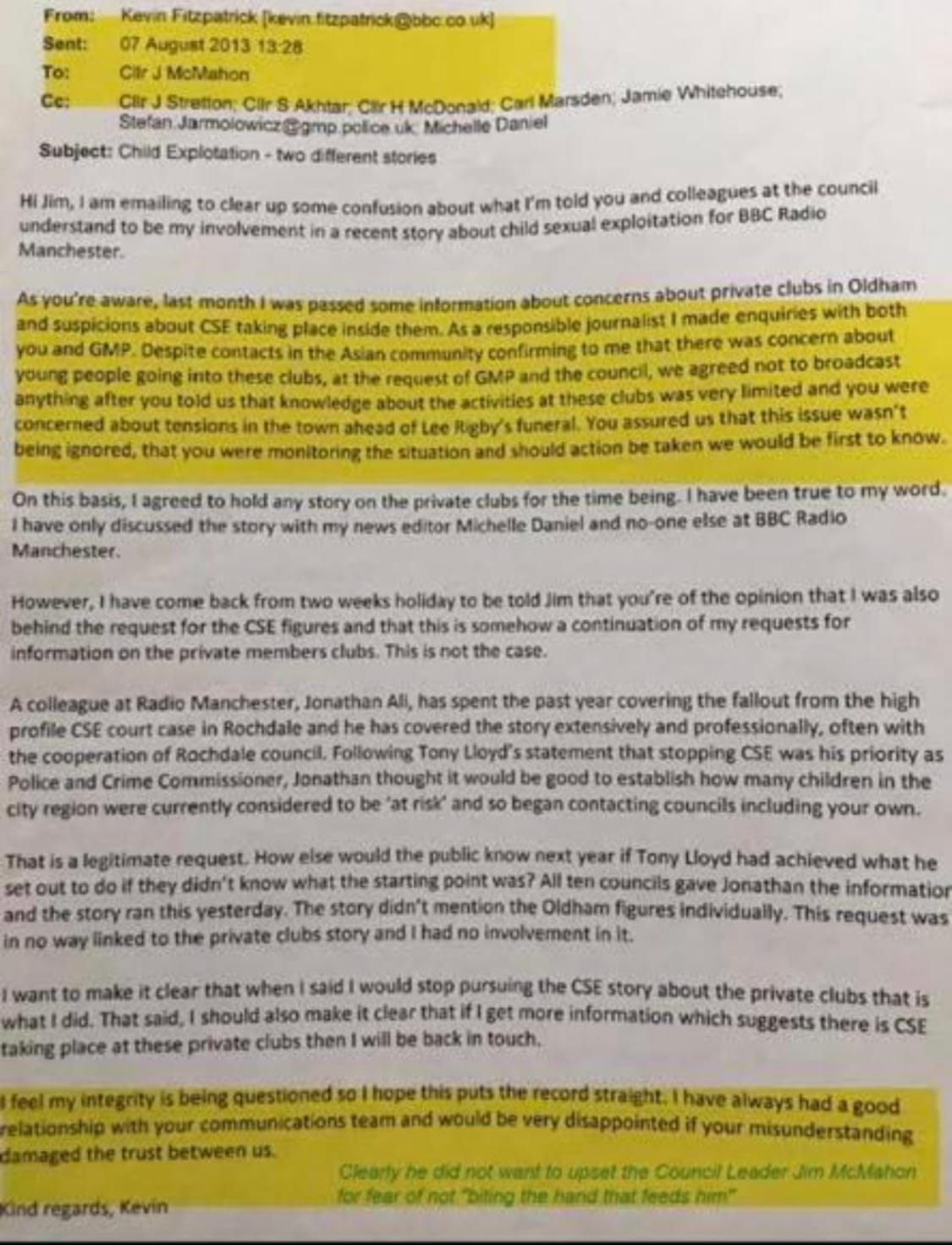
He then explains that, at the request of GMP and the council, and following assurances from McMahon, the BBC agreed not to broadcast the story.
A BBC correspondent received information about child exploitation, verified community concerns were real, then agreed to suppress the story because politicians and police asked him to.
Fitzpatrick's own words are damning. He states he "agreed to hold any story on the private clubs for the time being" and had "been true to his word." But "for the time being" became permanent. The story was never broadcast focusing on Oldham. There was no follow-up investigation into the community concerns. No revisiting when assurances proved hollow. No escalation despite documented safeguarding concerns.
The BBC has never denied the authenticity of this email, nor disputed its contents. Nor has it commented that FitzPatrick's father was a Labour Party councillor.
What worried Fitzpatrick was not child safety. It was his reputation. Look at what he prioritises in that email. His "integrity," his "good relationship" with council communications, his disappointment if institutional trust were damaged.
Look at what he does not mention. Why no reference to safeguarding escalation, reporting thresholds, duty to children, public interest. Instead, here is a BBC correspondent received information about child exploitation and his concern was protecting political relationships.
This is not journalism. Journalism requires scrutiny of power, escalation of safeguarding concerns, independence from political influence. This is collaboration.
The BBC has never explained why credible safeguarding concerns were suppressed following political assurances. It has never reconciled this conduct with any recognisable definition of public interest journalism. When reporters become part of the cover-up machinery, they forfeit any claim to independence.
Fitzpatrick's current reporting on Burnham is not some fresh lapse. It is a pattern stretching back over a decade. When he parrots Burnham's framing, sidelines survivor objections, and omits Burnham's role in commissioning a review that deliberately excluded Pakistani rape gang survivors, he is doing exactly what he has always done — serving power instead of scrutinising it.
Survivors Know This Playbook
Survivors understand this because they have endured it repeatedly. They have watched inquiry after inquiry designed to deflect rather than expose. Investigations quietly narrowed, evidence dismissed as administrative error, police operations producing no consequences, political leaders closing ranks while compliant journalists smooth the path to impunity.
Being told to "trust the process" after decades of managed betrayal is not reasonable. It is insulting.
The most dangerous moment for any inquiry is not its end but its beginning. It is when the terms of debate are set and the boundaries of acceptable questioning are established. We are watching this happen now. Key figures are being validated. Critics are being marginalised. Calls for calm and unity are drowning out demands for accountability.
This is how cover-ups work. Not through dramatic suppression but through patient management of expectations, careful control of narrative, and gradual erosion of public anger until exhaustion replaces outrage.
If this inquiry proceeds under these conditions, with compromised politicians setting limits and complicit media smoothing resistance, it will become just another expensive exercise in institutional self-protection.
Every genuine exposure of grooming gang failures has come from those the system tried to silence: survivors who refused to disappear, whistleblowers who risked everything, campaigners who would not be bought off.
Never from politicians demanding patience.
My work is free because the truth must circulate. But truth without numbers is easy to crush. The government does not fear facts. It fears scale. Subscribe to the newsletter. It’s free. Every subscriber is a number they can’t erase. Every reader widens the circle they can’t control.
The Real Fight Starts Now
Burnham's intervention is not defending justice. It is defending himself. The inquiry has not yet begun, but the cover-up already has.
This National Inquiry is not the ending. It is the beginning. It exists because survivors, whistleblowers, and campaigners refused to be silenced. It will succeed only if they refuse to be managed.
Every witness called, every question asked, every line of evidence pursued will be scrutinised. Every attempt to narrow its scope, delay its progress, or soften its conclusions will be documented. Every politician and journalist who tries to manage this process instead of exposing truth will be held accountable.
When institutional failures are properly exposed, consequences follow. Three Labour leaders removed. A council taken to no overall control. An inquiry that was never wanted forced into existence. This happens when evidence is presented systematically and political protection is stripped away.
Making sure this inquiry tells the truth will be harder than forcing them to hold it. But the pattern is established. When the facts are laid bare, institutions collapse and leaders fall.
Burnham Should Be Afraid
Burnham knows exactly what he faces. He commissioned a review that cleared his allies while silencing survivors. He defended a process that excluded Pakistani rape gang victims. He tried to block any further inquiry. Now he is desperately trying to manage expectations before the real investigation begins.
He thinks containing the inquiry's scope will protect him. He is wrong. The evidence of his role in commissioning institutional cover-up is already established. The only question is whether this inquiry will have the independence to follow where that evidence leads.
Burnham's intervention is not defending justice. It is defending himself. And he has every reason to be afraid.
I’m Raja Miah. For seven years, I led a small team that exposed how politicians protected the rape gangs. Before that, I spent over a decade safeguarding children and protecting communities from extremists.
My work is free because the truth must circulate. But truth without numbers is easy to crush. The government does not fear facts. It fears scale.
Starmer and the Labour Party fear thousands reading, sharing, and backing the same work because numbers mean witnesses, pressure, and consequences. That’s why I am blacklisted by the legacy media. That's why this matters.
🔴 Subscribe to the newsletter. It’s free. Every subscriber is a number they can’t erase. Every reader widens the circle they can’t control.
👉 Subscribe or support here:
🔴 If you can afford it, please support for 75p a week (£3/month or £30/year). Not for perks. Not for access. But because numbers with backing become power. A few supporters can be ignored. Thousands cannot.
This is how this campaign survive. This is how we see this through. This is how voices like ours stops being managed and starts being feared.
🔴 Prefer a one-off contribution?
👉 http://BuyMeACoffee.com/recusantnine
👉 http://paypal.me/RecusantNine
No sponsors. No parties. No institutions to lean on. Just numbers. Growing fast enough that shutting this down becomes impossible.
We don’t need everyone. We need enough. We need you.
– Raja Miah MBE