Warsi's Rape Gang Deflection Is A Desperate Denial
The racism accusation has a documented history in the Pakistani rape gang scandal. It was used to silence the people trying to expose it. Warsi is using it again.
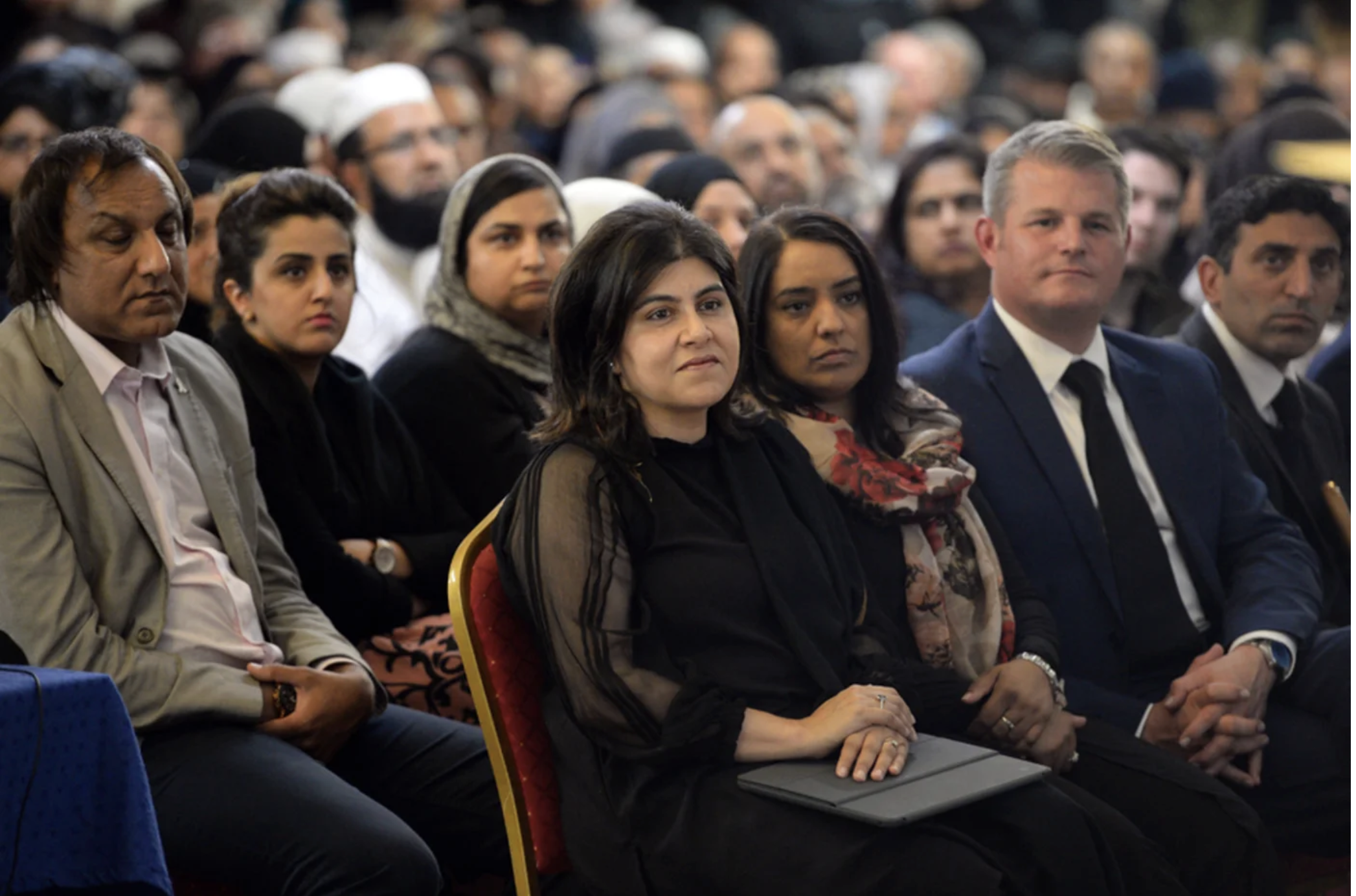
As the grooming gang scandal dominated the national conversation and whistleblowers were finally being heard, Sayeeda Warsi went on air to shut the conversation down.She did it with a comparison she knew would land hard.
Warsi, a Pakistani Muslim, argued that the biggest sexual abuse scandal today is the case surrounding Jeffrey Epstein. Some of the people involved in that network, she said, happened to share the Jewish faith. Nobody would claim there is something culturally wrong with Jewish people that makes them more prone to abusing children.To do so, she suggested, would be antisemitic.
...the biggest sexual scandal and the abuse of children that we're facing at the moment is the Epstein scandal, and the number of people who have been involved in that scandal, who also may have a shared faith, for example, the Jewish faith, should not be a reason why we then say, "Well, is there something culturally wrong with Jewish people which makes them more prone to abuse children?" Because that is antisemitism and that is racism.
So if you have been asking why predominantly Pakistani men in towns across the north of England spent years raping White working-class girls, and why institutions knew and said nothing, Warsi has your answer. You are a racist. Sit down.
Turning Pattern Into Prejudice
It is a familiar move. Not new to this scandal. Not new to Warsi.
For over a decade in Rotherham, before the Jay Report forced official acknowledgement of what had been happening, the institutions did this to everyone who named what was happening. Social workers recorded concerns and were told to reframe their findings. Police officers raised the ethnic profile of offending networks and were sent on diversity training. Councillors who asked questions were warned they were feeding the far right.
The accusation of racism was not a response to the scandal. It was deployed against people trying to expose it. It functioned as institutional protection. Not for victims. For the reputations of organisations that had failed them.
Warsi is doing what the institutions did. The same logic that told investigators to stay quiet, that warned victims their accounts would cause community tensions, that dismissed journalists as irresponsible. That logic is what her Epstein comparison is designed to invoke.
The public controversy did not arise from prejudice. It arose because people kept finding the same thing in town after town, year after year. It arose despite every institutional pressure designed to prevent it from arising at all. The pattern was not imposed on the evidence. It came from the evidence, and acknowledging it required fighting through years of coordinated accusation that anyone who named it was acting in bad faith.
Warsi is asking the public to forget that history. To treat the racism charge as a clean instrument rather than a weapon with a body count.
The girls who were failed by that weapon are still waiting for an honest account of what was done to them. That account begins with what Warsi's comparison is built to erase.
Why the Epstein Comparison Fails
Jeffrey Epstein was a wealthy trafficker who bought access and used what he knew about powerful men to protect himself. The women and girls he abused came from varied backgrounds. His network was not concentrated in particular towns, did not target a specific type of victim, and nobody in it left a documented record of racial motivation or using religious contempt as justification for what they were doing.
None of that is the rape gang scandal.
The victims in over 100 towns and cities were overwhelmingly vulnerable White girls, many of them already known to social services. Girls already written off before anyone came for them. The targeting was not incidental. It was the point. Survivors gave evidence that their abusers selected them because of what they were, and said so while abusing them.
Survivors reported being called kuffar while they were being raped. Offenders described non-Muslim girls as morally inferior or sexually available. This was not private rationalisation. It was said out loud to the girls being abused and repeated in the courts.
The abuse was carried out by groups of men operating together as part of a clan. Victims were shared between them and transported between addresses. What was being done to them had become normal practice within their networks.
When survivors tried to report the abuse, they were turned away. Again and again, across agency after agency, over years.
By reaching for Epstein, Warsi removes every one of those features and replaces them with something she can answer. What remains is a clean moral lesson about not blaming whole communities for individual crimes. Nobody disagrees with that lesson. It just has nothing to do with what happened in these towns and cities to over a hundred thousand little White girls.
The Kinship Network
The abuse frequently involved groups of men operating together. Survivors described being passed from one abuser to another in houses and across towns and cities where this appeared to be routine. That routine did not come from nowhere.
The biraderi system is a clan-based kinship network with deep roots in rural Pakistan, transplanted into British towns through successive waves of migration and held together through bloodline and obligation. Loyalty is owed to the clan.
Men within a biraderi network owe each other protection and silence as a matter of honour. What happens inside the network stays inside the network.
This is the structure that investigators kept running into without naming. When offenders shared victims across a town, they were not acting as strangers who happened to share a predilection. They were acting as men whose networks had been telling them what they owed each other, and what they could keep quiet, for generations. The secrecy was not incidental. It was built in.That same infrastructure did not stay quiet when prosecutions began.
Community Defence
Relatives of offenders publicly blamed the victims and accused them of lying. Supporters gathered outside courts during trials to protest that the prosecutions were racist, drawing on the same logic of collective reputation that had protected the networks from the start. Community activists and local figures dismissed the entire issue as a conspiracy or smear campaign.
NEW @GBNEWS: Independent MP brands grooming gangs outrage 'false right-wing narrative' in 'malicious' tirade at Mirpur Airport campaign event - as Labour MP watches onhttps://t.co/jMi7649e02
— Charlie Peters (@CDP1882) April 18, 2025
That pressure landed on officers and officials already uncertain about how to proceed. In some areas it worked.
It worked because they were operating inside institutions that had their own reasons to avoid the question. The community pressure found institutional anxiety already waiting for it. The institutions knew what the girls had been telling them. They had known for years.
A Culture That Dismissed the Victims
Many of the girls targeted by grooming gangs were already known to social services. They were in care, from unstable homes, already failed by the adults responsible for them before the abuse began.
When they reported rape or exploitation, they were dismissed as making lifestyle choices. The word used in official documents was promiscuous. Girls as young as eleven were recorded as having made a lifestyle choice to engage in sexual activity with groups of adult men. Police reports and safeguarding records framed them as difficult teenagers whose behaviour needed managing rather than victims of organised crime whose abusers needed arresting.
The label did specific work. It moved responsibility from the perpetrators to the girls, reclassified rape as a welfare issue, and gave every institution that encountered these children a reason to file the case rather than pursue it.
This was not confusion or incompetence. It was a decision, made repeatedly across many years, that these girls were not the kind of victims whose suffering was worth the trouble of pursuing. When they stopped reporting, the agencies recorded that as resolution. Their testimony was discounted not because it was incredible but because acting on it was inconvenient.
The abuse continued because the institutions entrusted to stop it chose not to.
She Has Seen This Work Before
Warsi knows what the racism accusation does. She watched it silence social workers and keep councillors from asking questions, all while girls were being passed between men in houses across northern England. She watched it hold long enough that it took a statutory inquiry to force acknowledgement of what every local authority in those towns already knew.
She is not confused about the history. She is counting on the public being confused about it.
The Epstein comparison is precisely calibrated. It says nothing about why working-class White girls were targeted. Nothing about kuffar. Nothing about the biraderi networks that organised the offending and then organised the collective defence when prosecutions began. Nothing about the institutional decisions that left these girls unprotected for over a decade. It sidesteps every specific feature of the scandal and lands in a place where the only question is whether an entire community is being blamed for individual crimes.
In that framing, the social worker who reclassified rape as a lifestyle choice has no name and no case number. The police officer who filed the report and closed it does not exist. The politician who decided to prioritise their vote bloc was never there. The institutions that failed these girls disappear along with the specific nature of what was done to them. What remains is a moral principle that nobody disagrees with, attached to a scandal it was never designed to explain.
Warsi has watched this mechanism operate for years. She knows it works. She is not making a mistake with this comparison.
She is making a choice. And it is the same choice the institutions made.
It is easier than telling the truth.
I’m Raja Miah MBE. For seven years, I led a campaign that exposed how senior Labour politicians helped protect Pakistani rape gangs. The people of my town helped force the national inquiry.
You won’t see me on the BBC. You won’t read my work in the legacy press. That’s not an accident. I take this to a place from where there is no coming back.
I document everything in my newsletter. It’s 100% free to read. If this work matters to you, if you believe it must continue, I need your backing.
My work is free. No paywalls. No gatekeeping. No exclusions. Because the truth shouldn’t belong only to those who can afford it. If you can afford to do so, supporting me costs as little as 75p a week (£30 a year).
If you can’t commit to a regular subscription, a one-off contribution genuinely helps keep this alive. You can support me using one of these links;
👉 http://BuyMeACoffee.com/recusantnine
👉 http://paypal.me/RecusantNine
We’re up against a machine, politicians, police, officials, and media, working together to shrink, sanitise, and bury the truth. This work survives because of you.
If you’ve ever shared my posts, learned something, or felt less alone reading them, stand with me. I need your help.
Raja 🙏