They Want You To Think They Conceded. But The Cover Up Continues.
Part One: Every Concession Came With a Get-Out Clause
Three prime ministers refused this. Thousands of survivors were told they lied. Campaigners were arrested. Platforms were removed. Journalists were ignored. The question itself was called racist by the people whose job was to answer it.
None of it worked.
Eight years of sustained pressure, survivor testimony, and public campaigning produced what the political class tried everything available to prevent. The inquiry exists because it could no longer be refused. Every concession in these terms was extracted. None was volunteered. Not one.
Read them that way and you will understand what is now taking place.
"Where the Evidence Demands It" Is How They Will Bury This
The original framing examined ethnicity only through the lens of how institutions responded to it. That was a deliberate narrowing. It allowed the inquiry to conclude that police failed to act without ever being compelled to ask why Pakistani-heritage networks were disproportionately represented in organised abuse.
Baroness Longfield has amended the terms to examine ethnicity, culture and religion as potential drivers of abuse. That concession belongs to the survivors who refused the managed version, and to those who spent years being told the question itself was racist.
 PA Media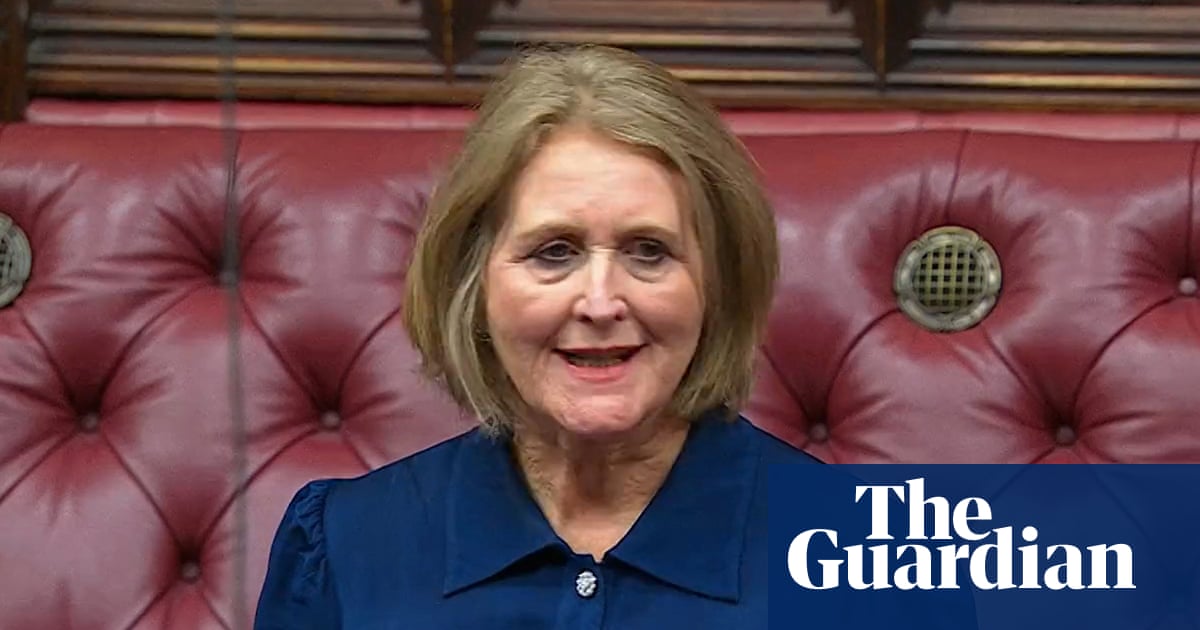
Culture and religion are not decorative additions to this inquiry's scope. They are the central question. What happened in Rotherham, Rochdale, Telford and Oldham was organised and ethnically targeted. Sustained over decades. White girls were selected because they were white. They were considered impure, considered legitimate targets. That contempt has a source. It was theologically grounded. Communities knew and said nothing.
Pakistan is a nation established through rape genocide. It has no age of consent in any meaningful functional sense. Child marriage is endemic. The sexual availability of children is sanctioned through the interpretation of religious and cultural frameworks that travelled with communities to the United Kingdom and were never challenged by institutions too frightened to look.
The rape of thousands of white working-class girls in British towns was not a series of isolated criminal acts. It was a genocide of rape, organised along ethnic and religious lines, with victims selected by their perceived inferiority by men who believed in their racial and religious superiority..
The Quran and the Hadiths contain passages that perpetrators and their communities have used to justify the targeting of non-Muslim women and girls. The inquiry must examine those passages directly, compel theological evidence, and reach a conclusion on whether religious doctrine functioned as an active enabler of mass rape and whether community and mosque structures provided cover for perpetrators.
Longfield said the inquiry will examine these factors "where the evidence demands it." That conditional is the exit they built into the concession the moment they made it. It permits examination. It does not compel a finding.
What that means in practice. The inquiry commissions academic evidence on ethnicity and offending patterns. Experts disagree, as experts on contested questions always do. The inquiry notes the disagreement, records that cultural and religious factors may have played a role but that the evidence allows no definitive conclusion, recommends further research, and moves on.
No named doctrine. No conclusion on the Quran or the Hadiths. No reckoning with why Pakistani-heritage networks selected White girls with such consistency across dozens of towns over at least four decades.
The terms have been technically honoured. The question has been technically examined. The answer has been withheld.
This is the established playbook. Every inquiry that has touched this question has found that exit and taken it. Without a mechanism that compels a finding rather than merely permitting an examination, "where the evidence demands it" is the sentence that buries the question for another decade.
They Gave Four Years. They Protected Five.
The original start date of 2000 was not arbitrary. It excluded a decade of documented abuse in towns where the pattern was already established. Moving the threshold to 1996 extends the inquiry's reach into an earlier period that will implicate institutions and individuals the 2000 date would have protected.
Nonetheless, 1996 is not 1991. Birmingham's abuse was documented in the Jill Jesson report five years before the inquiry's new start date. That report was commissioned by Birmingham City Council, completed in 1991, and suppressed. The decision to suppress it was made by identifiable people in identifiable positions. The inquiry as currently framed cannot reach them. Four years were conceded. The five that matter for Birmingham were not. That arithmetic is not coincidental.
1996 looks like a significant concession. Against the Jesson report it is a precise exclusion.
Transparency With an Escape Clause
Rolling reports rather than a single document at the end of three years. Longfield framed this as preventing institutions from quietly managing findings before publication. She is right that a single terminal report is a gift to every organisation with lawyers and a communications team. The concession is real.
The phrase "where we can" remains in the language. That is permission for future delay dressed as transparency. There is no mechanism in the terms that compels rolling publication on any timetable. No penalty for withholding. No external body that can force early reporting. When the inquiry encounters findings that are politically inconvenient, "where we can" will become the reason they cannot.
The Institutions That Covered It Up Will Help Decide Who Gets Investigated
The inquiry has said it will follow the evidence. The selection criteria for which towns get investigated will be built on evidence submitted by local institutions, the same bodies that spent years suppressing scrutiny of what happened in their areas.
When the Government first proposed non-statutory local inquiries in January last year, not a single council aside from Oldham volunteered (and that was because we forced them to). Bradford Council has spent years defending its record and resisting calls for an inquiry into abuse in areas like Keighley. Under the current structure Bradford will help supply the evidence base that determines whether Bradford is selected for investigation.
In the towns where the cover-up was most complete, victims were disbelieved, testimony went unrecorded, and authorities left no paper trail. A process built on following existing evidence will not find those towns. It will find the towns where institutions cooperated enough to generate a file.
The inquiry has handed its selection mechanism to the people who decided what would and would not be written down.
My work is free. No paywalls. No gatekeeping. No exclusions. Because the truth shouldn’t belong only to those who can afford it. If you can afford to do so, supporting me costs as little as 75p a week (£30 a year).
Beaconport Cannot Do What They Are Telling You It Can Do
Operation Beaconport is being presented as the mechanism through which individuals are held criminally accountable. The NCA leads it. Allegations from the inquiry feed into it. On the surface it looks like the prosecution pathway the previous non-statutory reviews deliberately lacked.
Pull it apart and it collapses.
The inquiry goes back to 1996. Beaconport starts in 2010. Fourteen years of abuse sits in the gap. The suppression of the Jesson report, the early Rotherham years, the establishment of the organised networks that operated across dozens of towns are all unreachable.
Everything the inquiry uncovers from 1996 to 2009 feeds into a criminal operation that has already told the public it cannot look at that period. The concession of 1996 as a start date means nothing if the only body with power to pursue individuals draws its own line at 2010.
It gets worse.
Beaconport is a case review operation. It examines cases where police and the CPS took no further action. It can reopen a dropped rape case. Compelling a senior officer to explain why force policy discouraged prosecution of Pakistani-heritage suspects is outside its design. Examining the institutional decisions that sat above individual investigations is outside its design. That will not change as the operation matures.
The NCA has already described what it found as human error. That framing is doing political work. It strips out causation before a single charge is brought. What happened in these towns was institutional policy driven by racial politics. Human error is what you call systematic racial policy when you want no one senior to answer for it. Beaconport is already softening the language of what it finds before any finding has been made public.
Beaconport has no confirmed budget and no confirmed end date. Operation Stovewood, the Rotherham equivalent, cost £89 million over eleven years and is still running. The government is presenting an operation of comparable or greater scale as a functioning accountability mechanism with no financial ceiling and no deadline. Leaders have said openly it will be a multiple year journey and that it may be years before cases come to court.
The terms also contain a legal trap. The inquiry must take all necessary steps to avoid prejudicing Beaconport's criminal investigations. That constraint runs in one direction only.
Beaconport can designate any area as active and the inquiry must stand back.
The inquiry has no power to compel Beaconport to move faster or share what it finds. The parallel investigation does not run alongside the inquiry. Under the terms it sits above it.
The Memorandum of Understanding governing how the two bodies interact will not be published for six months. The inquiry will begin operating before anyone outside government knows the rules of that relationship. The document that determines where the inquiry must defer and what evidence flows between the two bodies does not yet exist in public form. By the time it does the inquiry's working practices will already be established around it.
Towns that commissioned their own reviews, however inadequate, however designed to limit findings, are potentially insulated from Beaconport scrutiny on that basis. A hollow independent review may yet prove to be a shield.
The prosecution threshold is the final wall. Beaconport requires evidence sufficient for a criminal charge. Politicians, council leaders, and senior officers who made policy decisions that enabled abuse, who designed reviews to limit findings rather than establish facts, will not meet that threshold. They are not Beaconport's target.
The inquiry has outsourced individual accountability to a mechanism that was never designed to reach the people most responsible. The referral pathway for politicians leads to a process that was never built to receive them.
Longfield Knew and Announced It Anyway
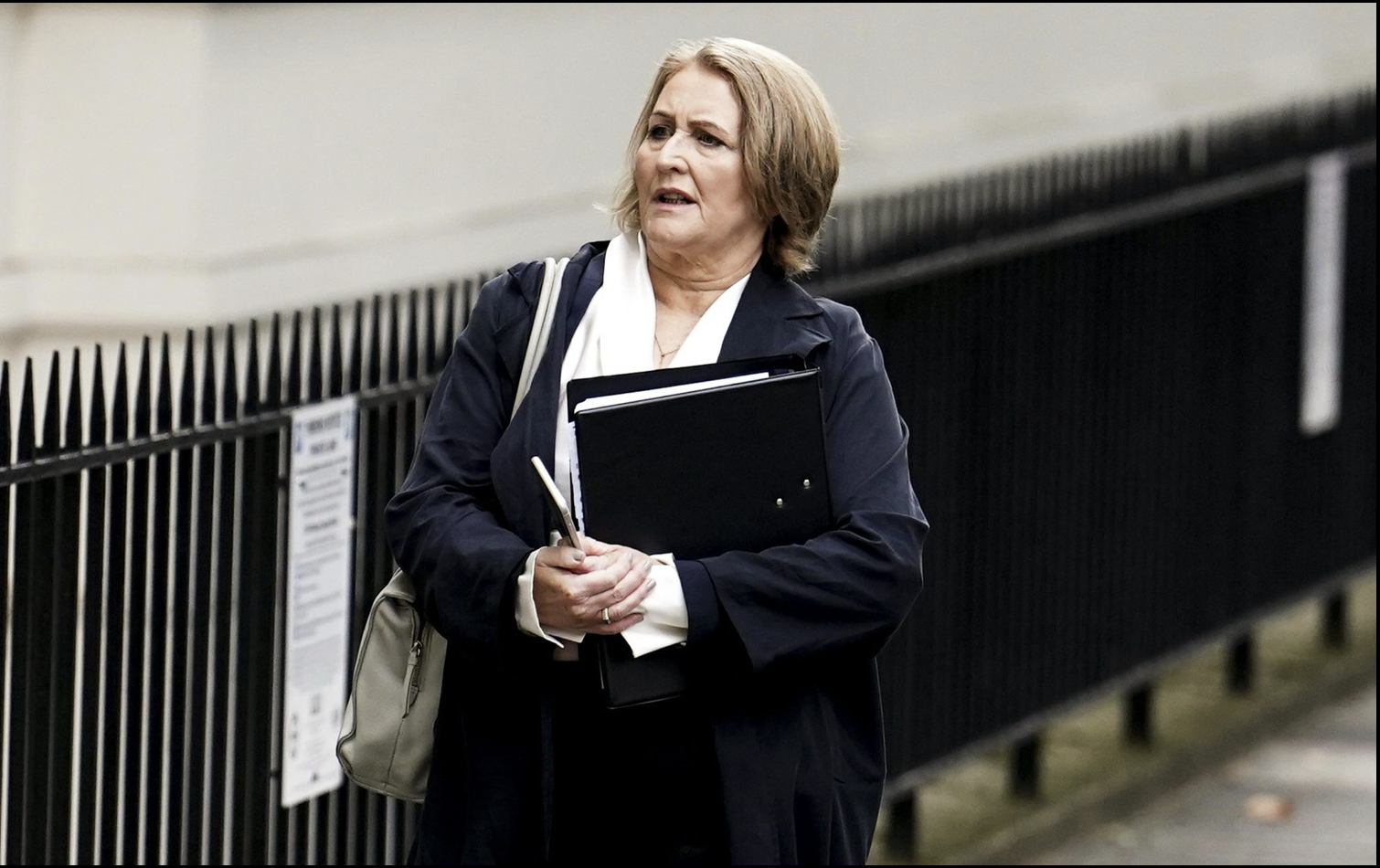
Baroness Longfield has informed these terms. She worked alongside the Home Office that drafted them. She knows everything set out above. She stood at that press conference and announced a reckoning anyway, alongside a Home Secretary whose department has not been placed in scope, presenting a process whose every structural weakness she had already been briefed on.
She announced it. She presented it to survivors as the truth they had been promised.
Baroness Longfield is fronting a process designed to look like accountability while protecting the people accountability would destroy. Believe the establishment and the legacy media if you want to. From where I'm standing, the cover up continues.
That is where Part One ends. Part Two will be released tomorrow. You decide who you believe.
I’m Raja Miah MBE. For seven years, I led a campaign that exposed how senior Labour politicians helped protect Pakistani rape gangs. The people of my town helped force the national inquiry.
You won’t see me on the BBC. You won’t read my work in the legacy press. That’s not an accident. I take this to a place from where there is no coming back.
My work is free. No paywalls. No gatekeeping. No exclusions. Because the truth shouldn’t belong only to those who can afford it. If you can afford to do so, supporting me costs as little as 75p a week (£30 a year).
If you can’t commit to a regular subscription, a one-off contribution genuinely helps keep this alive. You can support me using one of these links;
👉 http://BuyMeACoffee.com/recusantnine
👉 http://paypal.me/RecusantNine
We’re up against a machine, politicians, police, officials, and media, working together to shrink, sanitise, and bury the truth. This work survives because of you.
If you’ve ever shared my posts, learned something, or felt less alone reading them, stand with me. I need your help.
Raja 🙏