It Is Time Britain Found The Courage And Really Talked About Pakistan
Shabir Ahmed is free, Pakistan will not take him, and the inquiry now has to ask the question every review before it was built to avoid. Who were these men, why did they gang rape so many White girls, and what connected them?
Shabir Ahmed walked out of prison a free man this month, and the country he raped children in cannot make him leave. Pakistan will not take him. Its Foreign Ministry says Ahmed was raised, groomed and spoilt in Britain, choosing the vocabulary of his crimes to tell us he is our problem. Behind the official line, Islamabad is reported to want the extradition of a former adviser to Imran Khan and a retired army major in exchange, while ministers sign off £153 million in aid to the same government over the next three years.
All of it is true and none of it is the story. Ahmed was never one man. He was the ringleader of a network of Pakistani heritage men who raped girls across Rochdale, Oldham and Middleton, one network among many that kept appearing in town after town across the north. Britain has spent twenty years arguing about what to do with men like Ahmed after conviction. It has never once found the courage to ask how the networks formed in the first place.
Britain Knew They Were Pakistani
The police called them Asian grooming gangs. Politicians did the same and most of the media followed. The word blurred something everybody already knew.
The Rochdale network involved Pakistani heritage men. In Rotherham, nearly two-thirds of the 42 people convicted through Operation Stovewood were recorded as coming from a Pakistani ethnic background. The national audit itself records the recognised model of Pakistani heritage men targeting young white girls.
These men were not drawn at random from across Asia. Calling them Asian spread the blame across communities that had nothing to do with these particular crimes. It also stopped the next question. What connected the actual offenders?
Being Pakistani does not turn somebody into a rapist. That was never my argument. I want to know why this particular model of abuse repeatedly involved Pakistani heritage men. How did they find one another, and why did they choose these girls?
For years, the response was that there was no reliable national evidence of a Pakistani pattern because the national data is inadequate. The Casey audit says a definitive national assessment cannot be made. It also places responsibility for that failure on successive politicians and policymakers who never collected the information properly.
That failure kept the argument unresolved. Whenever local evidence exposed a pattern, officials could point to the missing national picture. Nobody could prove the full scale because the state had never gathered what was needed to measure it.
The Government has now accepted that ethnicity and nationality should be recorded in every child exploitation case. That should have happened years ago. Instead, we are beginning the work after the children have grown up.
Why Pakistan Matters
Much of the postwar Pakistani settlement in northern mill towns came from one place, the Mirpur district of Azad Kashmir. When the Mangla Dam flooded villages across Mirpur in the 1960s, displaced families used their compensation to follow relatives already working in the mills of Lancashire and Yorkshire. Chain migration did the rest, village by village and family by family. People brought their beliefs, loyalties and family structures with them.
Those ties helped families build new lives here. They also gave enormous power to elders, family names and the people claiming to speak for the community.
I have seen how this works, and it is the same everywhere they settled. Your family name carries weight, along with the village your people came from, the mosque you attend, who your relatives are and who is prepared to speak for you. Whilst none of this causes somebody to rape a child, these connections do become relevant when the offenders are brothers, cousins, friends and business associates.
They shared girls, cars, houses and information. The inquiry needs to establish how those networks were built and why so few people spoke.
The Casey audit records one offender speaking about British girls as though they lacked morals and were easy to access for sex. Survivors have described that contempt for years. Girls who drank alcohol, lived in care or came from troubled homes were called slags and treated as available.
At the same time, women and girls inside these men's families were subjected to strict rules around sex, modesty and honour. A girl within the community had to be protected and controlled, while a girl outside it was there to be used. How widespread was that belief? Did religious identity help some offenders place non-Muslim girls outside the rules they imposed at home? The inquiry has been ordered to find out.
Pakistani and Muslim girls were also abused. Their suffering was often harder to expose because reporting could be treated as bringing shame upon the whole family, so the family's reputation was preserved at the cost of the child, who carried what happened alone.
The inquiry is required to test this evidence rather than rule the cultural explanation out before the work begins. Britain avoided these questions because it feared the answers.
The Votes Were Part Of The Protection
I have spent eight years documenting the relationship between biraderi, bloc votes and political power. None of it was ever a secret.
Certain families and community figures could deliver votes, and everyone who fought a seat in these towns knew it, from council candidates to those heading for Parliament. Access to those networks could decide who was selected for a seat and who went on to hold influence inside the council.
Public money and political access flowed through some of the same gatekeepers. They were presented as community leaders, even when large parts of the community had never chosen them to speak.
Once a political party depends upon those people for votes, challenging them carries a price. What happens when investigating criminality inside a community risks angering the people a political party needs at the next election? Nobody has to write an instruction telling police officers or council officials to ignore raped children. The pressure works without one. Everybody understood the price of pushing too hard.
The girls had nothing to push back with. Many were already regarded as difficult before anyone listened to them. They had no community organisation speaking on their behalf and no bloc vote to offer. Their parents could be ignored, and professionals who kept raising concerns found themselves isolated.
The fear of being called racist played a part in what happened, alongside institutional self-preservation and the relationships that kept politicians in power. Political patronage belongs inside this inquiry as much as police and safeguarding failure. The crimes did not take place outside politics.
Politicians did not build this campaign. People did. While children were being raped and councils and the police covered it up, a handful of us refused to look the other way.
For eight years I named the politicians who protected them. I was smeared for it. I was arrested for it. I was dragged through courtrooms on fabricated evidence in a desperate attempt to silence me. It made no difference. I kept going. We kept going.
This statutory inquiry exists because we forced it. Nobody in Westminster wanted it.
Andy Burnham is now Prime Minister. Operation Hexagon happened on his watch. The review that has been exposed as nothing short of a cover-up of the cover up was his. He must answer for what he did under oath.
You know by now that Burnham will not testify voluntarily. Likewise, the mainstream media dare not ask him pressure him, especially now he is Prime Minister.
Our relentless campaigning is the only thing that has ever moved these people. Which is why we must now campaign with an intensity never seen before.
665 people have come forward to fund this work once we knew Burnham was going to become Prime Minister. I need 2,000 to join us. In just under a month we are a 1/3 of the way there.
£3 a month. £30 a year. More if you can afford it.
Nobody tells me what to publish. Nobody is off limits. That is what you are paying for. A campaign that refuses to surrender. One that cares not at all that the evidence trail leads all the way to Number 10.
Join Red Wall and the Rabble today.
The Avoidance Reached The Top
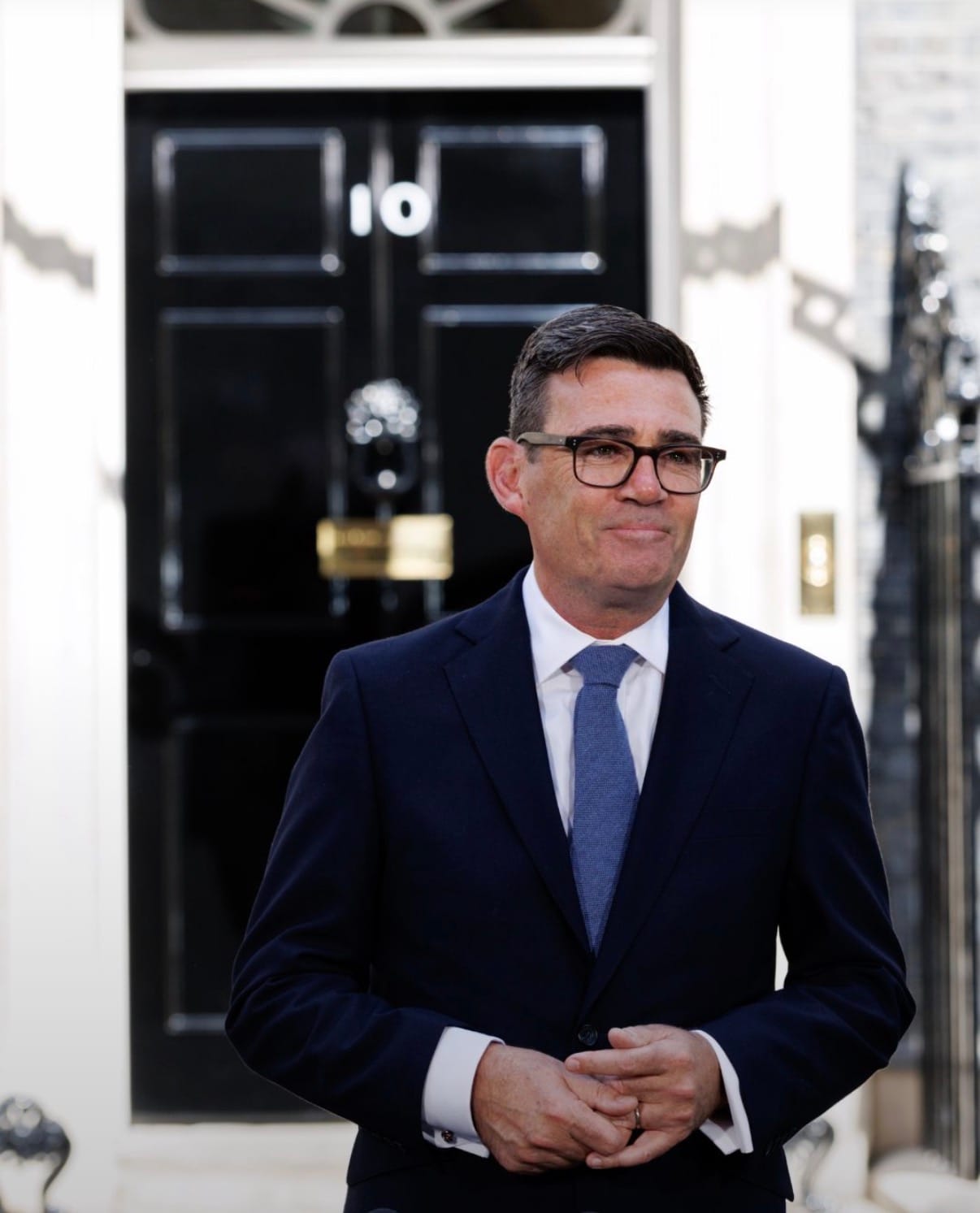
Nobody sat closer to that politics than Andy Burnham, who walked into Downing Street this week carrying nine years as Mayor of Greater Manchester behind him.
The assurance reviews he commissioned into Manchester, Rochdale and Oldham managed to say nothing about who the groomers were. Ethnicity, religion and biraderi sat outside the remit in the very towns where those forces shaped who held power, and a Mayor whose party depended upon those community networks for its votes had every reason to keep them there.
The national inquiry can compel his evidence under oath. The Prime Minister must be called to testify.
The Inquiry Has No Excuse Left
The final terms of reference require the inquiry to examine how ethnicity, religion and culture affected the abuse and the institutional response. They also require it to look for failures that may have amounted to intentional or unintentional cover-ups. Religious institutions, community organisations, police forces, councils, prosecutors and national government can all be examined where the evidence justifies it. Nobody can claim these subjects sit outside its reach any longer.
The inquiry needs to establish how the offenders were connected, what they believed about their victims, who received warnings and who stopped those warnings going further. Where the evidence reaches religious institutions, it should follow it. The same applies to councillors, political parties and senior police officers, who should be named when the evidence justifies naming them. Mentioning culture will not be enough. The inquiry has to show what part it played and who refused to confront it.
Pakistan is present at both ends of this scandal. Its Foreign Ministry taunts Britain that we groomed Ahmed ourselves, and for years Britain refused to examine what Pakistani family, clan and religious structures may have meant in towns like Rochdale and Oldham. Those networks may have connected offenders to one another and handed politicians access to organised votes, while discouraging anyone inside from speaking. Instead of investigating any of it, the state hid Pakistani behind the word Asian and left the national evidence uncollected.
Millions of Pakistani people had nothing to do with these crimes. Their innocence cannot be used as a shield for the men who did.
The inquiry should use the word Pakistani when the offenders were Pakistani. It should follow the evidence into religious belief wherever that evidence leads. Biraderi belongs on the table too, in every town where family and clan connected offenders to organised votes. After that comes the naming. Who knew, and why the girls mattered less than the votes.
Britain has spent twenty years finding polite ways to avoid this conversation. The inquiry has been ordered to end it, and everyone will notice if it flinches.
I’m Raja Miah MBE. For nearly eight years, I have led a campaign that exposed how senior Labour politicians helped protect Pakistani rape gangs. The people of my town helped force the national inquiry.
You won’t see me on the BBC. You won’t read my work in the legacy press. That’s not an accident. I take this to a place from where there is no coming back.
I document everything in my newsletter. It’s 100% free to read. If this work matters to you, if you believe it must continue, I need your backing.
My work is free. No paywalls. No gatekeeping. No exclusions. Because the truth shouldn’t belong only to those who can afford it. If you can afford to do so, supporting me costs as little as 75p a week (£30 a year).
If you can’t commit to a regular subscription, a one-off contribution genuinely helps keep this alive. You can support me using one of these links;
👉 http://BuyMeACoffee.com/recusantnine
👉 http://paypal.me/RecusantNine
We’re up against a machine, politicians, police, officials, and media, working together to shrink, sanitise, and bury the truth. This work survives because of you.
If you’ve ever shared my posts, learned something, or felt less alone reading them, stand with me. I need your help.
Raja 🙏