How Many of Greater Manchester's Ten Local Authority Areas Did The Pakistani Rape Gangs Operate In?
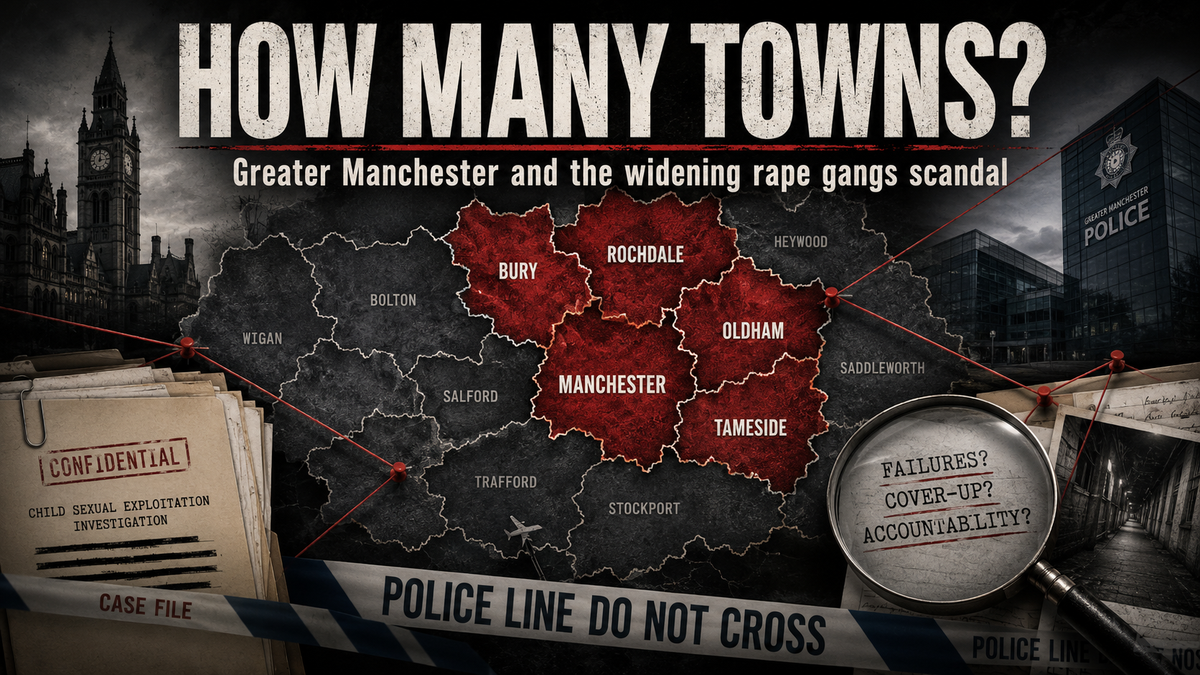
Bury is now the fifth borough on the map. Andy Burnham answered a regional scandal with local assurance reviews that were never capable of exposing the full scale. Why?
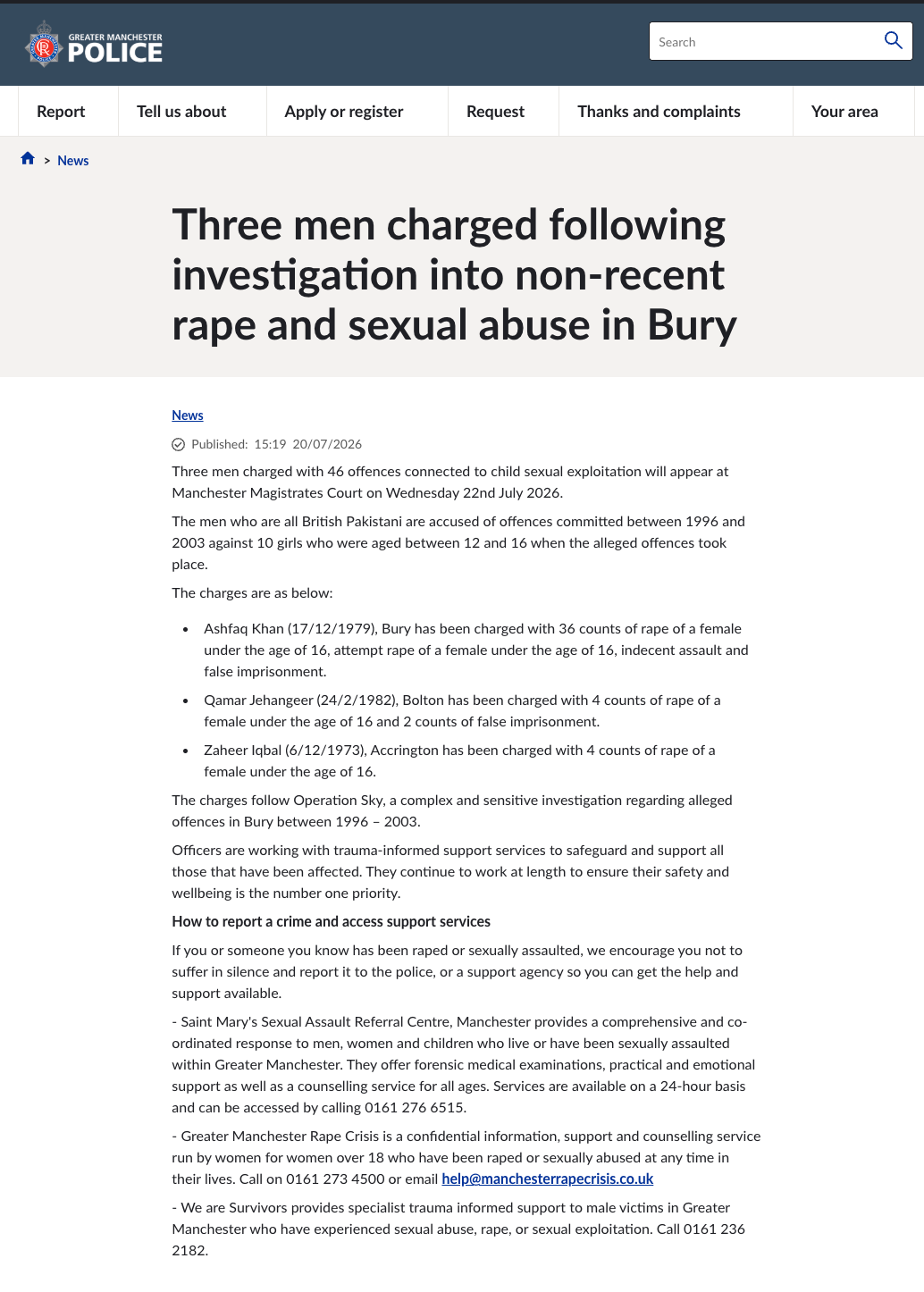
Three British Pakistani men have been charged with 46 child sex offences involving ten girls in Bury. The alleged offending ran from 1996 to 2003. The girls were aged twelve to sixteen.
Ashfaq Khan faces 36 charges, among them rape, attempted rape, indecent assault and false imprisonment. Qamar Jehangeer faces four counts of rape and two of false imprisonment. Zaheer Iqbal faces four counts of rape.
None of it has been tested in court. All three men are innocent unless and until convicted. That legal protection must be stated clearly. It does not prevent us from asking what these charges mean for Greater Manchester.
Bury Changes Everything
Bury is another town. This is not one more historical prosecution that GMP can wrap in a statement about a complex and sensitive investigation before putting it back in its local box. It is evidence, again, that this scandal never stayed inside the lines the official reviews drew around it.
For eight years I have asked the question the authorities designed their reviews to avoid. How many of Greater Manchester's ten boroughs had organised groups of predominantly Pakistani men sexually exploiting girls?
Andy Burnham held the answer within reach for nine years. He had ten boroughs, one police force and regional responsibility for policing and public safety. His answer to a regional scandal was a series of local assurance reviews, one town at a time, and that question sat outside the terms of reference of every one of them.
The Map They Never Wanted You To See
The public was trained to see this as a string of separate local scandals. Rochdale belonged to Rochdale. Oldham was Oldham's problem. Augusta was one failed Manchester investigation, filed and forgotten. Every town got its own operation name and review, narrow terms of reference, and a publication date chosen by the very institutions being examined.
Placed beside each other, the cases tell a different story.
Manchester's Operation Augusta identified at least 97 suspected offenders connected to the sexual exploitation of vulnerable children. The investigation began after fifteen-year-old Victoria Agoglia died. It was closed in 2005 despite intelligence pointing to extensive organised abuse. The later review found many suspects were never properly investigated and children had been failed. Those 97 men did not disappear when the file shut. The evidence was buried and the men stayed on the streets. The children were left carrying it. Years later GMP had to dig it all back up under Operation Green Jacket.
Rochdale eventually saw gangs of Pakistani men prosecuted. The gang's ringleader, Shabir Ahmed, lived in Oldham. The crime was never the whole scandal there. For years before anyone was charged, police and social workers met those girls over and over. Their contact with older men was known and recorded, and still the abuse was written off as a lifestyle choice the children had somehow made. The prosecutions arrived long after the institutions had run out of ways to look away.
Oldham I know better than anyone. Known offenders, failed investigations, missing evidence, and a political establishment that fought a statutory inquiry every step of the way. The assurance review we were given could not compel a single witness or take a word of testimony under oath. Any document an institution wanted to keep, it kept.
Now Bury, where ten girls and 46 charges span seven years of alleged offending. All of it happened in one city region under one police force, among councils that shared borders and communities that moved freely across them. Every official response was built to examine one small piece. That was the design.
Bury Was Not A One-Off
This is not even Bury's first case. In October 2025, Manzorr Hussain and Imtiaz Ali were convicted over the grooming and sexual abuse of five girls in the town between 1996 and 2000. Those dates sit almost directly on top of the period now being prosecuted under Operation Sky.
 BBC News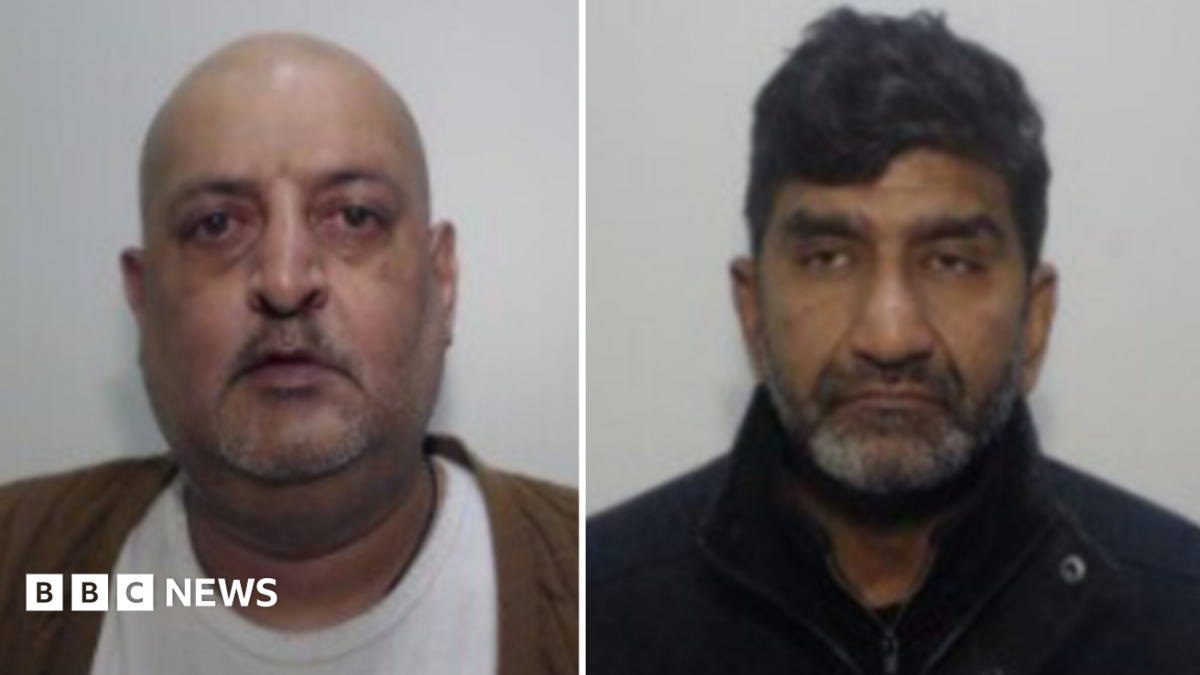
I am not claiming the two cases are linked. There is no public evidence the men knew each other, shared victims or ran in the same network, and unless that emerges in court nobody should say otherwise. But two separate groups of men are alleged to have targeted teenage girls in one town during the same years, and that demands an answer.
A survivor in the earlier case came forward in 2018. Investigators rebuilt what happened from old school and social services records. The same question follows every one of these scandals. What was in those records at the time? Were the girls going missing over and over? Did teachers clock the older men outside the gates? Somebody saw the unexplained money, the drink, the drugs and the cars. Either it was written down and ignored, or it was never recorded at all. When police came across these children, were they treated as victims or as nuisances?
The existence of those records proves the children were never invisible. The information existed. The institutions failed to connect it or act on it while the girls were being abused.
The Boundaries Only Applied To The Investigators
The defendants in the new case do not all live in Bury. One is in Bolton. Another is in Accrington. The girls were in Bury.
So the men crossed council boundaries. The girls could be moved across them. Taxis, addresses, businesses, care placements and intelligence all moved with them. The only thing that ever respected a borough boundary was the official response.
The intelligence all sat with a single police force, and regional responsibility rested with one man, yet every review stopped at the borough line.
None of that was administrative tidiness, because the structure decided which questions could be asked. An Oldham review looked at Oldham and nowhere else, yet Shabir Ahmed, the convicted ringleader of the Rochdale gang, was an Oldham man. So were others convicted alongside him. The men who raped children in one borough slept in another, and the customers they supplied girls to came from everywhere.
Jess Phillips has since written to the National Inquiry identifying Birmingham as a transport hub, which places the movement of children not just across borough lines but across the country.
Nobody was tasked with finding suspect names that turned up in more than one borough. No review traced the taxi firms, the takeaways, the hotels or the addresses linking separate investigations. At no point did anyone check whether girls were being moved between Manchester, Rochdale, Oldham, Bury, Tameside and Bolton, let alone beyond Greater Manchester altogether.
That suited everyone except the children.
In Tameside, Asking Questions Brought The Police
Former Tameside councillor Liam Billington saw figures in a presentation produced by his own council. The presentation recorded more than 30 active child sexual exploitation cases in an average quarter.
He tried to raise them at a council meeting in 2022. He was shut down. The webcast was suspended and the meeting later vanished from the council's online archive. After he went public, he says GMP contacted him off the back of an anonymous complaint and demanded he attend a police station. He called it intimidation. I know what it looks like when police powers are turned towards the person asking the questions rather than the institutions refusing to answer them.
Billington did not invent those figures. The council produced them. The man asking why nobody was talking about them became the problem.
Precision matters here, because precision is what they use against us when we are sloppy. Those figures do not prove every case involved a Pakistani offender. They do not by themselves prove a Tameside gang like Rochdale's or Rotherham's. What they prove is that Tameside had a serious child sexual exploitation problem, and that a councillor who tried to put official numbers into public debate says his council silenced him and his police force leaned on him.
That alone should have triggered an investigation. Who made the anonymous complaint? What offence did GMP think he had committed? Somebody ordered a public meeting scrubbed from the record, and the police approach had an author too. Was the mayor's office told? Did Burnham know a councillor raising CSE concerns believed GMP was trying to frighten him quiet?
Those questions decide whether the institutions were exposing the scandal or managing the people who tried to expose it.
Five Boroughs Are Already On The Map
Ten local authorities make up Greater Manchester. Bolton, Bury, Manchester, Oldham, Rochdale, Salford, Stockport, Tameside, Trafford, Wigan.
We now have major evidence, live allegations or unresolved institutional questions in five.
Manchester had Augusta and its 97 suspects. In Rochdale the gangs were convicted after the institutions abandoned the girls. Oldham is the ground I have spent eight years digging. Bury now adds 46 charges alongside a separate case from the same period, and Tameside supplied official CSE figures plus a councillor who says he was leaned on for reading them aloud.
One of the Bury defendants lives in Bolton. That proves nothing about offending there. What it proves is that any inquiry stopping at the boundary of the town where the girls were found has failed before it starts.
Under Andy Burnham's watch survivors in Oldham were abandoned. Whistleblowers had their homes raided by his police force while the men responsible for the cover up of the gang rape of children kept their positions, pensions and their reputations.
Burnham is now Prime Minister. He is the most powerful politician in Britain. It makes no difference to us. A change of address erases nothing.
The statutory inquiry in to the cover up of what is now accepted as the cover up of the industrial scale gang rape of little White girls by gangs of predominantly Pakistani men must call him to testify. That he holds the position of Prime Minister should not shield him. This is the man who ran Greater Manchester while the cover-up held. And had it not been for us, this cover up would have succeeded.
For eight years this campaign has confronted council leaders, police chiefs and government ministers. Three Labour council leaders are gone because ordinary people stood their ground. The fight now reaches Downing Street.
If you believe Andy Burnham must answer for what was done under his authority, stand with me and support the campaign that will see politicians made to answer for what they did.
We did not come this far to kneel at the gates of Number 10. Subscribe now. I need your help
The Cover-Up Of The Cover-Up
Burnham became mayor in May 2017. Two months later the BBC aired The Betrayed Girls, and Maggie Oliver told the country how Greater Manchester Police had walked away from Operation Augusta. The review into Augusta followed the documentary rather than anything Burnham uncovered for himself.
Oldham arrived the same way. It took years of published evidence, campaigning and public anger before the town was added to the programme, and I know precisely what that pressure cost because I applied it. Rochdale came later still. Seven of the ten boroughs were never examined at all. Bury, where three men now face 46 charges, was never looked at. Neither was Tameside, with its 30 active cases a quarter sitting in the council's own presentation. No pressure meant no review, which tells you what the reviews were for.
Each one was sealed inside its own borough by design. The Augusta review examined one abandoned investigation. Oldham's looked only at Oldham, and Rochdale's stayed inside Rochdale. None was permitted to follow a name, an address or a taxi firm across a borough line.
The stated purpose was assurance.
The word 'assurance' tells us everything. An assurance review cannot compel a witness or take a word of evidence under oath, and it has no route to a document an institution decides to withhold. The absence of powers was never some flaw that emerged in practice, because it was visible in the instrument before Burnham chose it, and he chose it three times. By the time he commissioned the second and third reviews he had seen exactly what the first could not reach. He commissioned them on the same terms anyway.
The reviewers recorded the limits themselves. Institutions disclosed what they chose to disclose, and the findings carried the qualifications of everything that could not be obtained. Burnham then presented those qualified findings as the difficult truth confronted, and the region was told it had its answers.
It was containment dressed as accountability.
The original scandal was that police officers, council officials and elected politicians knew children were being raped and protected their institutions, their careers and their votes instead. The reviews were sold as the reckoning for that, commissioned by a politician from the same party whose councillors had presided over it.
What Burnham actually delivered was an examination with no power to compel the truth and no reach beyond a single borough, and it existed at all only where campaigners had forced it into being. He never asked how many of the ten boroughs had gangs operating in them. Whether the same names appeared in different councils' records went unexamined, along with how GMP shared intelligence across its own patch. No one was ordered to look at whether fear of race politics and bloc votes shaped what councils and police chose to do.
Manchester got a review, then Oldham, then Rochdale. The public was assured. Then another town turned up.
This is what the cover-up of the cover-up looks like.
The Court Cannot Answer The Institutional Questions
A criminal trial can determine whether these three men committed the offences alleged. It cannot establish the regional failure that allowed the scandal to spread.
The court will not establish what Bury Council knew between 1996 and 2003 unless it bears directly on the charges. It has no remit over what GMP knew about organised exploitation regionally, no reason to check whether the Bury names sat in intelligence held in Manchester, Rochdale, Oldham, Tameside or Bolton, and no interest in why the region's political leadership treated every town as a sealed historical problem.
Only a statutory inquiry into Greater Manchester as a region can do that.
The national grooming gangs inquiry must take all ten local authorities and trace suspects, victims, intelligence, addresses and businesses across every borough line, and beyond it, because the movement of children did not stop at the region's edge. It needs to find each occasion GMP received evidence of organised exploitation and establish whether information was deliberately kept in fragments. Whether officials cared more about reputation, race relations and their own political survival than about the children belongs on its list too. It must also establish what Burnham knew, what he was told and why he chose assurance reviews instead of demanding an inquiry across the whole region.
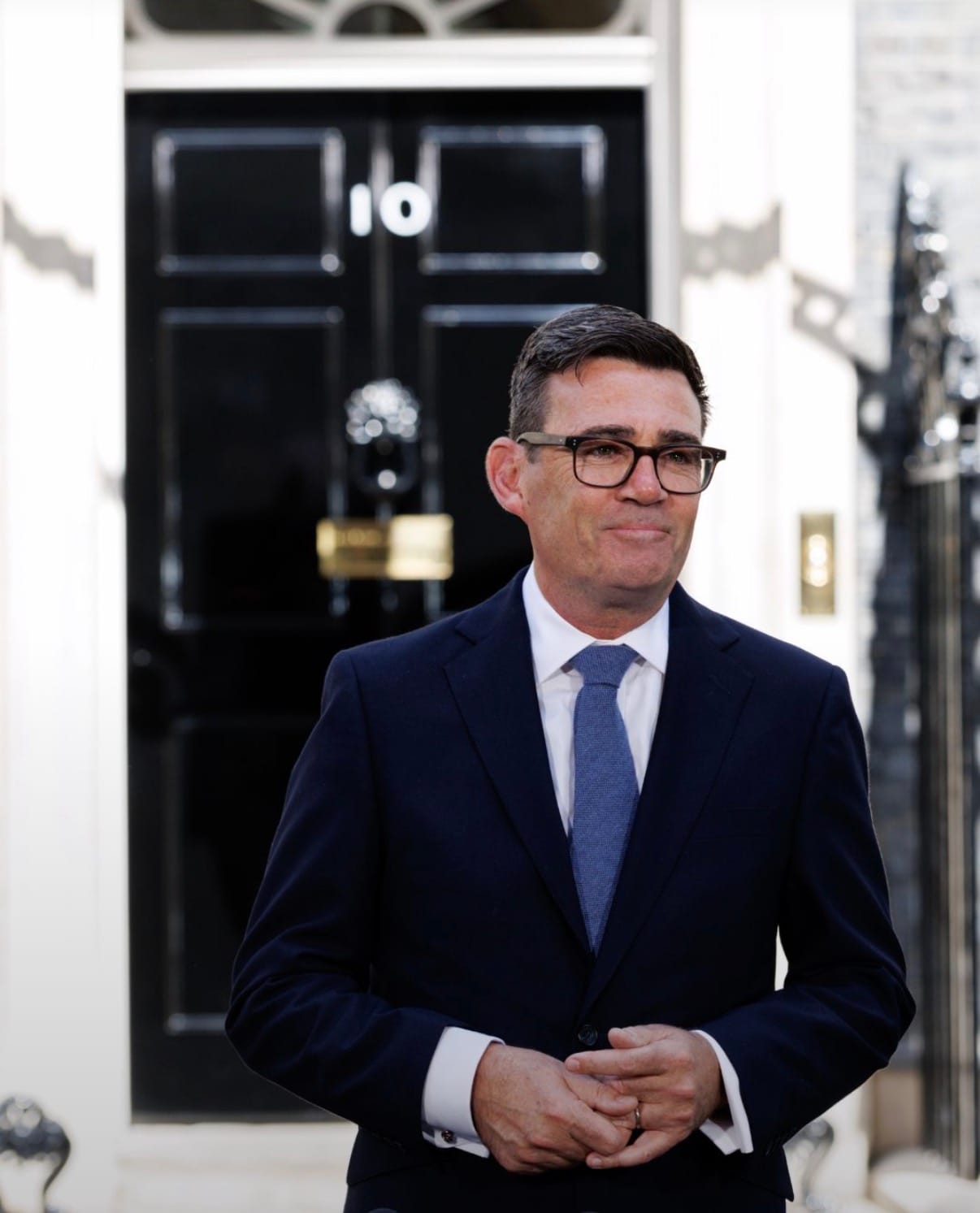
Burnham Took The Unanswered Questions To Downing Street
Burnham walked into Downing Street after nine years running Greater Manchester. His record went in with him, and it includes a force that closed an investigation with 97 suspects on the books, Rochdale, Oldham, now Bury, and Tameside, where a councillor says police tried to frighten him for quoting the council's own figures.
He will point at the reviews. He commissioned them, he will say. He confronted the difficult issues, and published findings that made uncomfortable reading. The fragments were the protection.
The map is filling in. Five of ten already. I do not know if the final number is five, seven or all ten. His reviews never established whether it was. Nine years with regional responsibility for the structures meant to protect these children, and the Prime Minister cannot answer the most basic question about his own city region.
The national inquiry must call him and make him answer the question his reviews never reached.
Just how many of Greater Manchester's ten local authority areas did the Pakistani rape gangs operate in?
My name is Raja Miah. I led the campaign that exposed the Pakistani Rape Gang cover up in my hometown of Oldham. The people of my town helped force the national inquiry. As well as Pakistani gangsters and Islamists, we fought against the man that is now Prime Minister to expose the truth. This fight now runs all the way to Downing Street.
Subscribe to Red Wall and the Rabble and help us finish this.
Should we succeed, politicians will go to prison. Laugh if you want. They were laughing when we first exposed their crimes too.
My work is free. No paywalls. No gatekeeping. No exclusions. Because the truth shouldn’t belong only to those who can afford it. If you can afford to do so, supporting me costs as little as 75p a week (£30 a year).
If you can’t commit to a regular subscription, a one-off contribution genuinely helps keep this alive. You can support me using one of these links;
👉 http://BuyMeACoffee.com/recusantnine
👉 http://paypal.me/RecusantNine
We’re up against a machine, politicians, police, officials, and media, working together to shrink, sanitise, and bury the truth. This work survives because of you.
If you’ve ever shared my posts, learned something, or felt less alone reading them, stand with me. I need your help.
Raja Miah MBE