How Labour Turned a National Reckoning Into a National Disgrace
How Survivors Will Expose Labour's Betrayal
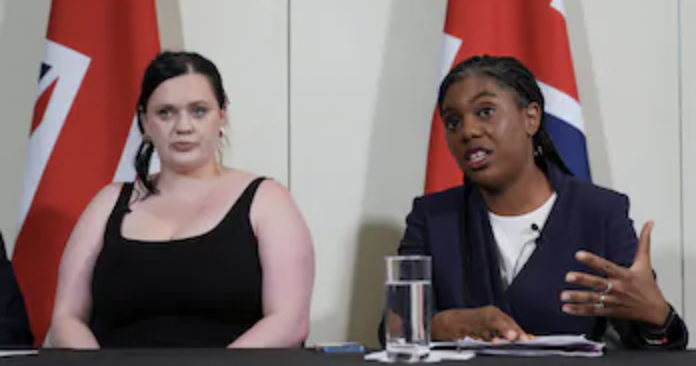
Later today, Kemi Badenoch will stand alongside survivors and publish a proposed set of survivor-led terms of reference for a statutory national inquiry into grooming gangs. On its face, it will look like an opposition policy announcement. In reality, it will be something much more dangerous for the Labour Government. A public charge sheet for their botched handling of arguably the most important inquiry in our nation's history - the industrial scale cover up of the gang rape of Britain's children.
But this intervention will also detonate something Labour has tried desperately to smother. The fact that survivors themselves no longer recognise the Government's inquiry as credible or honest.
This intervention will not arrive in a vacuum. It will land on top of months of Labour drift and dysfunction. A Government that tried to dodge a national inquiry with five local, non-statutory inquiries. A belated U-turn to a national investigation forced by political pressure and Baroness Casey's audit. And an inquiry process now in open meltdown, with survivors, chairs and public confidence falling away.
Badenoch's message later today will be simple. If the Government will not design a credible inquiry, survivors and their allies will do it for them.
How Labour Tried to Bury Grooming Gangs with Bureaucracy
To understand why today matters, you have to go back to the beginning of this Government's approach.
When Labour first responded to renewed outrage over grooming gangs, it did not offer the one thing survivors and campaigners had been demanding for years. A single, national, statutory inquiry able to pull the whole scandal together.
Instead, in January 2025 ministers authorised five separate, local inquiries, alongside an audit by Baroness Louise Casey. But here was the con. These local inquiries had no statutory powers. They could not compel witnesses. They could not demand documents. They could not force answers from the very institutions that had covered up abuse for decades.
These local inquiries were presented as faster and more "locally relevant", the familiar language of devolution and technocratic reform. In reality, Labour was offering survivors the facade of an investigation without any of the tools that might actually deliver justice.
Critics saw through the deception immediately. Fragmentation, yes, but worse than that. Labour was offering survivors the theatre of accountability while ensuring the very people they needed to hold to account could simply refuse to cooperate. Pins on a map, not a national reckoning. Performance, not power.
After four decades of institutional failure and cover-ups across multiple governments, Labour had chosen to repeat the same pattern of evasion that created the scandal in the first place.
It was only in June, under heavy political pressure from the Conservatives, Reform UK and a renewed media focus, that Sir Keir Starmer finally announced a national inquiry, effectively U-turning on Labour's original local-only model and aligning belatedly with Casey's recommendation.
So when Chris Philp says Labour had to be "dragged" into a national inquiry, he is not plucking the claim out of thin air. The paper trail is there.
"It is time to put survivors first and ensure this can never happen again. The truth is the Labour Government never wanted the inquiry into grooming gangs to begin with. They had to be dragged kicking and screaming into holding it. It is time for the Prime Minister to grow a backbone, deliver justice for every survivor, and hold every official who enabled these crimes to account.” - Chris Philp
Survivors Fled. Chairs Quit. Labour Pretends It's Fine
If Labour's defence is that they got there in the end, the events of this autumn have blown that excuse apart.
Before a single witness has given evidence, the national inquiry is already in crisis.
Survivor walk-outs have become a haemorrhaging wound. At least four survivors, including Fiona Goddard and Ellie-Ann Reynolds, have quit the victims and survivors liaison panel, describing "condescending and controlling" language, attempts to manipulate them into broadening the scope away from group-based exploitation, and a process they fear will see grooming gangs "brushed under the carpet" yet again.
The chairless inquiry stands as a monument to institutional failure. Both leading candidates to chair the inquiry, Annie Hudson and Jim Gamble, have publicly withdrawn. Hudson walked after media pressure; Gamble cited a "toxic political football", deep mistrust among survivors and concerns about his policing background in a process meant to interrogate police failures. And this was before his links with the Labour Party.
Most damaging of all, Jess Phillips finds herself in the firing line. The safeguarding minister who built her public persona on speaking up for victims of abuse now faces those very victims saying, in public, that they do not trust her to oversee the most important inquiry of their lives. Multiple survivors have signed letters describing her conduct as dishonest, accusing her of spinning the scope of the inquiry in public while trying to water it down in private. They have gone further, saying they will only return to the process if she resigns, and branding her "unfit" to oversee a process that demands trust.
Phillips denies all this, insisting there is no dilution and that the inquiry will remain "laser focused on grooming gangs". But politically, she has already suffered the one fate a minister in her position cannot afford. Survivors no longer believe her.
When the people the inquiry is supposed to serve are walking away, the inquiry is not "in difficulty". It is in collapse.
The establishment wants this scandal buried in bureaucracy. We're not going to let that happen. Help grow this community. Help survivor voices reach the people who make decisions. Help force the reckoning.
Every new subscriber is another person who won't let the rape gang survivors be failed again.
Badenoch Shows Labour How It's Done
It's against this backdrop that Kemi Badenoch will step up later today with her own terms of reference, drawn up with survivors and advocates, not behind a Home Office curtain.
Her framework will do four things Labour has resisted at every stage.
- Make it unambiguously statutory and national. One inquiry, not five local fig leaves and an audit.
- Put survivor priorities at the centre of the remit, not bolt them on as an afterthought or a panel to be managed.
- Investigate institutional cover-ups explicitly, not just "lessons learned", but the missing minutes, the buried reports, the political calculations.
- Examine ethnic, cultural and religious dynamics, where relevant to patterns of offending and the state's response, instead of treating these questions as untouchable.
None of this should be remarkable. It is what a serious country would have done years ago.
But Badenoch's framework offers something Labour's inquiry cannot. Real power. Witness compulsion under threat of criminal sanction. Subpoena authority over decades of buried documents. Cross-force police scrutiny that no chief constable can deflect. And crucially, criminal liability for perjury that would make lying to the inquiry as dangerous as lying in court.
But because governments of all political persuasions have avoided justice, preferring carefully managed reviews to unsparing inquiries, it will feel like a rupture.
When Survivors Stop Trusting You, It's Over
The Government will respond with the usual reassurances. The inquiry is already statutory. It already has powers to compel witnesses. Louise Casey is involved. Officials are working "at pace".
But they are answering the wrong charge.
The crisis is not about whether powers exist on paper. It is about whether anyone believes this Government will use them without fear or favour.
When survivors are accusing the Home Office of "political interference", when both chair candidates have fled, when the minister in charge is the subject of open letters demanding her resignation, you do not have a comms problem. You have a legitimacy problem.
This is where Badenoch's move bites deepest. By standing with survivors and publishing a rival set of terms, she is not just criticising Labour's handling. She is offering a parallel centre of gravity. A different locus of authority. One that does not run through Jess Phillips or Shabana Mahmood or the Home Office, but through the people who were failed.
That is politically lethal territory for Labour.
The Minister Survivors Want Gone
Whether every accusation against Phillips is fair is almost beside the point. Perception is reality for an inquiry of this kind. Once survivors decide that the minister in charge is part of the problem, the structure under her collapses.
Labour can keep Jess Phillips, or it can salvage the inquiry. It is hard to see how it can do both.
The Question Labour Cannot Answer
When Badenoch unveils her terms of reference, she will crystallise the choice facing the Prime Minister.
Stay the course with an inquiry that, so far, has produced resignations, abandoned chairs, internal letters of no confidence and headlines about chaos. Or adopt the survivor-backed statutory blueprint, even if that means admitting Labour got it wrong on local inquiries, wrong on delay, and wrong to keep the process so tightly controlled by the Home Office.
One path protects political pride. The other path offers at least a chance of justice. For decades, governments have chosen the first path. Local reports. Narrow reviews. Carefully circumscribed terms. Pious regret.
Later today, under pressure from survivors and from a rival framework that finally matches what they asked for, we will see whether this Government is any different.
If Labour truly believes its inquiry is credible, it should have no fear of adopting a framework written by the survivors themselves. Because once those survivor-led terms of reference are out in the open, Labour will face the most uncomfortable question in politics. Why won't you just adopt them?
I am Raja Miah. For seven years, I led a small team that exposed how politicians protected the rape gangs.
I cannot do this on my own. I need you to stand with me and help make sure we can stop the sectarian takeover of the places we call home.
We’re running out of time. Without the numbers, they will win. It’s as simple as that.
🔴 Subscribe to my newsletter – it’s free. Or support the work for just 75p a week (£3/month or £30/year).
Whatever you do, please subscribe;
This is the fight.
This is the moment.
There will not be another
🔴 Prefer a one-off contribution?
👉 http://BuyMeACoffee.com/recusantnine
👉 http://paypal.me/RecusantNine
No corporate sponsors. No party machine. Just you and thousands of ordinary people who know what’s at stake. We’ve come this far. Help finish it.
Raja Miah MBE