Before Rotherham, Birmingham Already Knew
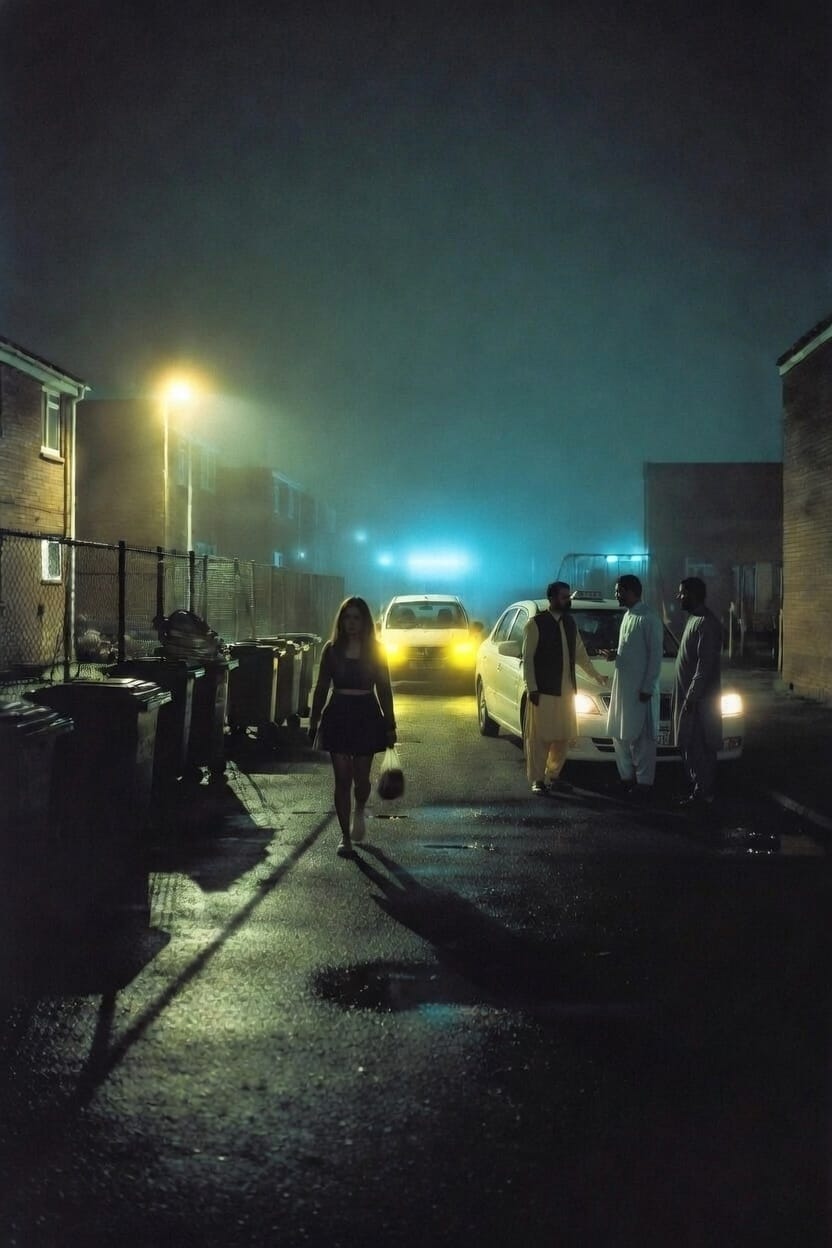
Birmingham City Council Commissioned a Report Into the Rape of Girls in Its Care, Received the Findings, and Destroyed the Evidence. The People Who Made That Decision Have Never Been Named.
In 1991 Birmingham City Council buried research documenting how girls in its care were being raped by organised networks. In 1995 it voted down the enquiry that might have exposed what it had done. Thirty years later girls were still trying to tell a Birmingham MP what that report had already documented and been ordered to erase.
Birmingham City Council destroyed evidence of child rape in 1991.
A formal research report documenting how girls in its own care were being picked up by men, taken to locations where multiple offenders were waiting, and raped was ordered suppressed. Copies were destroyed. The planned institutional response was cancelled.
Four years later, a motion was tabled at a Birmingham City Council social services committee meeting calling for a full enquiry into the suppression of that report.
Birmingham City Council debated that motion and voted it down.
The people who commissioned the research, received the findings, ordered the evidence removed, and then voted against being held to account for any of it have never been publicly identified. They have never answered for what they did.
More than two decades before Rotherham became a national scandal, Birmingham City Council had already documented the same pattern early, buried the evidence, and blocked the enquiry that might have forced the truth out.
This is where the Birmingham story actually begins.
 Jeanette Oldham
The Council Knew There Was a Problem. It Commissioned the Research to Prove It. Then It Destroyed the Proof.
In 1990, Birmingham City Council commissioned Dr Jill Jesson, a lecturer at Aston University, to research child prostitution involving girls in the city's care system.
Jesson knew from the start what her role was. "The city council commissioned me to carry out the piece of research because they knew there was a problem. I was employed to do the work because I think they thought I would be objective. I was told to reveal what I saw."
After six months of research she produced a two-part report.
The picture she found was not ambiguous. "It wasn't called grooming then, it was called prostitution. The girls were all aged between 13 and 17 and were all under the care of Birmingham City Council social services."
Jesson found twenty girls by name in the council's own case files across three divisions of Birmingham social services, thirty-two children's homes, all recorded manually with different paperwork systems in each division. She interviewed police officers, officers in charge of children's homes, social workers, and five of the girls themselves. Of the twenty, fifteen were white and five were of mixed race.
"I found 20 girls' names, next to which either the word 'prostitution' or some concern about their sexual behaviour had been written."
The behaviour of those girls had been dismissed by the system around them. She described what that dismissal looked like on the ground.
"The role of the police seemed to be to find girls who were reported as missing. Their job was to find the girls, bring them back to the homes, but then the staff running the homes would just let them walk out again. The officers in charge of the homes would say 'Well, we can't lock them up. We can't stop them'. The homes and social workers knew the girls were coming back with new trainers and new coats, and the girls would just say their boyfriend had got them for them."
She was clear about what was actually happening to those girls.
"But what I found, looked at and reported was not prostitution as in girls working on the streets as prostitutes for money. It was absolutely not that. It was 'You're my girl and I love you and you do as I ask'. The girls would go somewhere with a man in a car and there would be several men there, men who wanted to have sex. Prostitution was just the label it was given then. It was the girl's behaviour that was seen to be at fault."
Asian private hire drivers appeared repeatedly in social workers' own case notes as a feature of what was happening to those girls. Some of those drivers had already been cautioned by police for pimping offences.
The link between the private hire trade and the exploitation of girls in council care was not Jesson's interpretation. It was in the council's own records.
"It was written in the social services' notes of the girls that the girls had told about taxi drivers being one of the features of what was happening to them. But it was difficult for me to get a complete picture. Some evidence was written down. I'd look at the forms and sometimes it was there, sometimes it wasn't, and some girls who spoke of it as an issue did not always have it written down in their notes. There may well have been much more of it going on but I could only look at what social workers had written down in the notes and what people were willing to tell me."
Despite those gaps, the pattern was clear enough to document.
"I thought there was a link between Asian taxi drivers, private hire drivers they were, and the girls who were getting the cautions for prostitution. I put that in the report and was asked to remove that, too. I was asked to take it out because one of the members of the steering group said I had not got enough evidence of what was happening elsewhere in the city. Therefore my methodology could have been flawed, they said."
The council had commissioned a researcher to reveal what she saw. When she revealed it, they told her her methodology was flawed and ordered the evidence removed.
"There was a link between the sexual abuse of the girls and private hire drivers in the city. I thought at the time I did the work that there was an issue with race. Most of the girls were white. I was asked to take this link out, to erase it."
What she had expected to happen next was straightforward.
"When the work was completed and the report was finished, as far as I was concerned my report was going to be discussed by staff in social services in order to do something. The report was meant to be presented at a seminar to discuss the council's policy around protecting these girls. It was all about establishing if the policy fitted the problem, so to speak."
What happened instead was different.
"The report was shelved, buried, it was never made public. I was shocked to be told that copies of the report were to be destroyed and that nothing further was to be said. Clearly, there was something in this report that someone in the department was worried about."
Dr Jill Jesson, 2014
"I was told to reveal what I saw. I did. And some people didn't like it."
Girls in the statutory care of Birmingham City Council were being passed between men for rape. The council's own researcher had documented it, named the girls and interviewed them. The response of the people running that council was to accuse her methodology of being flawed, order the evidence erased, and destroy every copy.
Birmingham City Council's Explanation for Burying a Child Rape Report: The Reasons Are Not Clear.
When the Birmingham Mail forced this into public view in November 2014, Birmingham City Council insisted the full report had been published in December 1995.
Jesson flatly contradicted this. "Part of the report with the evidence about the problem, the numbers of girls involved, was attached to the committee report. My report was critical of the council and social services department. It was critical of their policy. It stated that their policy was not robust enough." Only one part of the two-part report was ever brought to a social services committee meeting. The section containing the evidence, the scale and the private hire connection was the part that never reached full public scrutiny.
The council's own Strategic Director for People acknowledged that in 1991 the department decided not to publish the report.
His explanation for why: the reasons are not clear.
The council commissioned research into the rape of children in its care. When the findings identified perpetrators and networks, the ethnic dimension was removed and copies were destroyed. When finally forced to address this publicly more than twenty years later, the best explanation the council could offer was that it cannot remember why it buried a child rape report.
A confession dressed as an administrative shrug.
The people who made those decisions in 1991 held specific roles and chaired specific committees. I have found no public record identifying who they were. Birmingham City Council has simply never been compelled to produce them.

If you are reading this, you take value in this work. Please sign up and subscribe.
In 1995 a Motion Was Tabled Demanding an Enquiry Into the Cover-Up. Birmingham City Council Debated It and Voted It Down.
What happened in December 1995 has never received the attention it deserves.
Four years after the Jesson report was destroyed, a motion was tabled at a Birmingham City Council social services committee meeting. It expressed concern about the suppression of the report and called for a full enquiry into what had happened.
Birmingham City Council debated that motion.
Then it voted it down.
This was not passive institutional failure. Four years after the destruction of a child rape report, Birmingham City Council sat in a committee room, considered whether to examine what it had done, and chose not to.
The councillors who voted against that motion had names. Those names are in the committee minutes. The committee minutes are public records that can be obtained. Nobody has yet made Birmingham produce them publicly in the context of this scandal and nobody has yet asked the people who cast those votes to explain them.
That is the gap a statutory inquiry would close.
Jill Jesson Watched Rotherham, Rochdale and Telford Become National Scandals Knowing Birmingham Had Documented the Same Pattern First and Buried It.
When the Birmingham Mail published its investigation in 2014, Jesson said something that demolishes every remaining institutional defence Birmingham has left.
"Every time a news item has come on about sexual grooming of young girls and girls in care, and the link between private hire drivers, I have thought: I told them about that in 1991 but they didn't want to acknowledge it. I think the problem has got worse and worse over time."
Dr Jill Jesson, 2014
For twenty years she watched the country express horror at the same pattern she had documented in Birmingham in 1991, city after city, while the institution that had ordered her evidence destroyed and voted down the enquiry carried on as normal.
"Anyone reading my report now would say 'Well, we already know that'. But the important point is to see that in 1991 this was ground-breaking insight into the desperate lives of some young women allegedly in the care of social services. The story would be the same as it is now, and has been reported in all of these grooming scandals, stories which I've followed."
Her final verdict on what all of it cost is the most damning line in the entire Birmingham record.
"The sad part of this story is not the suppression of evidence but that the relevant organisations have failed to address this problem."
Dr Jill Jesson, 2014
She said that in 2014. Birmingham had documented the pattern early, killed the evidence, voted down the enquiry, and spent two decades watching the consequences run across the country.
The Institution That Destroyed a Child Rape Report in 1991 Is Now So Broken the Government Has Had to Take It Over.
Birmingham City Council is currently under direct government intervention. Government-appointed commissioners are running the institution because it has been found incapable of governing itself, with commissioners describing systemic failure of oversight and good governance and a culture in which officers felt it was never possible to tell bad news to senior management. It stands as one of the gravest local authority failures in modern Britain.
That has been reported as a financial story. It is a moral one and the morality has a history.
Birmingham City Council destroyed a child rape report in 1991. It voted down a call for a full enquiry in 1995. It presided over three decades of documented exploitation and when forced to explain itself offered "reasons not clear" as its defence. The institution that has now collapsed so completely that the government has had to take it over is the same institution that made those decisions.
The commissioners currently attempting to rebuild it have never once been asked publicly to address what the council did in 1991 and what that decision cost the girls who were still in its care when it was made.
Sir Richard Knowles Led the Council. Sir Michael Lyons Ran It. Yve Buckland Oversaw Children's Services. None of Them Have Ever Been Asked What They Knew About the Jesson Report.
The steering group that ordered Jesson to remove the ethnic dimension from her report, the group that told her her methodology was flawed and that she had not got enough evidence, has never been publicly identified. I have found no public record of who sat on it.
But we know who was running Birmingham City Council when it happened.
The Leader of Birmingham City Council in 1991 was Sir Richard Knowles, who had led the Labour-controlled authority since 1984. The Chief Executive between 1989 to 1994 was Sir Michael Lyons, the council's most senior administrative officer, responsible for overall management of departments and coordination between elected members and officers. The Assistant Director of Social Services was Yve Buckland, whose responsibilities included children's services, safeguarding policy and operational social services management. Theresa Stewart, who had previously chaired the Social Services Committee and remained one of the most senior Labour figures in the council, was a dominant presence in the council's social policy leadership throughout this period.
These were the people at the top of the institution when Jesson's research was commissioned, completed, stripped of its key findings and buried.
None of them have ever been asked publicly to account for what happened to the Jesson report. Knowles is now dead.
And the question of what these individuals knew does not stay in 1991.
Sir Michael Lyons
Sir Michael Lyons went on to become one of the most prominent figures in British public administration. After serving as Chief Executive of Birmingham City Council in the late 1980s and early 1990s, he became Chief Executive of Nottinghamshire County Council and later Director of the Institute of Local Government Studies at the University of Birmingham.
He chaired the Lyons Inquiry into local government finance for the UK Government (2004–2007) and was later appointed Chairman of the BBC Trust from 2011 to 2014, overseeing the governance of the BBC during a period of major reform.
Yve Buckland
Yve Buckland served as Assistant Director of Social Services at Birmingham City Council between 1988 and 1992, overseeing operational areas within children’s and social care services.
She later held a number of national roles, including Chief Executive of the Legal Services Commission and Deputy Chair of the Independent Police Complaints Commission (IPCC), the body responsible for overseeing the investigation of serious complaints against police forces in England and Wales.
The specific questions that remain unanswered include;
- Who chaired the steering group that ordered Jesson to remove the ethnic dimension from her report?
- Who authorised the destruction of copies of the two-part research report the council had commissioned?
- Which councillors and senior officers were present when the decision was taken not to publish the findings?
- Which councillors voted against the motion calling for a full enquiry at the December 1995 social services committee meeting?
Those last names are recoverable. The December 1995 committee minutes are public records held in the Library of Birmingham local studies archive and in Birmingham City Council's own archive. They record who was present and how the vote went. Nobody has yet forced Birmingham City Council to place those names on the public record in the context of this scandal.
But two names do not require an archive request.
Sir Michael Lyons was Chief Executive of Birmingham City Council when Jesson's research was commissioned, completed, stripped of its findings and buried. He went on to become one of the most prominent figures in British local government nationally. He chaired the BBC Trust. He led major national reviews of local government finance. He was knighted. His entire subsequent public career rested on a reputation for institutional integrity and good governance.
Yve Buckland was Assistant Director of Social Services at Birmingham City Council during the same period, with direct responsibility for children's services and safeguarding policy. She went on to a senior role in policing oversight, precisely the kind of national position where the question of what she knew about child protection failures in Birmingham is not a historical curiosity. It is a live question about the integrity of the oversight she was later trusted to provide.
Both individuals occupied senior roles in the institution when a child rape report was commissioned, suppressed and destroyed. Both went on to hold national positions of public trust. Neither has ever been asked publicly what they knew about the Jesson report, what they knew about the decision to destroy copies, or what they knew about the 1995 vote that blocked the enquiry.
The national inquiry into grooming gangs has the power to compel testimony. It has the power to put those questions on the record and require answers under oath.
Sir Michael Lyons and Yve Buckland should be required to testify.
The girls whose names were in those files in 1991 deserve nothing less.
More Than Twenty Years After Jesson's Report Was Destroyed, Inspectors Found West Midlands Police Treating a Thirteen Year Old Going Missing With Men as a Lifestyle Choice.
The Jesson report did not exist in isolation. It sat inside a wider West Midlands child protection system that was already documented as failing.
A Birmingham Safeguarding Children Board report published in September 2013 stated plainly that partnership arrangements in Birmingham were failing to protect children from child sexual exploitation. It noted that at the time of writing, three young victims of child sexual exploitation were subject to secure accommodation orders while their perpetrators remained at liberty and continued to target other children.
It said the absence of prosecutions was startling.
Her Majesty's Inspectorate of Constabulary examined West Midlands Police child protection work and found that a thirteen year old who frequently went missing from her care home with men was considered by police to be making a lifestyle choice. It found that a seventeen year old girl was failed after she said she was being approached by older men for sex, that intelligence suggested those men may still be raping younger girls, and that no follow-up action took place because she had turned eighteen.
These were not findings from 1991. They were findings from 2013 and after. More than two decades after Jesson documented the same failures in the same city, the same patterns were still running and the same institutional reluctance to act was still being recorded by inspectors.
Jesson had already named that reluctance in her original report. Her report was critical of the council's policy. It stated that the policy was not robust enough. The council buried the report, voted down the enquiry, and the policy remained not robust enough for decades.
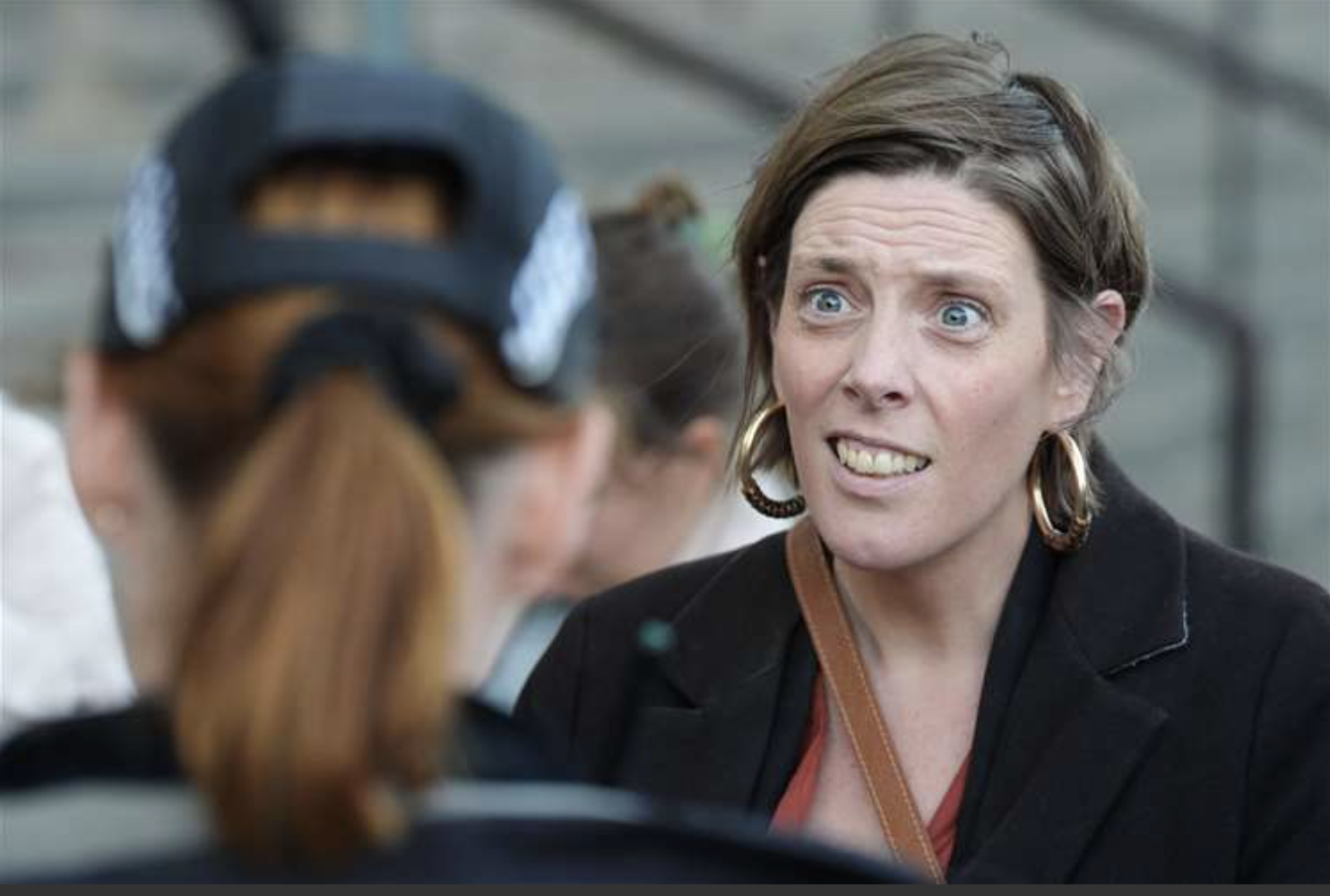
The Girls Telling Jess Phillips That Police Were Involved in the Abuse Were Living in the Same City Where the Council Had Already Documented That Abuse and Ordered the Evidence Erased.
When Jess Phillips told Parliament in September 2025 that girls had been telling her over the years that police were involved in the abuse itself, she was describing testimony reaching her in a city where the council's own commissioned research had been destroyed in 1991 to prevent exactly that kind of reckoning.
That connection deserves to be stated plainly.
Jesson's girls in 1990 described being picked up by men, moved between locations, and raped by multiple offenders while the council's own social workers were recording what was happening and being told to stop. Phillips's girls in the years before 2025 described police being part of the abuse or its cover-up in the same city. The institutional silence behind both sets of testimony ran through the same civic architecture.
Jess Phillips built her public reputation on the claim that institutions fail victims by doubting, sidelining and minimising them. She has never publicly connected that claim to the Jesson report, never demanded to know who sat on the steering group that ordered the evidence destroyed in the city she represents, and never asked why the 1995 motion calling for a full enquiry was voted down.
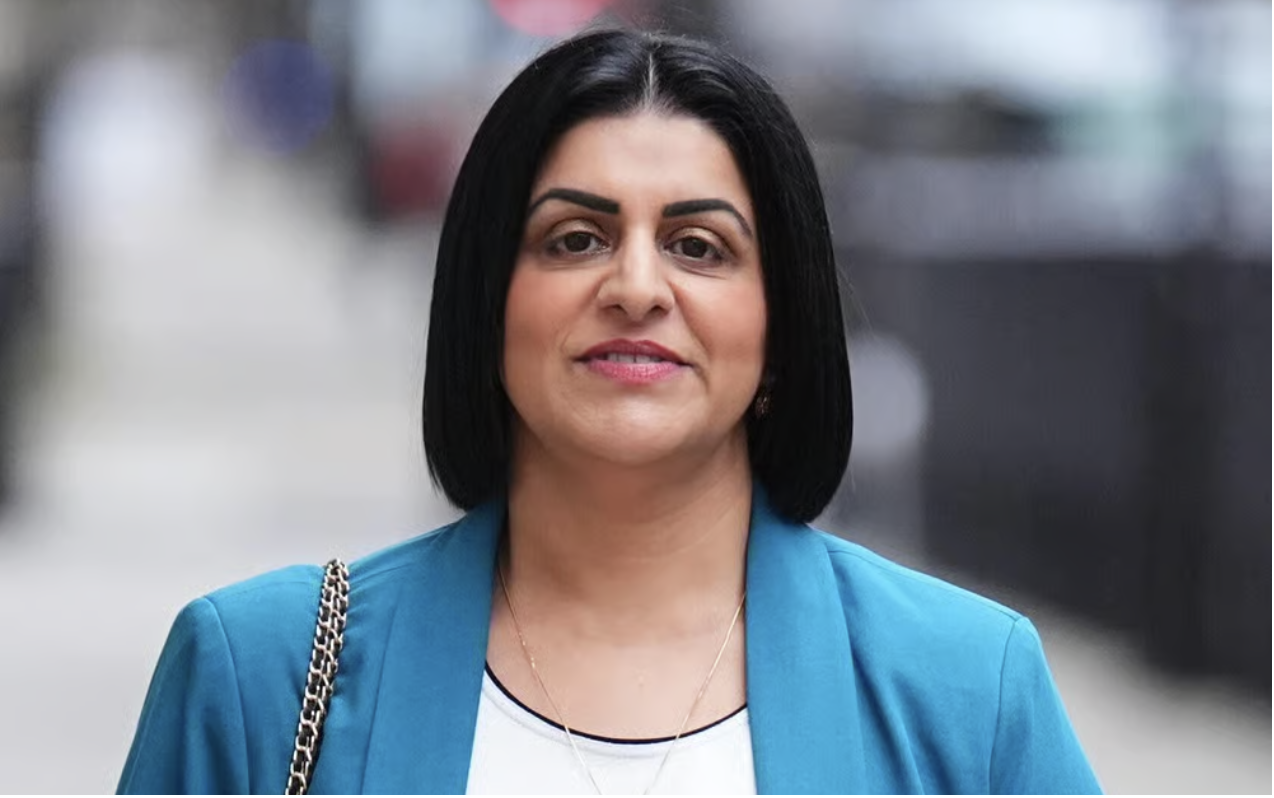
Shabana Mahmood is the Home Secretary. She is responsible for policing nationally. She has represented a Birmingham constituency since 2010. She has said nothing publicly about the Jesson report, nothing about the two decades of documented failure that preceded her own political career in the same city, and nothing about what it means that a council she represents voted down a child rape enquiry in 1995.
Two of the most powerful women in British politics represent Birmingham. The girls who were in council care in 1990 are still waiting for either of them to demand the full public reckoning the city has never had.
Twenty Was a Six-Month Snapshot. The Real Number Was Never Allowed to Be Found.
Twenty is the number Jesson was able to document. It was never the full picture.
"You could say that 20 is not a lot. It's not a lot compared to the numbers we've seen in Rotherham, for example. But this was just a six-month snapshot of what was happening at the time. I think there was very much an issue then of social workers protecting the confidentiality of the girls involved by not recording, or not recording properly, information about their involvement in what was then called prostitution."
The inadequate recording she had already criticised in her report was the same inadequate recording that kept the true scale hidden. Twenty was what survived the system's own failure to document what it was seeing. The real number was larger. How much larger, nobody was ever permitted to find out, because the report that might have prompted that question was destroyed.
Nobody has ever asked publicly what happened to the twenty girls Jesson did identify by name in 1990 and 1991. Whether any of their abusers were ever investigated. Whether any of those girls are still alive.
Those girls were thirteen, fourteen, fifteen years old in 1990. The youngest would be in their late forties now. Some of them may have spent their entire adult lives waiting for the city that failed them to acknowledge what was done to them and who was responsible.
Birmingham City Council had their names. It had the files in 1991. It chose to close them.
The Questions Birmingham Has Spent Thirty Years Making Sure Nobody Could Force It to Answer.
- Who chaired the steering group that ordered Jesson to remove the ethnic dimension from her report?
- Who authorised the destruction of copies of the two-part research report the council had commissioned?
- Which councillors and senior officers were present when the decision was taken not to publish the findings?
- Which councillors voted against the motion calling for a full enquiry at the December 1995 social services committee meeting?
- Were any of those individuals still in positions of authority in Birmingham when West Midlands Police produced its 2010 child sexual exploitation problem profile?
- Were any of the perpetrators identified in the original research ever investigated or prosecuted?
- What happened to the twenty girls identified by name in the council's own case files in 1990 and 1991?
Birmingham City Council has never placed those answers on the public record. A statutory inquiry with the power to compel documents and testimony would have to.
Jess Phillips Has Never Asked Who Destroyed the Jesson Report. Shabana Mahmood Has Said Nothing About Any of It.
Jess Phillips admitted in Parliament that girls told her over the years that police were involved in the abuse itself. Shabana Mahmood is the Home Secretary. Both represent a city whose council suppressed research into the rape of girls in its own care in 1991, voted down a call for a full enquiry in 1995, and has never been made to account for either decision.
The question now sits on the public record.
Will either of them call for the full publication of the Jesson report and the identification of the steering group that ordered its findings removed?
If the suppression was an error, the city deserves the truth. If the decision was deliberate, the people who made it should be named.
Thirty years after Birmingham buried this research, the question is no longer whether the city knew. The question is whether anyone with the authority to demand answers is prepared to ask them.
Birmingham City Council Made a Decision in 1991 That Protected Abusers for Thirty Years. The Names of the People Who Made It Are Still Not on the Public Record.
Birmingham City Council knew in 1991. It had commissioned and received a formal research report documenting the rape of girls in its own care, identifying the networks involved, and recommending a policy response. It suppressed that report, destroyed copies, voted down the enquiry four years later, and allowed the abuse to continue unreported and unaddressed.
The timeline of what followed makes the scale of that decision plain.
1990 Birmingham City Council commissions Jesson research into child prostitution involving girls in care.
1991 A steering group suppresses the report, strips the ethnic dimension, and orders copies destroyed.
1995 A motion calling for a full enquiry into the suppression is tabled at a social services committee meeting. Birmingham City Council debates it and votes it down.
2010 West Midlands Police produce a problem profile on child sexual exploitation.
2014 High Court anti-grooming orders are sought in Birmingham.
2015 Reporting on a confidential police problem profile says more than 700 potential victims had been identified in Birmingham in three months.
Every one of those subsequent failures happened in a city whose council had already documented the problem thirty years earlier and chose burial over accountability.
The timeline does not begin with Rotherham. It begins in Birmingham, in a steering group, with a decision to destroy a report documenting the rape of children in council care and the names of the girls it was happening to.
Those names are still in the files. Some of those girls are still alive. The people who voted down the enquiry in 1995 have names too, and those names are in the committee minutes.
Birmingham has simply never been made to produce them. And up until now, no one has demanded anything of them.

I’m Raja Miah MBE. You won’t see me on the BBC or read my work in the legacy press. That’s not an accident.
For seven years I led a campaign exposing how senior Labour politicians helped protect Pakistani rape gangs. The people of my town helped force the national inquiry.
Everything I publish is free. No paywalls. Because the truth shouldn’t belong only to those who can afford it.
But I’ll be honest, despite tens of thousands of people taking value from my work each week, only a small number support me financially. And this number is reducing each week.
The reality is the national inquiry we forced will almost certainly be a cover-up. The next phase is exposing that and shaping what comes next. That fight could take another five years.
If you believe this work matters and can afford to do so, please support it.
Upgrade or subscribe here:
Or support with a one-off contribution:
👉 http://BuyMeACoffee.com/recusantnine
👉 http://paypal.me/RecusantNine
We’re up against politicians, police and media working together to bury the truth.
This work survives because of you.
Raja 🙏