21 Men Were Convicted. Survivors Say Hundreds More Walk Free
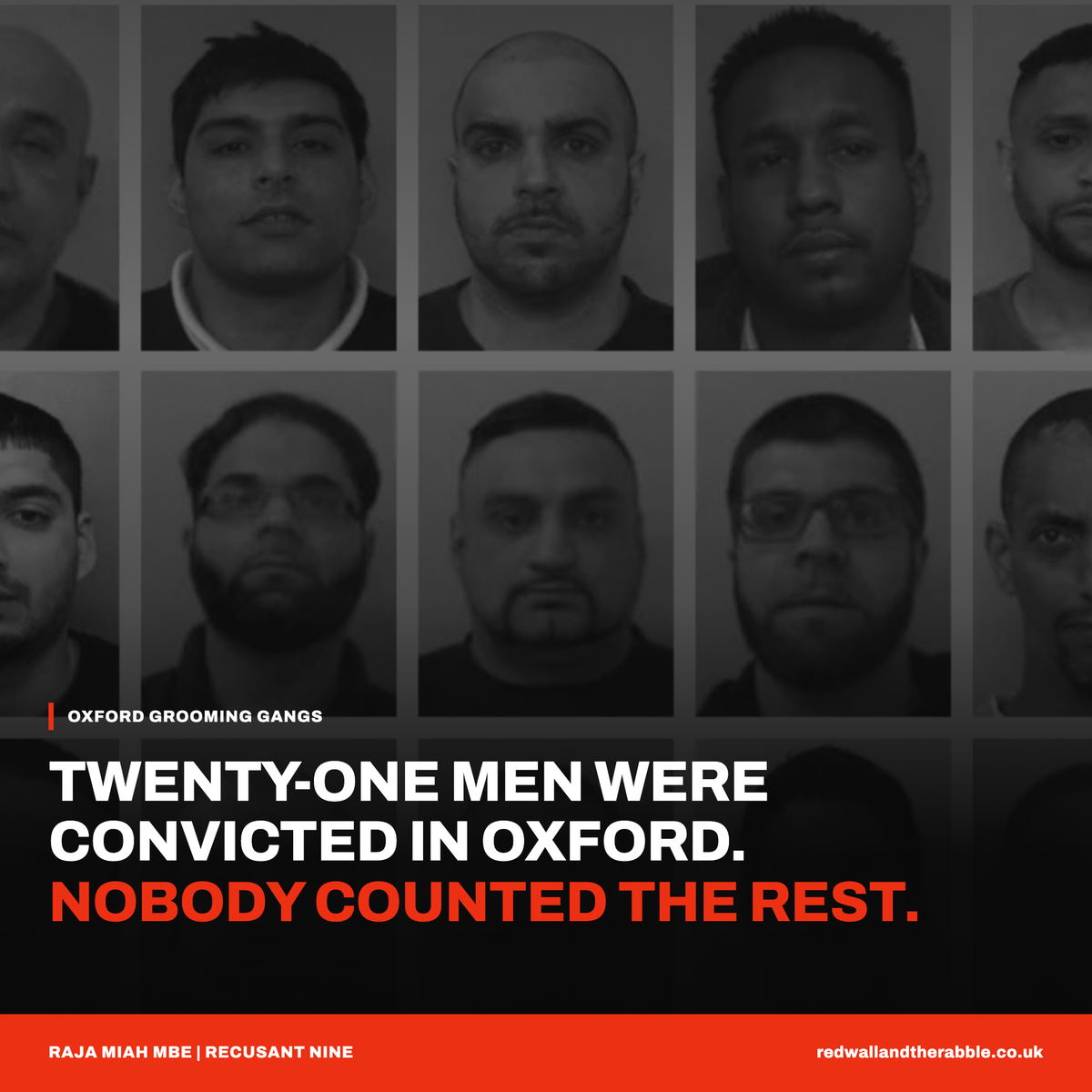
BRITAIN CAN TELL YOU HOW MANY MEN IT CONVICTED IN OXFORD. IT CANNOT TELL YOU HOW MANY MEN RAPED THE CHILDREN.
Sarah was eleven when the men started giving her cigarettes. The cigarettes were laced with heroin. When she was addicted, they told her she owed them money, and that the only way to pay it back was with her body. She was locked in houses. She was made to drink until she was sick. Then the men arrived, one, two, six, seven at a time, as she put it.
Three of them were convicted in 2020, more than twenty years after it started, because Sarah stood in a courtroom and told a jury what they had done to her. They were sentenced to between five and twenty-four years. She thinks they should stay inside forever, because in her words they have taken her life. She has spent most of that life addicted to the drug they put in her cigarettes, and some of it in prison.
That is the version of the story Britain has been sold. A girl was abused, the men were caught, the men were jailed, and everyone involved got to say that justice was done.
Sarah walks around Oxford and sees the others. A shop, a petrol station, a restaurant, everywhere you can imagine, is how she puts it. Everywhere she goes, she says, she sees a man who did something to her. Not a man who was convicted, but a man who was never charged.
THE WOMEN RECOGNISE THEM IN THE SUPERMARKET
Chloe was thirteen. What happened to her follows the pattern described in many of the major cases across the country. The men befriended her, bought her things, gave her alcohol, told her she was in debt, and then raped her. She describes being picked up, a random old man in the car, and being driven to a flat. Asked what happened in the flats, she answers that it was the same as always, they raped us.
Chloe chose not to go through a police investigation. Many women in her position made the same choice, and having read what Rachel says about the police van on the Cowley Road, I do not blame a single one of them. So none of the men who raped Chloe has ever been charged with anything on the basis of what was done to her, and her account has never been tested by anyone in authority. She lives in the place where she grew up, and she sees them. In the supermarket, driving around, as she describes it. She says she feels sick and cold when it happens.
Rachel was abused from twelve to fifteen. She was trafficked to other towns and cities, where men paid to rape her. She was a key witness at the first Oxford trial in 2013, when seven men were convicted. She says that for years the police did not believe her.
She also says that one night on the Cowley Road she was put in the back of a police van by two male officers, one of whom told her they knew what she was about, and then asked her to perform a sex act on him.
She never reported it. She had already learned what reporting things to Thames Valley Police got her. Rachel says a lot of people involved in this to some degree or another have simply been allowed to get on with their lives.
Those are three women, and all three believe hundreds of perpetrators remain free.
THE DETECTIVE SAYS THEY GOT THE CORE GROUP
The man who led the first investigation into the abuse in Oxford is a former senior detective called Simon Morton. He accepts that he and his force failed at first to understand what was happening. I will give him credit for saying so out loud.
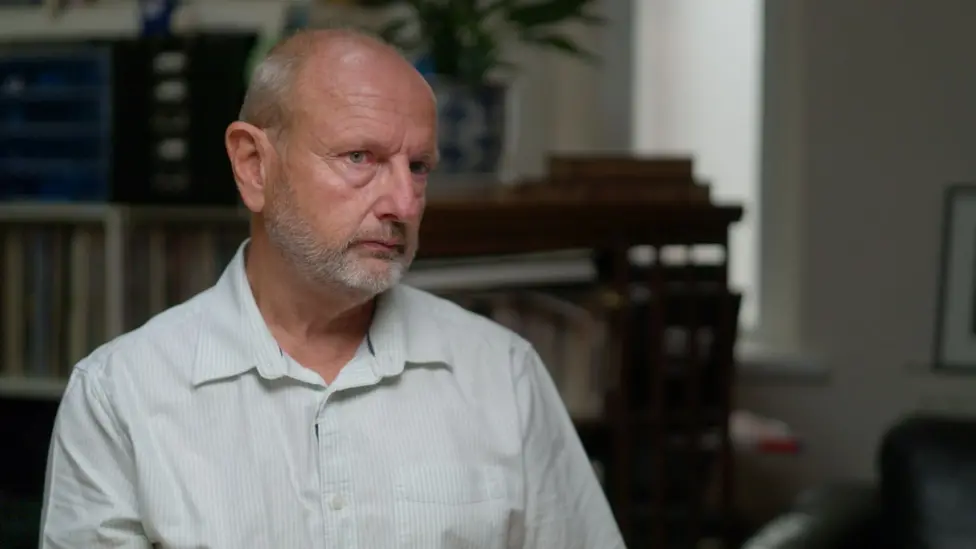
Plenty of the men who ran these investigations retired on full pensions without admitting a thing. He says the number of people involved was crazy. He says they should have done more. He believes abuse of this kind is absolutely continuing in the city.
We got the core group. That doesn't mean there isn't more.
Read that again with the survivors' testimony in your head. The detective who built the cases is telling you that the men whose photographs appeared after the trials were the men his force managed to prosecute.
He is not telling you they were the only men who took part. He describes girls who were drugged and thrown into a room with a mattress on the floor, and a procession of men going in all night and all day. He says he believed the women. He says identification was super hard. He says getting a victim to stand up in court a year later and open it all up again was another thing entirely.
I do not doubt any of that. It is the point. Every one of those difficulties is a reason a man was not prosecuted. It is not a reason he and his fellow police officers were not there.
CONVICTIONS ARE NOT A COUNT OF THE MEN WHO TOOK PART
Twenty-one men have been convicted in connection with the abuse of children in Oxford. That is the number the country has been given, and the country has treated it as the size of the crime.
The size of the crime is a different thing. Twenty-one is the size of what a police force, the Crown Prosecution Service and a set of juries could prove beyond reasonable doubt, using witnesses who were drugged at the time, addicted afterwards, disbelieved for years, and in at least one case says she was propositioned by one of the officers who was supposed to protect her. It is a measure of the justice system's capacity. It is not a census of the perpetrators.
For years I have argued that Britain prosecuted a small number of the men who groomed and trafficked these girls and almost none of the men the girls were sold to. Oxford suggests the problem is wider even than that. The women are not only describing the buyers. They describe the friends who were in the flats, the men who turned up in the cars, the old man in the passenger seat, the procession through the room with the mattress. Some paid, some were invited, some provided the flat and some drove. Those are different roles, and the law treats them differently. But they are all roles, and the question is how many of the men who played them were ever investigated at all.
Nobody has published an answer for Oxford. How many men were named by the girls? How many names sat in police intelligence? How many were investigated and dropped? How many were never investigated at all? And where they were not investigated, why not? Nobody in Thames Valley Police or the Crown Prosecution Service has ever put those figures in front of the public, and I have never seen them published for Rotherham, Rochdale or Telford either. Morton offers some of the possible reasons himself. The girls were drugged. Identification was hard. Testimony capable of surviving a trial was hard to obtain. Those may all be true. They are also the same three explanations I have heard from force after force, and they still do not tell us how many men there were.
Over the last 3 months we have secured over 1,000 paid supporters towards our target of 2,000. That is an incredible achievement. Every new supporter strengthens this campaign, increases our voice and makes it harder for those in power to ignore the evidence.
If you believe the truth should be followed wherever it leads, please stand with us.
THE INQUIRY WILL BE MEASURED BY WHETHER IT COUNTS
A serious case review in Oxford found no evidence that fear of being called racist held the agencies back, while recording that most of the men convicted were of Pakistani heritage and calling for research into the apparent national pattern. Both of those findings belong on the page, and I put them there because I have spent long enough watching one side of this argument quote the first and the other side quote the second. The national inquiry has been told to consider whether attitudes to the girls or the ethnicity of the perpetrators played a part in the failures. Those are the right questions, but they are not the only ones the inquiry needs to answer.
The inquiry cannot convict anyone. Its terms of reference send criminal evidence from 1996 onwards to Operation Beaconport, overseen by the National Crime Agency, and those terms specifically include those who introduce children to others, traffic them, take payment for sexual activity with them, or allow their premises to be used. Government has built a mechanism that is supposed to turn historical examination into fresh prosecutions. It wrote that promise into the terms of reference itself, and I intend to hold it to it.
The final terms, published on 31 March 2026, say the inquiry will decide for itself which local areas it reviews, and that those local investigations can include data collection and analysis which the national review must then draw on. Nothing in those terms stops the inquiry from establishing how many men were involved. Nothing in them requires it to either. Beaconport investigates crimes, and the inquiry examines why institutions failed, but neither has been told in plain terms that producing that number is its job. If the inquiry does not choose to attempt it, and Beaconport is not built for it, then nobody has been asked to produce the one figure that would tell us the true size of this scandal. I have watched enough inquiries to know how this goes. If nobody is asked for the number, nobody will be blamed for not having it.
I believe the country has spent more than a decade mistaking the number of men it convicted for the number of men who raped these children. I believe that in every town where this happened, the gap between those two numbers is the true measure of the scandal, and that nobody can tell us the size of the gap because nobody in authority has ever been made to work it out, and plenty of people in authority have preferred it that way. Twenty-one men went to prison in Oxford. Three women say they can point to their rapists in the aisles of a supermarket. The inquiry should be made to establish how many men there were, and Beaconport should then be judged on how many of them it finds.
I come at this from the inside. Inside the communities where these crimes are committed and from inside the government that facilitated the cover up.
If Andy Burnham and his Labour Party had their way, I would be in prison. If many in Reform and Restore had their way, people would place no value in my work, because my work adds pressure on them to do the right thing.
I do not just educate people on the rape gang cover up. I put the pieces together and expose the rot that allowed it to happen. I evidence and explain the Pakistani Mafia, the Biraderi, that has infiltrated our democracy and its use of postal vote fraud to rig elections. I document and share my insights into the growing Islamist threat and how the Labour Party and the liberal metropolitan elite are complicit in the demise of our democracy.
Politicians have tried to imprison me. Pakistani gangsters follow me home. The police have dawn raided my home on numerous occasions and have been exposed in the High Court for protecting those that want me taken care of. No one should be surprised that Islamists have tried to incite my murder or how the legacy media have run hit piece after hit piece desperately trying to smear my good name.
Despite everything, eight years later, I am still here, and so are you.
I take this to a place from which there is no coming back. Should we succeed, politicians will go to prison and we will save the place we call home. Even if there is only the smallest of chances in achieving this, is it not worth your support?
Sign up to the newsletter. Educate yourself. Learn how to fight back. If you can afford to, become a paid supporter and fund the work that the legacy media will not do. If you cannot, just read and share what you can. We have got this far because of you.
You are what they fear the most.
It is why they have done what they have done to try and silence me. To try and stop you.